Author Archives: Inspiring Innovations, Inc.
TRIPLE III TIME – Indispensable: THE Value Test
In a recent workshop session I challenged the group to determine if they…their products and services…were Indispensable to their/today’s marketplace. And as I witnessed a lot of questioning looks on the faces of those in attendance, I realized I needed to better explain my question with a more exact definition of Indispensable.
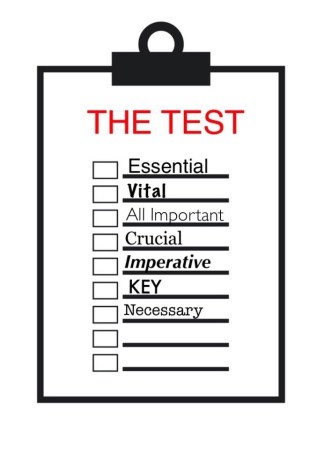
The definition I gave them was a series of words. I stated that in order to consider yourself or your organization Indispensable…are you:
- Essential
- Vital
- All Important
- Crucial
- Imperative
- Key
- Necessary
The reaction of the group was quite humbling. And even though they were confident that they individually and as a group were Indispensable…they felt really challenged by THE Value Test!
My Indispensable: THE Value Test was actually very simple. Specifically I first asked:
- Have the potential customers coming through your doors changed? Answer: YES…a lot!
- Have the organizations/businesses you work with changed? Answer: YES…a lot!
- Finally have the needs of the customers/organizations/businesses changed? Answer: YES…a lot!
Then I asked if everything around you has changed “a lot”…what/how have you changed and thereby increased your Indispensable VALUE to the marketplace?
Well I am not going to give you the details of our follow-up discussion. Instead I want everyone to apply the Indispensable: THE Value Test to yourself, your business and/or your organization. Are you Essential, Vital, All Important, Crucial, Imperative, Key and Necessary?? This type of unique strategy session is high value in every workplace situation.
Give the “Test” a try. Honesty and awareness are great motivational and inspirational outcomes.
TRIPLE III TIME: Co-Worker Conflict/Leadership/Customer Service (A Mixture Message)
One of the toughest leadership challenges is addressing Co-Worker Conflict. In many instances it (conflict) is the result of just plain personality differences… and are those really changeable? But even more critical to an ongoing Co-Worker Conflict is its very negative impact on the delivery and effectiveness of quality Customer Service within and outside of an organization!
Co-Worker Conflict can negate inter-organization clear and concise communication. It can spread an “illness” of non-cooperation among staff. Co-Worker Conflict can limit or even destroy any plans for a new, cool innovative product or service. And this list can go on.
 One of my most effective Leadership actions to deal with Co-Worker Conflict was to remove the decision-making authority on a challenge issue from the “conflictors”. My directive sounded something like this: “If you can not resolve this issue between yourselves…I WILL MAKE THE DECISION AND NO ONE WILL BE PLEASED…EXCEPT ME!” And fortunately most times a new sense of maturity and need for progress prevailed…and we moved positively forward.
Co-Worker Conflict/Leadership/Customer Service are sometimes mixed together in ways that require clear, timely, corrective action. Leaders need to NOT sit back and hope the Co-Worker Conflict resolves itself and co-workers need to remember professionalism matters and move forward for the sake of Customer Service.
Learning Moments Podcast: “Speaking of Praise”
Do you have a quality style of sharing, giving Praise to someone? Or do you offer Praise in a very routine, standardized fashion that ends up not really conveying the appreciation you were really hoping for? The “Speaking of Praise” Inspiring Innovations LEARNING MOMENTS podcast is proposed to help everyone give the responsibility of Praise delivery all the special attention it deserves. As always, I try to explain a lot in my five (or so) minute talk… but I hope the suggestions I offer can make a positive difference. Enjoy the listen.
TRIPLE III TIME: Strategic Planning & The Time Factor
As we all slowly evolve out of the pandemic strain, its limitations and elimination of our “business-as-usual” routines, many groups are considering new Strategic Planning initiatives. This means getting leadership and employee representatives together to consider future product, service, location, workforce and yes maybe even special innovation opportunities for their business/organization’s future. And as a consultant that has worked specifically in the strategic planning arena, several have asked for my general input on what I consider the most critical issue(s).
My direct answer is: The Time Factor!
Typically Strategic Plans look at the world from a distance of about 3 to 5 years in the future. The goal is to try to project what the needs of the business/people/community/marketplace/education sectors may be. There are always multiple opinions, options and ideas about the ideal time frames for achieving effectiveness and efficiency in all planning projections. So what are MY recommendations regarding Strategic Planning & The Time Factor?
Well I must admit that my approach to Strategic Planning has not changed much over the years. I believe planning 1 to 2 years ahead is the most logical and cost effective approach. This recommendation is based on:
- The speed of technological advancement
- The time required to train and retrain employees.
- The global marketplace impacts
- The action of “getting too far ahead” can be as problematic as “getting too far behind”
- The process of obtaining, fine-tuning and retaining quality product/service partnerships cannot be Time Factor driven.
Please remember this is MY Strategic Planning recommendation. Topics, issues, money and politics all may alter the best Time Factor. Also, consider the fact that personal and professional patience has lessened in recent years. Therefore, one size will never fit all.

TRIPLE III TIME: Asking-For-Help… Seeing the Camouflaged Wins!
As the years have passed it is very interesting when you learn a little more about yourself everyday. For example I have given extra time and real consideration thinking about the personal similarities between my Dad and me. My Dad was a total farmer and I am a public administration/consulting professional. As different as day and night…right??
WRONG!!
I can not tell you about the multiple times…more even recently…that I realize I have acted/responded very similar to my Dad with regard to some issues. Whether the issue was “re-purposing” a piece of equipment or taking a certain position on the purchase of an expensive item…my Dad’s influence comes out loud and clear. One of the most negative influences however was “asking-for-help”. My Dad was beyond stubborn with regard to asking-for-help…even to the point of experiencing personal injury. I would never follow that type of example…would I??
This week’s TRIPLE III TIME message: Asking-For-Help…Seeing the Camouflaged Wins! has both personal and professional importance. Think about it. Every time you DO NOT ask-for-help, you cheat yourself and others out of:
- Partnering For A Cool Project
- Two-Way Teaching & Learning Experiences
- Encouraging Confidence In A Special Area/Way
- Benefiting From “A Second Set of Eyes” To See Potential
- Attaining A Better Use of Time
- And Yes…Maybe Better Safety
I am sure there are many more Camouflaged Wins that may come from Asking-For-Help. “I can do it myself” or just being stubborn…standardly does not put you in the WIN column.
Some of us are VERY slow learners in this area but Asking For Help…Seeing The Camouflaged Wins! is a training seminar both my Dad and I could have benefited from!

TRIPLE III TIME: Public Understanding: Whose Job Is It?
Teaching an American Government & Politics class each semester is an educational experience for the students and for me! There are so many topics, issues and events that are part of our government system which allows for an always engaging and debate-filled class period. But I have to admit, my favorite teaching “tool” is my Public Understanding: Whose Job Is it? component. This quarter my American Society for Public Administration (ASPA) article is totally dedicated to explaining the high-value of improving Public Understanding: Whose Job Is it? government responsibilities. Too often citizens assume they know more about who-does-what at all government levels than they really do! As a result the volume of mis-information in the field of public administration grows.
I hope you enjoy the article: Public Understanding: Whose Job Is it?
TRIPLE III TIME: Self-Improvement: A “Common” Approach
It is not comfortable or easy to address and take on the task of true Self-Improvement in the workplace. Self-Improvement requires you to look closely, deeply at what YOU do and how YOU do it. Then you must identify not just that you need to be better…but also figure out how to be better! Honesty and openness are a definite requirement, along with an open mind about options for Self-Improvement. So…do you really consider Self-Improvement in its purest form?
This week’s TRIPLE III TIME message: Self-Improvement: A “Common” Approach recommends everyone try a: “What Bugs You The Most?” fun journey to Self-Improvement. First, I want everyone to think of a few of the main (common) issues that occur in the workplace and belong on a “What Bugs You The Most?” priority list. What are they? Let me offer a few (common) examples:
- Not getting a timely message returned (or at all) or call back.
- One person that always thinks they have a better or the best idea.
- Endless debate.
- Being always told to wait a little longer.
- Being told NO but without a real reason why.
I am sure everyone could add to this list. However, I am guessing most are asking: What does this list have to do with MY Self-Improvement?
This Self-Improvement: A “Common” Approach message is designed to inform you that one of the greatest Self-Improvement activities is learning how to better handle these (common) types of “What Bugs You The Most?” issues! Do you let them eat away at you for hours/days? Or do you reconcile them in some timely way? By taking A “Common” Approach to Self-Improvement in the workplace, honesty and openness can become easier, conflict becomes less likely and progress remains the standard.

LEARNING MOMENTS: Innovation Motivates

Every organization/business is always in search of new and different ways to motivate their employees and often even the customers they serve. There are books, articles, and workshops which all offer ideas and actions to help get everyone motivated… right? But today I ask, “What about using INNOVATION to be your motivator?
This month’s Inspiring Innovations LEARNING MOMENTS podcast: Innovation Motivates is all about using new creative innovation practices as your organization’s motivation “driver”. The progressive outcomes from Innovation Motivates are labeled in the podcast as the Fantastic Five! Each describes the multiple personnel benefits and future considerations that may come forth.
Enjoy the listening.
TRIPLE III TIME: Leadership Decision-Making (The Little Bit Strategy)
The task of Leadership Decision-Making for any business or organization is NOT designed to be easy. Whether it is deciding on a financial investment, down-sizing strategy, personnel matter…whatever, every issue has different challenges and mandates appropriate time and deliberation.
Think about it.
In almost every decision area the issue of profit or loss or cost versus benefits come up for assessment. Or maybe with regard to personnel, a certain decision may result in someone being laid-off or transferred to another town, state or even country! SO many considerations have to be reviewed and it is challenging because there is not a PERFECTION IN DECISION-MAKING Guidebook?!
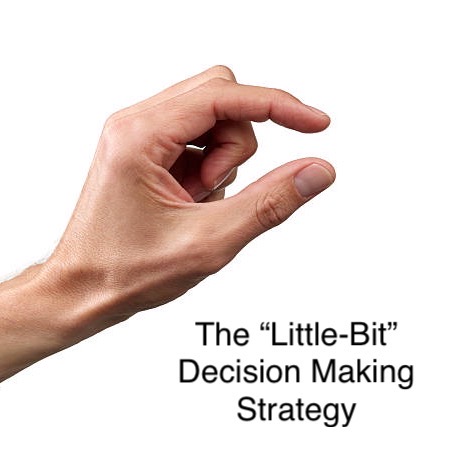 Well this TRIPLE III TIME message is intended to offer a Leadership Decision-Making idea I have benefited from over the years that I call: The “Little-Bit” Strategy. The basic principle of the The “Little-Bit” Strategy is simple…try and make sure your decision on anything helps EVERYONE involved to come away a little bit better and happier. Whether it is awarding separate contracts to two different organizations and thereby sharing the income and responsibility, or assigning a job to a team instead of a single individual and thereby growing diverse project input. The benefits far out-weigh the challenges.
The “Little-Bit” Decision-Making Strategy does not prioritize attempting to please one single individual or group. The “Little-Bit” Strategy also doesn’t cater to the biggest whiner or loudest voice. Its goal is leading by inclusion and shared responsibility.
It’s worked well for me.
TRIPLE III TIME: Simply Speaking or Speaking Simply

One of the most common “critiques” my III partners have regarding the preparation of these weekly messages is that “I have too many messages in one message!” And although I can argue…99% of the time they are absolutely correct. Because as I reread and proofread my drafts…I too can feel the multiple messages, confusion and questions regarding “what is he really trying to say!”
In these growing times of information and messaging overload, it is critical that we assess whether we are Simply Speaking or Speaking Simply. Do we take appropriate steps to make sure our communications convey an accurate, non-wordy, straight-forward message? Do we understand the need for political correctness, but not at the expense of promoting a greater number of issues that cloud our purpose and communication intent? Or do we try to be efficient in our number of messages we send and thereby “say” too much in one which then causes confusion on what is most important?
Speaking Simply is a “cause” that will serve everyone well at home and at the job. If you find yourself Simply Speaking…those reading or listening will get lost in the backlog of words and essentially quit hearing and the most direct meaning of your message is gone.
Ok D.S., J.B., and J.L. I know I’ve said enough.
 Inspiring Innovations, Inc.