TRIPLE III TIME: “MAXIMIZED” Customer Service (Beyond: “Can I help you?”)

We have addressed the importance of quality customer service in a number of different ways within multiple blog segments over our TRIPLE III TIME years. But as I considered how limited the prior messages were and how non-personalized my improvement recommendations felt… I believe I fell a little short of what “MAXIMIZED” Customer Service should represent in our highly competitive 2025 (and beyond) marketplace.
Think about it.
Whether the customer is looking for the right nails, food, car, job, consultant advice, appliances, crop fertilizer, co-worker support, employment service and the list is endless… it is way past the critical time to enhance and begin universally providing a much more personalized approach to customer service.
Maybe there are already a large group of professionals that do this, but I want to ask: do we take the appropriate customer service time to ask: WHAT/WHY/HOW questions about the product/service being sought… or do we just react with traditional/convenient responses?
Taking the time to discuss past product/service experiences, planned use, one-time or long-term need, research completed on options/opportunities and/or the situation requiring a possible unique/creative customer service approach…can totally drive a “MAXIMIZED” Customer Service style!
Bottomline: I believe adopting a solid “MAXIMIZED” Customer Service (Beyond: “Can I help you?”) professional habit will result in greater confidence, partnerships, respect and RETURN CUSTOMER occurrences for you and/or your marketplace. Gain the necessary insight into this development objective… and then go progressively forward.
TRIPLE III TIME: Beginning Our 12th Year
If someone had told me that I would be penning TRIPLE III TIME-Inspiring Innovations “Catablog” messages for more than one-five-ten years… “I would have laughed them out of the joint!” Yet with D.S. and J.B’s strong, continuing skills and support… we are now Beginning Our 12th Year!
Although each weekly message (1,144 so far)…was/is special in its own way, our major topic principles have remained constant: Leadership ALWAYS!, Developing YOU!, Communication LIVES!, and Innovation NOW! When I chose these high-value topics in the beginning… I simply picked professional development action areas that were most important to me. And thankfully after eleven years, I believe they have served us all well.
So now after that quick, fun trip down memory lane… it is time to share the first TRIPLE III TIME message for 2025. Plus in staying with my favorite format for message delivery, here is my TOP 10 Beginning Our 12th Year! priority action list:
- Create/Invent/Innovate something every chance you get.
- Read a meaningful book… completely during the year.
- Send a totally random “Thank You” note to a friend/colleague/family member… maybe every three (3) months.
- Begin making NEW donations (time or money) for a worthy cause.
- No matter your/their age… mentor someone to help them professionally grow.
- Arrive extra early and/or stay late at your workplace at least once per week.
- Tell someone you are proud of them for one of their professional development actions…because it matters.
- Keep a log of non-traditional personal or organizational growth efforts you are part of. (Keeping “score” will encourage you to do more.)
- Make “Always Fresh” a workplace/work performance an everyday theme.
- Finally, please use my first NINE (9) priority action list items to be your “LEAD BY EXAMPLE” professional development standards everyday… EVERYDAY!
Lets have a fun, cool new year.
TRIPLE III TIME: Recognizing “PUSHING-ME” Energy

It is that time of year when the calendar places us in that “in-between” state of being. If I am not clear in the point I am trying to make… think about the fact that we are right in the middle of the week when we celebrate Christmas and then in just days we say good-bye to 2024 and welcome in the New Year: 2025! And traditionally we just try to quietly relax and enjoy where we have been… and then quickly plan where we want to go both personally and professionally in the new year.
So why is this week’s TRIPLE III TIME message: Recognizing “PUSHING-ME” Energy so important??
First, I want you to think about those you are responsible for and recognize the value of how they unknowingly have a cool role in pushing you to grow and be more accomplished in just being YOU! Second, consider those who look to YOU for support, advice and guidance to help them resolve a problem issue or possibly make a challenging decision on a life/work situation that has been “on-the-table” for quite some time. Finally, take the time to begin Recognizing “PUSHING-ME” Energy sources from other unique, not regularly noticed areas. And as you do this fun “case-study”…take stock in how often you THANK THEM for the special Energy they deliver!?
So as you progressively celebrate your holiday “in-between” season and creatively attempt Recognizing “PUSHING-ME” Energy offerers in your work/life areas (family/ friends/ neighbors/ students/ co-workers/ leaders)… think about sharing an extra special thanks message to them.
For me… I want to write that I appreciate the GREAT ENERGY I get from everyone that reads and helps me produce these weekly TRIPLE III TIME messages!
I couldn’t keep writing them without you.
TRIPLE III TIME: Holding the Leadership Reins
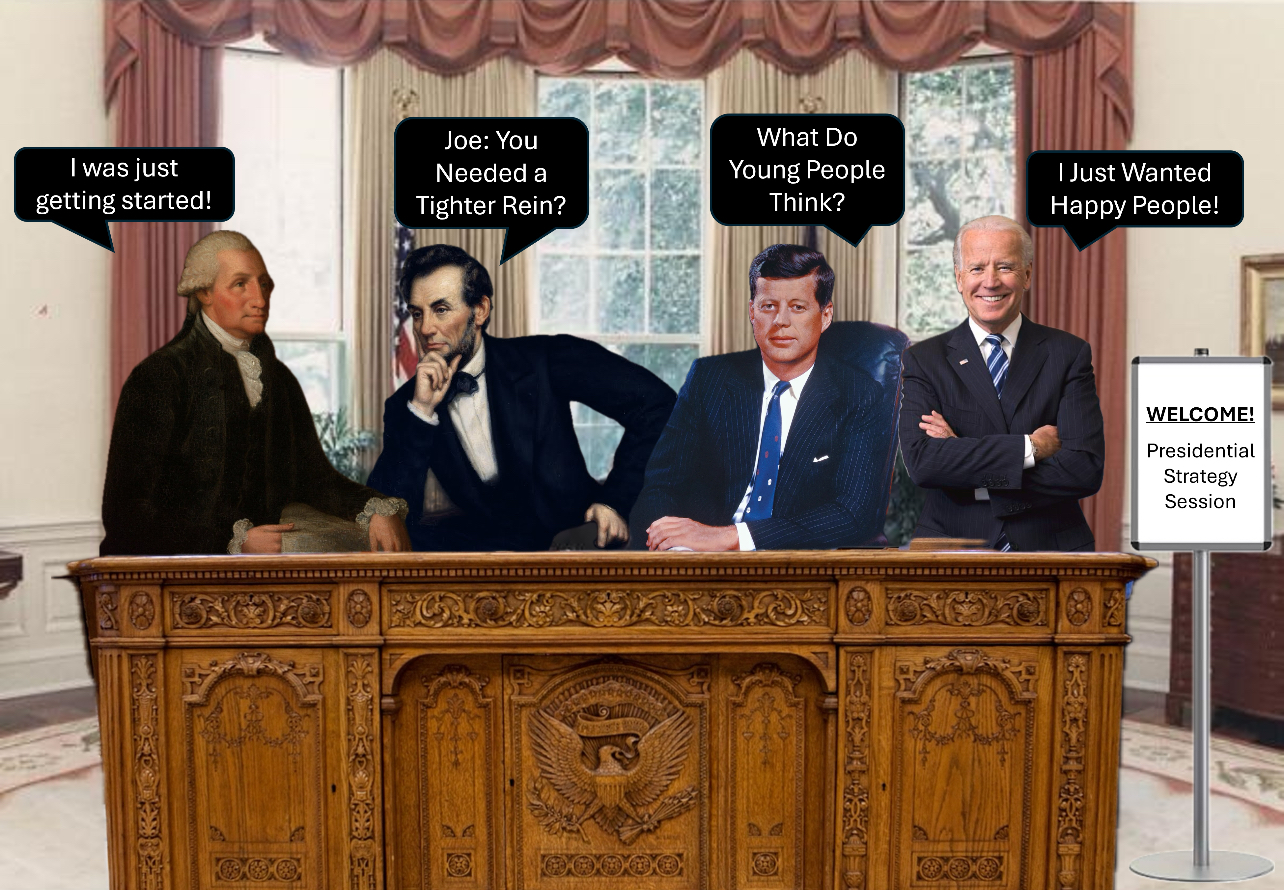 Are you in a LEADERSHIP role? Well no matter how you answer this question… today… I believe everyone is placed in a LEADERSHIP role at different times and for different purposes. So given this perception, did you ever give much thought about the professional responsibility of: Holding The LEADERSHIP Reins?
The first thing I think about when considering Holding The LEADERSHIP Reins for any organization or initiative… I think of it as an “ART” and that one can not do it perfectly because people are not perfect… right? Times, assignments, ages and circumstances are all impactors when appropriately Holding The LEADERSHIP Reins! Think about it.
If you apply a “moral idealism” concept and you believe if given the most appropriate situational freedoms everyone will do the right thing… you loosen the Reins! But what happens if those you manage practiced only doing the minimum at work and complained that you did not provide enough direction (as their leader) to get the job done?! And therefore your LEADERSHIP Reins were too loose and they did not totally understand the principles to be followed.
Perfection does NOT exist!
In my time as a LEADER… I followed a pattern that whoever I supervised had to earn how loose (or tight) my LEADERSHIP Reins would be for them. I never wanted to be Holding The LEADERSHIP Reins so tight that I restricted innovation, sharing of ideas and regular willingness to communicate. So if from time to time someone found me tightening the Reins exclusively for them… they quickly realized that maybe they lacked respect/ownership of the “mission” we were striving for…and their mis-use of freedoms caused their “Reins To Be Totally Tightened”… at least temporarily!
Bottomline: The goal for this week’s TRIPLE III TIME: Holding The LEADERSHIP Reins message is to first encourage you to assess your style in this personnel area. Second to reflect that there is no perfect Rein holding process. And finally to offer some situational examples that may help you find YOUR way in this vital professional responsibility area.
LEARNING MOMENTS: TOP 10 Growth Questions
Well as we finish 2024, this Inspiring Innovations LEARNING MOMENTS podcast is a targeted message toward bettering Board/Council/Committee advancement. Often as professionals are recruited and join a community development group, it becomes “growth- necessary” to pose a number of common-sense questions that help blend everyone in support of a special “cause”!
The TOP 10 Growth Questions and related growing-pain considerations highlighted in the podcast offer only a brief review of priority development processes. Please listen closely to each one and add your own thoughts.
Enjoy the holidays.
TRIPLE III TIME: Newsletter “Particulars”

This week’s TRIPLE III TIME message is one specially requested by a long-time reader. Her request was more about my “opinions” regarding company or organizational newsletters…rather than my thoughts about what qualities make one a GREAT ONE! So I guess as you read through the message…I believe you will find I have taken the middle-of-the-road position when discussing Newsletter “Particulars”.
First, I believe internal and external newsletters can be HIGH VALUE if designed/developed correctly. Regularly…consistently taking advantage of the ability to share accurate, enthusiastic information can prove “priceless”! GREAT newsletters should generate a vision of the future (what’s next) and thereby give readers something to look forward to.
Second I really don’t support a continual “report-out” document that only talks about what’s been done (i.e. old news!). Reporting pieces on progress are acceptable…especially if they describe what they mean for the future. Also, if you are the person most in charge of newsletter production, think about visuals reflecting today and tomorrow views on issues/products/services. Colors, straight-forward wording and terms that invite people to want more info are important.
My old TOP 10 weekly staff news-piece was a fun motivator. Every Friday it listed things to look forward to the next week…what staff would be responsibly involved…and what new stuff may result and determine who else may be given an assignment?! All about the future…all the time.
Finally when you think about Newsletter “Particulars”…don’t have big hopes of return communications from the readers…good or bad. Newsletters should be primarily considered a leadership privilege to better inform…set priorities…offer clarity…and possibly motivate those in the targeted audience.
Don’t waste this critical opportunity.
TRIPLE III TIME: In-Person Times

Somehow I wish I had recorded the times the discussion of in-person versus virtual connections occured… and the values of meeting face-to-face were highlighted. Yes, I understand that “distance” learning, meeting and communicating are just the new times requirement… but did I say “that I believe only half as productive!” So yes again I know that time… money…. speed and efficiency matter… but what about authenticity… clarity…. and personal sincerity? How do you measure those?
Today I feel In-Person Times in the workplace have increasingly gone up in value.
Think about it!
Think about meetings… presenting… interviewing… teaching and just plain LEADING. Think about the ability to introduce something totally unique to a group of faces on the big screen. Can you walk over and ask… ”do you really get it?” Can you convince them that every meeting is a special professional “once-in-a-lifetime” opportunity? Or are you just hoping that the session offers some level of quality understanding and need for solid further action? Or has progressive convenience replaced the priority for In-Person Times?
Bottomline: In a way this TRIPLE III TIME message may sound sarcastic or maybe a little bit old-fashioned… right? However, my goal for this week is to re-review the professional value of taking greater steps to require In-Person Times in workplaces. Don’t minimize its impacts. Don’t take it for granted. And don’t let “good enough” in the operational areas of meeting, learning, and communicating be your organizational standard. Go the extra mile in providing In-Person Times and your workers and customers will realize the benefits.
TRIPLE III TIME: The “What’s Missing?” Question

As we near the end of 2024… it seems like many in a decision-making position/role are trying to identify the best development areas to target as they begin operations in 2025. In my consultant day job… it is always a priority to help sort through the community, economic, education, business and/or workforce development challenges and more appropriately answer The “What’s Missing?” Question!
Do you understand the challenge?
As examples, think about The “What’s Missing?” Question regarding:
- Rebuilding the local library… but how many people really visit the library?
- Adding on to the local school… but overall school student numbers are declining?
- Approving the building of a general (dollar) store… but acknowledging there are already two in the area?
- Considering applying for a special childcare grant… but realizing there may not be the right people available to staff it.
- Or having to deal with being the single “development” organization in the region…and realizing you “can’t be everything to everyone!”
I believe Boards, councils, committees and directors of all businesses and organizations may identify a better development path by first simply addressing The “What’s Missing?” Question. Jobs, childcare, better trained people, housing and quality recreation options are and always will be important challenges. But if you narrow your planning focus and try to commonly agree on only one or two priority initiatives… quicker progress will follow.
I guess the goal/purpose of this week’s TRIPLE III TIME message is to try and help decision-makers with a simple, future planning, first-step action recommendation… focus on The “What’s Missing?” Question. Regardless of the planning group…this action will remind you what you already have…acknowledge your growth limitations and instill gratitude that you get to have the opportunity to make meaningful choices in necessary development areas.
TRIPLE III TIME: Progressive “HOMEWORK”

This last week one of my current American Government &Politics class members submitted a weekly Position Paper entitled: Homework Does NOT Increase Learning. Well I decided quickly she was a top candidate for making it a class presentation/discussion topic. And it was very evident that she was proud of her topic selection and even prouder of her opportunity to share her thoughts and “Position” on the homework issue.
As you can guess, the rest of the class voted unanimously in favor of her idea to eliminate homework for students in all grades. But you will also not be surprised that when I cast my vote…I included a statement that I thought it was a very short-sighted, creativity limiting and professional-growth delaying concept. The resulting class discussion was very good! And in the end I truly believe that everyone understand that dependent on one’s approach…Progressive “HOMEWORK” could be a better mindset. So to correctly continue this important re-learning opportunity…this week’s TRIPLE III TIME message is kind of a reminder that homework…Progressive “HOMEWORK” can and should be a continuous improvement component of every workplace.
Think about it.
If you want to stay “up with the times” research homework may be a suitable responsibility. Or if you are looking at new/different hi-tech ways of changing your business/agency marketing…Progressive HOMEWORKon what is most effective might be timely. Or if you need to upgrade your professional credentials…to possible apply for a new/different job…Progressive HOMEWORKwould be a natural action to build your new life/work plan!
Maybe we all don’t think about daily life/work challenges and the Progressive HOMEWORK that we complete to improve?! But if not before…today please be proud of and take credit for the professional advancements you achieve based on the Progressive HOMEWORK you complete everyday…EVERYDAY!
LEARNING MOMENTS: Making Sure Your Inventories Are Alive
In keeping with our annual tradition, this month’s LEARNING MOMENTS Podcast comes to you “LIVE”(ish) from my deer blind in northern Michigan! We’ll discuss and share thoughts about Making Sure Your Inventories are Alive. Let me know what YOU think in the comments.
Enjoy the listen.
 Inspiring Innovations, Inc.