Category Archives: Triple III
TRIPLE III TIME: Today’s Newest “Job Learnings”
This week’s TRIPLE III TIME message is my latest American Society for Public Administration article. And as you can tell from the article’s title: Today’s Newest “Job Learnings”… I have revisited my most predominant career initiative (getting people better ready for the world-of-work) and “proclaimed” it to be a modern-day public administration upgrade responsibility!
So many advancements have occurred in today’s employment arena that I believe someone/some group needs to offer a single, short-term session on: “Today’s Newest “Job Learnings”. It may sound too simple or common sensical, but job conduct and expectations need to be better defined and understood by both employers and employees as part of a standard up-training process.
I hope you enjoy the article.

Today’s Newest “Job Learnings”
Today’s workplace, employment processes and situations are NOT the same. Technology, global markets, world politics, hybrid learning, instantaneous communication and multiple other factors have altered the traditional employer-employee relationship in so many ways. Innovation and creativity have caused the infusion of so many new non-traditional components into every workplace and thereby have caused an “unawareness-knowledge-gap” with regard to pure job responsibilities and performance.
As practitioners in the public administration field… shouldn’t we be strategically reviewing and discussing all of Today’s Newest “Job Learnings” that are impacting our overall workforce… both public and private sectors? Isn’t it becoming more critical everyday that in our high school classrooms and also in every employment location… to directly orientate and communicate the progressive changes that are occurring and involving everyone? Although we may believe that this form of evolutionary “Job Learning” is just naturally occurring… I contend it is important for both sides of the employer-employee arrangement to become “up-with-the-times” regarding our upscaled worlds of work. For better clarity on Today’s Newest “Job Learnings”, lets go over a few examples.
Let’s first consider the new age view of when and how one’s work day begins. Traditionally if someone worked at a bank or in a manufacturing setting, they positioned themselves to consider that they were “on-the-job” from 7 until 4pm or 8 until 5pm. These very standard work hour situations were the historic measuring stick for everyone’s eight (8) hour day and consequential forty (40) hour week. But hasn’t this traditional time and attendance methodology been tested…modified and maybe even eliminated as a result of our COVID… online employment expansion experiences?
Interrelated to the personal time and attendance issue is the hybrid… work-from-home situation. I can’t recall the number of times workers in multiple sector situations have informed me that “my work day begins the moment I go online and look at my emails”! Understandably, the opportunity to have your home become your regular “workplace” has tremendous financial and time saving benefits! Less costs for gas and vehicle maintenance. No time spent on-the-road driving to and back from an office. Plus “dressing-down” is allowable…daily. However, does working from home improve job performance or lessen it? Can you really document time on-the-job accurately or is there a critical trust factor involved? Each of these “Job Learning”… impact areas need to be better explained, applied, integrated, assessed and monitored in a progressive… innovative… professional way to advance today’s new (and old) workforce participants.
Another employment-evolution area that would be valuable to instruct both job seekers and current workers about would be today’s “Specific-Generalist” job expectations. What are “Specific-Generalist” job expectations? Today I have observed that unlike past employment opportunities, some employers look for workers with natural specialist college-level knowledge… but many silently recruit candidates that have multiple (generalist) skill areas. This situation is most useful when those looking for work assess and are prepared to share their transferable skills. These skills include communication, teamwork, adaptability, creative thinking and attention to detail personal strengths. So whether the challenge is time management or beginning blue-print reading, the more high-value generalist skills/credentials one retains has become much more applicable in today’s competitive job market. This issue is even more realized as different companies and organizations have to “blend” job tasks due to financial or down-sizing concerns. Therefore, is providing this form of “Job Learning” instruction a valuable new age public administration obligation/responsibility?
Job re-entry and a much more flexible approach to retirement is another evolving
“Job Learning” component. Consider all of the modern-day approaches older citizens utilize to strategically exit their employment. Think about individual phase-out planning, part-time options, on-call opportunities and/or total return-to-work situations. With the shrinkage of the total workforce, worker buy-outs, robotics impacts, self-service structures and/or remote job opportunities… full retirement has become less of a standard life-change option than in the past. Additionally and unfortunately, quality survivability of those over age 65 living on a very fixed and/or limited income has become a greater circumstance. As a result, older citizens are regularly re-entering the workforce and would benefit greatly from sessions on Today’s Newest “Job Learnings”.
So what are some of the key issues to consider if we commit to better informing citizens about job conduct and expectations? I believe it is vital that common Today’s Newest “Job Learnings” be created and provided as a standard employment preparation/continuation service. A new public administration provider would not be required, rather the nation’s workforce agencies, community colleges or small business development system-network could assume the new learning session responsibility. As discussed the topics should include but not be limited to:
- Working from home standards
- Computer skills expectations
- Part-time work protocols
- On-line employment and responsibilities
- “Specific-Generalist” skill areas
The uniqueness of Today’s Newest “Job Learnings” sessions would be the specific discussion on jobs from both the employee and employer perspectives. Old-style work stereotypes would no longer apply. This system-wide initiative is an overdue upgrade to all employment preparation services.
TRIPLE III TIME: Creating A Motivational “Can’t-Do” List
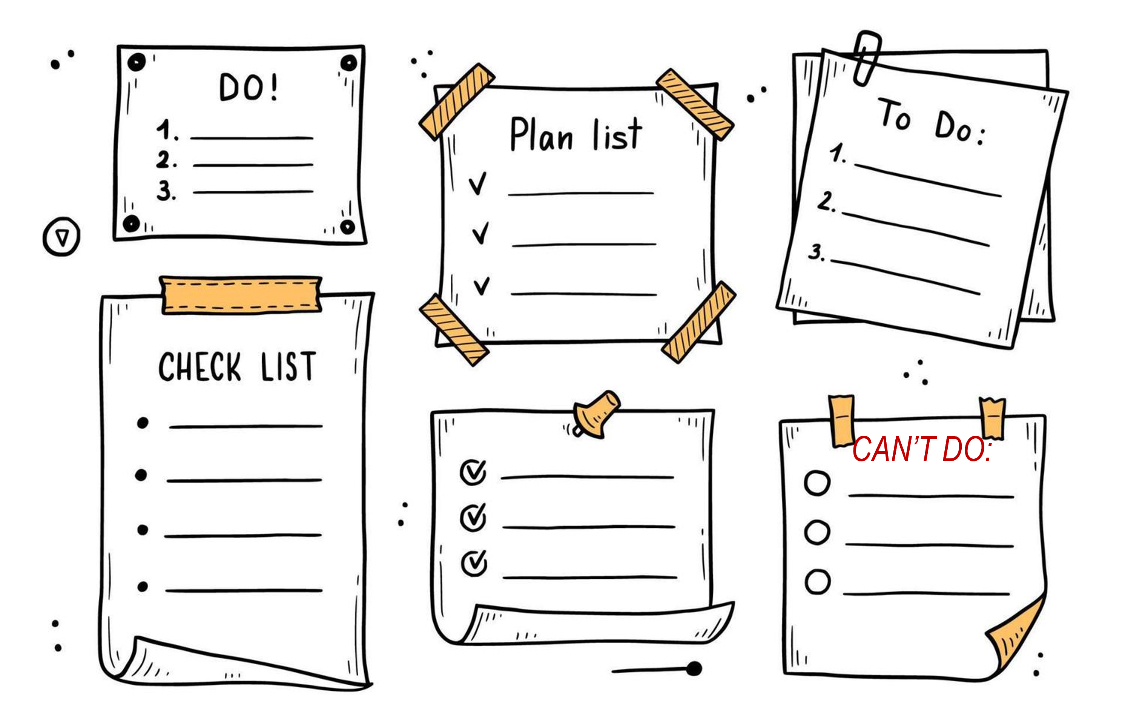
As I sometimes do my “homework” regarding finding the best… and most timely TRIPLE III TIME topic, shared below is a unique quote taken from a presentation by Julie Burnstein entitled: “4 Lessons in Creativity” (2012)… that really helped this week!
“Artists (often) speak about how pushing the limits of what they can do, sometimes pushing into what they can’t do, helps them focus on finding their own voice.”
So here’s the TRIPLE III TIME question: What are YOUR thoughts regarding creating a “Can’t Do” list for yourself?? I believe if you are truly correctly driven… Creating A Motivational “Can’t Do” List may be a fun, non-traditional method of extending your own entrepreneurial spirit.
Think about it?!
First, having a VISUAL of what you feel a need to try, work on and accomplish…would be a very appropriate beginning of utilizing a “Can’t Do” List. Somehow seeing the “Can’t Do” List in writing may show that the challenge is not as big as you believed and/or possibly convince you that you may be over-thinking specifically what can’t be done!
Next, possibly sharing parts of your “Can’t Do” List with others may result in a unique new working arrangement or mentoring situation that offers everyone a creative progressive opportunity. Many times just as attendees in a training situation are hesitant to ask questions that everyone may be concerned about… so too could others also be facing a similar “Can’t Do” situation and resist even talking about it.
Bottomline: Creating A Motivational “Can’t Do” List could serve as a GREAT problem-solving activity both personally and professionally. However, I also realize that some may look at a “Can’t Do” List as self-defeating. Historically it has been my approach to instantly think: “Bring-it-on!…or I know how to get around this problem…or this isn’t as big or confusing as I thought”!
Therefore I “vote” that MOTIVATIONAL is the better position to take!
LEARNING MOMENTS Podcast: Retaining a “SPIRIT” of Innovation

This month my Inspiring Innovations LEARNING MOMENTS are totally… completely and happily all devoted to INNOVATION. It is a professional development area I have prioritized my entire career.
Specifically, the podcast discusses the importance of actions required when Retaining a “SPIRIT” of Innovation in your everyday lifestyle. The suggested actions are not totally new or unique… however they require regular attention to make INNOVATION a true “way-of-life”!
Enjoy the listen.
TRIPLE III TIME: Delegation By “Personal Touch”

The goal of this Delegation By “Personal Touch” TRIPLE III TIME message is to first encourage organizational leadership to look more closely at all personnel to possibly observe their previously unnoticed SPECIAL skill areas. Then think about the traditional methods used within most businesses and agencies to delegate new, unique and or non-traditional tasks/responsibilities. Do you think we would find that the majority of delegators make assignment decisions based on job title, history with the organization or who is the “easiest” person to give an additional undertaking?
Well as a leader… it has always been my position that there should NOT be a rule that governs how specialty assignments are made. Rather I believe the greater benefit will be achieved if one utilizes a Delegation By “Personal Touch” strategy. What do I mean by “Personal Touch?”
Again… it is my belief and experience that the Delegation By “Personal Touch” process will strengthen feelings of personnel empowerment within every organization, better recognize the very unique/specialized skills in your workforce and at the same time put out a workplace message that leadership appreciates everyone’s “Personal Touch” contributions… because they result in better products and services everyday… EVERY WAY!
For example, the Inspiring Innovations Inc. company uses the Delegation By “Personal Touch” principle by strategically empowering each company partner… to contribute based on their special “Personal Touch” skill-set. Whether it is idea generation, online presence, document drafting, product proofreading, marketing and/or growth/change input… each has been delegated priority areas. The result is a cooperatively built product!!
TRIPLE III TIME: Pulling “Positives” From Grievances
- No one likes to talk about grievances.
- No one likes to be part of a grievance situation.
- No one likes to have a question levied at them.
- No one assumes that a grievance can be remedied easily.
I am guessing that a majority of people would be in agreement with those basic statements about grievances… right? But what would be the resulting statements if this TRIPLE III TIME message tried:
Pulling “Positives” From Grievances
Make no mistake… I have avoided this professional development topic from the very beginning of my blog experience. Was I asked multiple times by colleagues to toss out a few comments and suggestions about dealing with grievances… yes… but some things have a way of returning as an uncertain “priority”! So here goes!!
I have always chosen the continuous improvement path as a leader when dealing with grievances. From my early director days I very clearly chose to encourage client/customers to file a grievance if they thought it was needed. The gang that worked with me was instructed to support the grievance process as they worked with the people we serviced. This proactive position with regard to grievances served our organization very well and almost deferred grievance filings.
However, when a significant grievance was received, it was given immediate Director-level attention. In-person meetings were conducted and more prompt resolutions were achieved and always contained a two-sided corrective action(s) outcome. This meant that not only did our organization identify things we needed to do better…but also improvement actions to be addressed by the client-customer were included. Heightened personal responsibility…and co-corrective actions were the standard Pulling “Positives” From Grievances results.
Bottomline: Can I report that our organization was fortunate to have very, very few full grievances…yes! But did it require an always open mind to hearing every side of a problem…YES! Pulling “Positives” From Grievances almost has to be a “culture-priority” in your workplace. I found it to be worth the effort.
TRIPLE III TIME: Exit Interview
 Bottomline: The “Exit” Interview IS a very good appropriate continuous improvement action…for both parties! Professional discomfort is as important as gratitude and praise. Therefore be sure to prepare Exit interview question/discussion points around: Reasons for Leaving/Change/Compensation/Workplace Environment/Professional Development/Leadership/Teaming and QUESTIONS NEVER ASKED!
TRIPLE III TIME: The Absence of LEADERSHIP
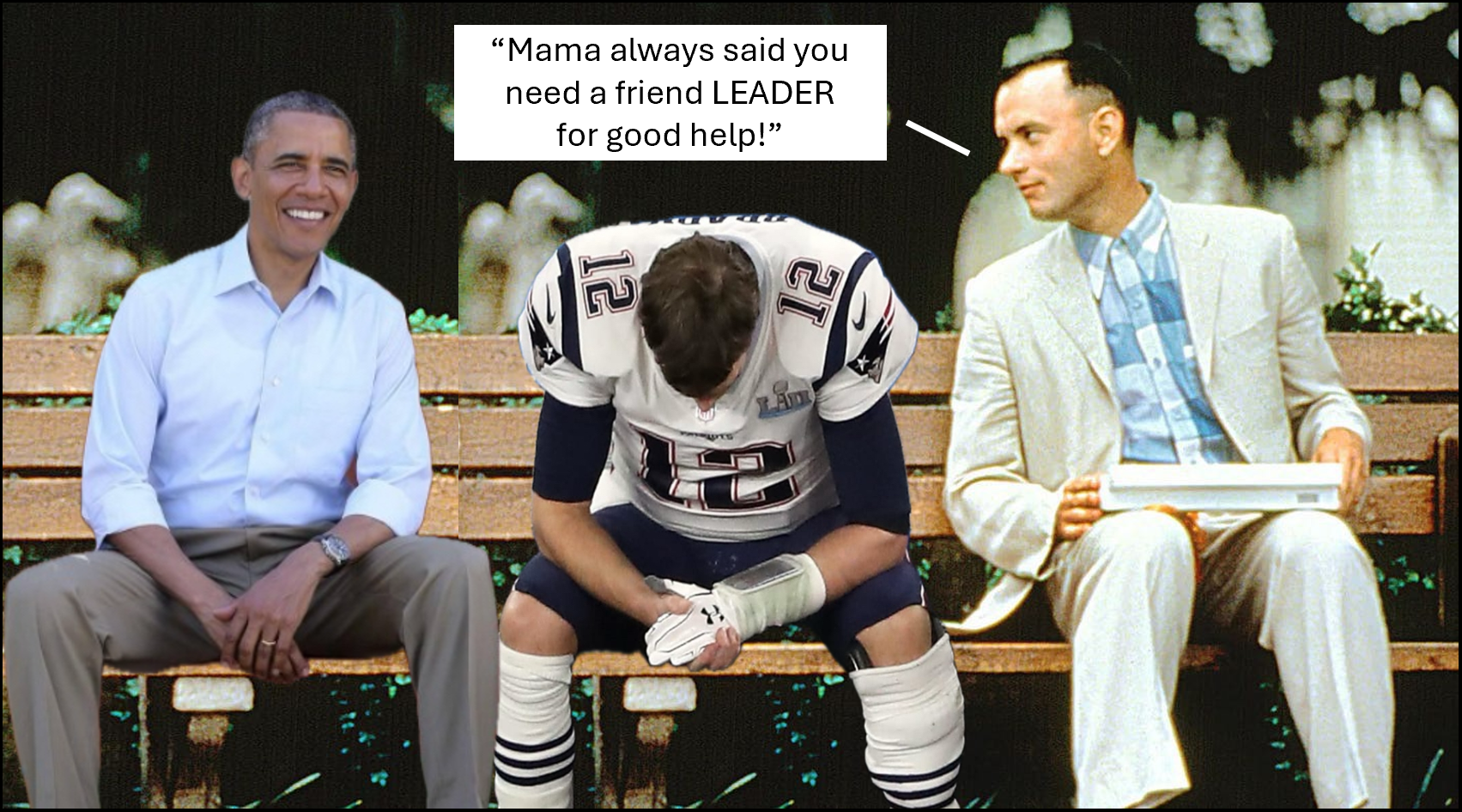
One topic area we have not ever addressed in our special blog format, is finding progress during The Absence of LEADERSHIP.
Think real hard about what is being stated in the TRIPLE III TIME opening sentence… The Absence of LEADERSHIP.
I am NOT referring to times when certain people are on vacation…dealing with an extended illness or having to address a special personal issue that requires a longer time away from work than planned. No…I am thinking about the fact that we are all leaders in some way-shape-or form in our workplaces (no matter the position we hold)…and how do WE respond to The Absence of LEADERSHIP situations.
And just for the record-books…I will admit that I have had my own The Absence of LEADERSHIP moments. Are they frustrating…kind of numbing…and sometimes even anger-generating when you are unsure of who to look to for guidance. However regardless of the feelings…finding the best way forward is totally on YOU! But in case you need a little help…consider and appreciate these unique TOP 10 factors:
- Admitting you need LEADERSHIP help is progress.
- Realizing even the greatest leaders you admire have needed LEADERSHIP help on occasion.
- Appreciating that people in your circle really do rely on you for LEADERSHIP growth.
- Understanding extended LEADERSHIP stagnation can become a bad habit quickly.
- Trying even baby LEADERSHIP steps…is better than zero steps.
- Reaching back into your network for reliable LEADERSHIP help is always a good strategy.
- Not ignoring that you are often someone’s special LEADERSHIP example-setter.
- Prolonging LEADERSHIP absence results in unrecoverable development-time shrinkage.
- Delegating to a colleague for inspiration is an acceptable LEADERSHIP absence recovery option.
- Accepting new LEADERSHIP priorities is a critical part of your professional responsibility.
I hope this TOP 10 helps reverse The Absence of LEADERSHIP for you.
Public Administration: “What Else Mapping”
As you can guess from this week’s TRIPLE III TIME message title… my quarterly guest author American Society For Public Administration article has been published!
The article Public Administration: “What Else Mapping” stresses the importance of gathering groups of common-purposed professionals together in an effort to strategically consider “what-else” public service or product opportunities are missing? Then after identifying a few “what else” concepts… a discussion of “mapping” (who can do what) is described as part of special leadership sessions.
My Public Administration: “What Else Mapping” idea is another version of strategic planning for the public/private sector. I hope it generates innovation in YOUR professional development planning.
TRIPLE III TIME: The 3 Most Important “E-Words!”
Recently for a bunch of frustrating reasons I had to go through “historic” Inspiring Innovations, Inc. records in search of a special start-up document or two! (My recordkeeping has never been real good!?) Then as I was closing my unplanned research…I came across notes on different “speeches” I had given over my career-years. And I must admit that it was fun, memory-strong and very satisfying to re-remember some of the important topics I discussed.
So as I reminisced…I couldn’t stop my mind from asking: “If a unique/cool group recruited YOU to give a special speech today…what would you talk about?
Well it didn’t take me very long to come up with a speech game plan. First because I am a firm believer in “repeating important messages that are worth repeating” I came up with a pretty good idea. Then as always I knew I would need a catchy title for my message…and I decided I would talk about: “The 3 Most Important “E-Words!” Here they are:
#1: EMPOWERMENT
“To give someone the authority, power or confidence to act, make decisions or take control of their own lives and often enabling them to achieve their goals and realize their full potential.”
Throughout my career I have tried to empower those I worked and partnered with to be successful and grow personally and professionally everyday.
#2: ENTHUSIASM
“A strong excitement of feeling!”
I guess because of my professional style…I have set an example of showing enthusiasm in all that I do. The positive impacts of these examples are reflected back to me by family, friends and co-workers.
#3: ENTREPRENEURSHIP
“An individual or small group of partners who strikes out on an original path to create a new business or initiative.”
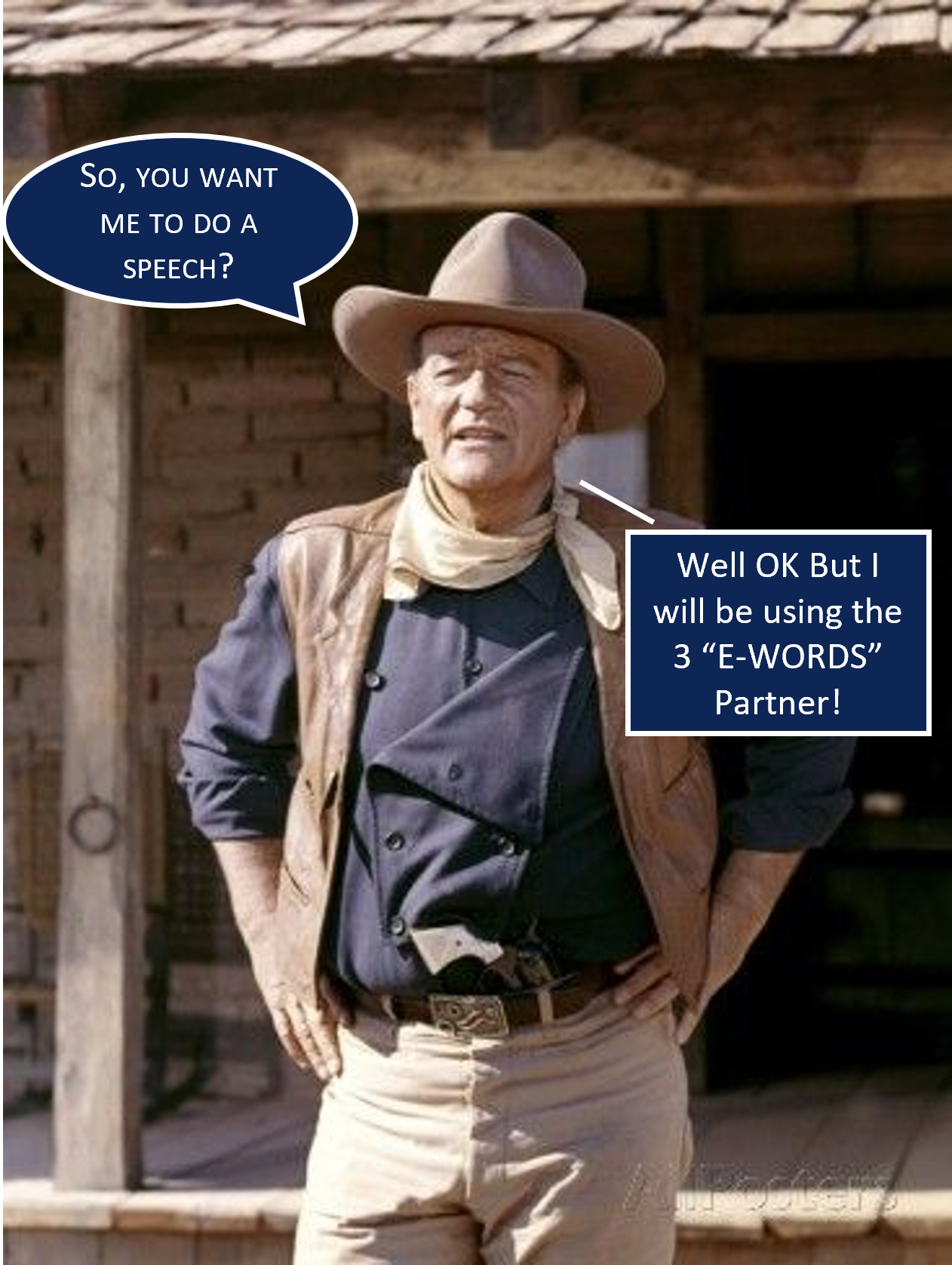 So there you have it…my ideas for the next Inspiring Innovations, Inc. speech: “The 3 Most Important “E-Words!”
As you can guess I would have no problem sharing my thoughts about: Empowerment…Enthusiasm…Entrepreneurship. Maybe my biggest problem would be how to keep the speech short?!
TRIPLE III TIME: Collaborative Communication Marvels
“How often do we find ourselves going in just the one direction? We have a problem, we think we know what the answer should be, and so we set off to talk to the people we think will have the answer were expecting. However, by inviting other people in, people who might not be obvious collaborators, we’re opening ourselves up to new experiences and new information.”(GREAT TED TALKS: Leadership. Harriet Minter)
I have lost count of the excellent…creative…innovative projects and services that I have been a part of as a result of collaborative communication. By this I mean that prior to…during creation of…and final outcome delivery, beneficial communication took place every step and at every organizational level along the way!!
Participating in Collaborative Communication Marvels is always a “what about this idea” opportunity. Better concepts may be offered by communicating at a greater level with those younger or older than those in charge. Likewise establishing a standard Collaborative Communication operating procedure within an organization or business will most often lead to a more complete/correct progressive decision!
Collaborative Communication Marvels are NOT difficult to construct and become part of. Most often collaborative communication experiences are created at no additional cost and/or even dedicated staff time. Rather this style of inclusive communication processes just needs to be established as an overall priority to all involved.

Finally although I am a strong supporter of in-person “get-togethers”…the rise of collaborative communication technology makes it easier than ever before to share ideas and heads off the traditional tendency of having just one owner per project. Culturally encouraging everyone to share work, not as a way to lose ownership of it but instead as a way to achieve the best possible outcome, taps into this spirit of building Collaborative Communication Marvels!
 Inspiring Innovations, Inc.