Category Archives: COMMUNICATION LIVES
TRIPLE III TIME: Product/Services “Knowledge Classes”

Quality customer service has all kinds of measurements. You know what I mean. Friendly appearances inside the company/agency facility, professional/appropriate staff dress, informative communication processes, timely responses to customer questions on available products or services…and we can all think of several more to add to this list. But how often do we think about and test ourselves on conveying: (1) accurate, (2) complete, (3) up-to-date application process specifics, (4) location and consistent product/services knowledge??
Have you ever considered using periodic: Product/Services “Knowledge Classes” as a methodology of continuous improvement for all company/agency personnel?
In this day and age when products and services are continuously modified…access to them become available in a store or online, and the people working with/for us change more than in recent years; it is important to conduct fun, simple but vital Product/Services “Knowledge Classes” for EVERYONE!
Some of the questions that could be addressed in the classes may include but not be limited to the following:
- Do the new and senior staff share common product/services information with people?
- Are all customers given ALL the relative company/agency contact information?
- Is there a standard product /services “elevator sales pitch” that is used?
- Do some employees assume people “understand” product/services application and time specific information…and then take them for granted?
- Will potential customers walk away with the right product/services information that will enable them to positively pass it on?
I realize conducting periodic Product/Services “Knowledge Classes” sounds corny and maybe even insulting to some. However, before you cancel this TRIPLE III TIME message idea…give it a try.
TRIPLE III Time: Keeping the Extra “D” (Drama) Out of Quality Discussion!
 Yes, I realize this is the Friday before Christmas and I should be sharing thoughts that are cheerful and smiley! Right?? But sincerely the historic purposes of every TRIPLE III TIME message has been to offer progressive ideas and approaches to life and workplace challenges.
Hence, with this long-term priority in mind, I believe even more today…we need to address: Keeping the Extra “D” (Drama) Out of Quality Discussion!
We have all heard the statements: “Wow this workplace is full of drama! Or I don’t even try to bring up tough issues…because he or she goes dramatic! Or I was just trying to explain the opposite viewpoint…and drama took over!” But has anyone in your network circle lately or ever devoted special time to sit down and positively create a meaningful but firm TOP 10 approaches on how to assist in Keeping the Extra “D” (Drama) Out of Quality Discussion!? Well, here’s my Christmas time attempt:
- Be prepared to LISTEN much more…and talk less.
- Respect that NO ONE is more right or more wrong during the discussion.
- Apply extra FOCUS on where the drama-driving information is coming from.
- Fairly assess how much of the real issue…REALLY matters.
- Place an OVER-REACTION filter on the discussion to prevent out-of-proportion blow-ups.
- Don’t be surprised by INCORRECT timeframes for resolution of the issue.
- Attempt to retain SIMPLICITY by handling issues one at a time.
- Avoid bringing up the past…it is always OLD NEWS.
- Remember how others deal with an issue is RARELYthe right solution for your challenge.
- 10. Show appreciation by allowing someone to STEP OUT of the drama…and take a positive breath.
In some ways this almost feels like the “short list” for Keeping the Extra “D” (Drama) Out of Quality Discussion! However, my hope is that it is a unique TRIPLE III TIME gift to everyone as a way of staying happy and content during these often-stressful holiday times.
TRIPLE III TIME: Quality COMMUNICATION Management (QCM)
People in all areas of their lives often are concerned about how well they communicate. Whether it is with family members, co-workers, students, friends or colleagues in their career field… Quality COMMUNICATION Management (QCM) is a critical, priority concern.
Today more than ever before, I believe the greatest challenge in the area of high quality communication is the diversity of communication options. Think about it. Tweets, emails, phone calls, letters, texts, podcasts, FaceTime, in-person meetings and other social media-isms…make the objective of delivering a complete and informative message understandably difficult.
So what’s the III self-help answer: Complete a Quality COMMUNICATION Management (QCM)assessment/evaluation! What do I mean?
My “official” QCM Assessment/Evaluation calls for a periodic “Test of 3” in specific communication areas. For example:
- Take 3 email examples and determine if they are complete messages or just “blips” of what you want to say.
- Take 3 cell phone messages and determine if the discussion assumes the call receiver knows everything you expect they do.
- Take 3 formal letters you have written/sent and assess them for purpose, content, receiver expectations and timeliness.
- Take 3 meeting agendas that you have utilized in recent in-person meetings and evaluate them for main topic(s), use of personnel time and outcomes.
- Take 3 virtual training session recordings and measure your learning points, questions asked and knowledge obtained.
Conducting multi-media Quality COMMUNICATION Management (QCM) assessments/evaluations is very…VERY IMPORTANT in today’s world. Use the five questions in this TRIPLE III TIME message as starter points…then create your own measuring sticks. And go ahead be critical…it will only make you better!

TRIPLE III TIME: Considering Untold CAREER STORIES
One of the most impactful and favorable tools I use in my classroom teaching moments and thought-provoking consultant opportunities is the sharing of personal CAREER STORIES. For a ton of solid reasons, listening and discussing the life-building experiences contained in every persons CAREER STORY is the greatest form of true, actual instructional content.
Hesitancy and modesty are often “limiters” of quality details that those invited to contribute their CAREER STORIES use during their presentation times. However, with the right prompting from me…the extra special details most often do come out!
So as I was looking at my notes regarding this week’s TRIPLE III TIME messaging Considering Untold CAREER STORIES…I could not help but think about what my Dad would say if he was pushed onto the guest presenter stage??
Well maybe he would:
- Tell everyone he only had an 8th grade education but wasn’t afraid to try new farming methods or crops…and make more money.
- Explain why it was important to try different brands of machinery (Massey Ferguson/International/David Brown/New Holland/John Deere) and not pick just one because that’s what everyone else was doing.
- Encourage everyone to help others because that is what farmers in our neighborhood did when someone wasn’t doing so good.
- Report that he liked innovation before it was called innovation. Because he allowed his kids to raise chickens, pigs, ducks, rabbits and even different kinds of calves…just to learn about being special.
- Maybe conclude about the importance of having hobbies that you love. Like playing accordion in a polka band for people that really appreciated the music.
Yes I believe he would have needed some prompting…but it would be worth the push! And I hope that this message encourages you to consider your own CAREER STORY and what unique experiences you might recall and share.
TRIPLE III TIME: Creating A QUALITY Communication Culture
Let’s start this TRIPLE III TIME message with a very simple question: Has your business or organization ever set aside a solid amount of time and resources with the single objective of: Creating A QUALITY Communication Culture? A culture of communication sessions brought together by everyone at all levels and with the goal that we will communicate better and more completely than anyone…anywhere?
Well have you?
Creating A QUALITY Communication Culture in your workplace/organization is not a one-time thing…it is a forever assignment. And before I find myself taking up valuable TRIPLE III TIME message space explaining why…let’s go quickly on to a TOP 10 Creating A QUALITY Communication Culture list of suggestions. Here goes:
- Anyone, anytime in an organization can initiate a QUALITY Communication Culture improvement concept.
- A QUALITY Communication Culture effort has no delivery limitations (i.e. oral/written/email/text/anything!)
- Using a “grapevine mentality” is a QUALITY Communication Culture prohibition.
- You do NOT need leadership’s approval to improve your Communication Culture.
- A QUALITY Communication Culture always requires you to re-review your message before you send it.
- Creating a QUALITY Communication Culture means YOU will take responsibility for what your message says.
- Remember that the skillful use of the three (3) T’s all play a role in Creating A QUALITY Communication Culture: Tone…Timing…Technology.
- Don’t Communicate just to speak…have a valid point.
- Perfection does not exist even in A QUALITY Communication Culture…so give people breaks.
- Finally, silence is allowable in A QUALITY Communication Culture…it can send a powerful message.
Creating A QUALITY Communication Culture is so vital in all workplaces and yes even at home. These special TOP 10 suggestions are probably just a starting spot to help grow your QUALITY Communication Culture…so get started!
TRIPLE III TIME: A Recruitment & Hiring Make-Over
We have talked before about how important it is to be a continuous “student of your job”! As I work to be the BEST-IN-THE-BUSINESS consultant…I regularly review (at least twice a year) the skills I have and use in delivering my Innovation Advisor services. What kind of questions do I utilize to conduct my own personal skills inventory:
- Things I excel at?
- Useful skills I possess?
- Concepts/processes/procedures I have in-depth knowledge about?
- Things I would rather be doing?
- Things wild horses couldn’t make me do?
How would YOU answer these questions? And if you are wondering if I came up with these questions on my own…please know that as a “student of your job”, I borrowed these from Entrepreneur Magazine’s Start Your Own Consulting Business booklet.
So how does this information apply to this week’s TRIPLE III TIME: A Recruitment & Hiring Make-Over message?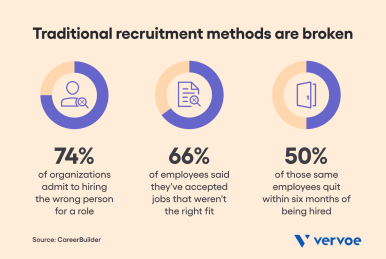
This week I want you to think about your historic approach to recruitment and hiring for your organization. Do you ask the right questions during an interview? Or could you change your process and begin with candidates completing a skills inventory worksheet with the five questions I listed earlier?
Could you alter the job posting you utilize and request information on:
- Their position on working from home?
- How the candidate shares a “bright idea”?
- Their understanding of the customer-base you serve?
- Their definitions of teamwork, innovation and personal responsibility?
Bottomline: You get what you ask for! If you follow traditions in your recruitment and hiring practices…you will only get what you have traditionally got.
Experiment with non-traditional…it might be fun!
TRIPLE III TIME: The Power of Career Stories
This week’s TRIPLE III TIME message is totally and simply all about highlighting The Power of Career Stories. Everyone has a unique Career Story to tell. Age doesn’t matter! The Career Story told by a twelve-year-old to their aunt or grandmother has tremendous value with regard to their new understanding the challenges of a “soon-to-be” teenager in today’s world. Likewise, the 70-plus year old with almost 50 years of customer service experience from both the public and private sectors, can explain “QUALITY” better than any textbook.
One of the most educationally impacting components of my college class instruction structure is the sharing of Career Stories by professionals I invite in each semester. Whether it is a local business person, elected official, public servant, instructor colleague or maybe just a great friend; the learning value of each Career Story is priceless.
 Sometimes listeners are drawn in by the passion of the speaker and the energetic words they use to convey the highs and lows of their life journey. Other times a certain Career Story focuses on a specific vision that a person had at one time in their life but it was somehow denied due to personal circumstances. Each Career Story always carries its own special personality and areas of continuous learning.
Bottomline: Take some time to make a page of notes about YOUR CAREER STORY. And if possible, hold a CAREER STORY time event in your workplace. This area of professional sharing can have a positive workplace culture impact…and you will never know if you don’t give it a try.
TRIPLE III TIME: The Negative Side of “Always A Better Way!”
If you look at my website, spend some time reading past blog messages and/or listen to a few Inspiring Innovations LEARNING MOMENTS podcasts, you will realize a continuous theme that suggests there is:
“Always A Better Way!” (To Get It Done)
Now at first glance this belief statement appears innocent enough and hopefully encouraging, however if taken with a negative spirit…I appear to be proclaiming that no matter how well you complete a job or task you are accomplishing it will be “Never Good Enough”.
 During the course of my career, I have been told that on occasion the drive to find “Always A Better Way!” to improve a service or project has prompted co-workers, organizational partners or colleagues to believe their ideas, support or work will never be sufficient in my view…no matter what. And the negative side to this personal or professional belief is that it causes individuals to lose their motivation and creative energy to go above and beyond what is normally expected.
So given this “Always A Better Way! vs. Never Good Enough” analysis…what is the TRIPLE III TIME message I am really trying to deliver this week?
Because we are all people who work with people everyday…EVERYDAY, be sure to convey a progressive, positive “Always A Better Way!” SPIRIT as part of your operational style. I believe individuals will honestly recognize a “Never Good Enough” negative message when they hear it. However, the key will be in the quality, effective communications you use. I think you know what I mean.
Never underestimate the impact conveying the right communication SPIRIT can make!
TRIPLE III TIME: Negotiating With Confidence & Class
We are all sometimes…somewhere placed in a situation when we have to utilize our negotiating skills. The issue or issues being negotiated may appear simplistic and easy to respond to…but often there are multiple “behind-the-scenes” challenges that only come to light as the discussions/debates of negotiating unfold.
So how do you identify and develop YOUR negotiating skills. Do you obtain them from parents, bosses, teachers, colleagues….or mostly from experiences? Yes, again there are helpful seminars on negotiating but have you ever sat down and considered the “art” of Negotiating With Confidence & Class and maybe a TOP 10 list of ideas that may help?!
Well just in case you haven’t given Negotiating With Confidence & Class much thought, this week’s TRIPLE III TIME message is just in time to offer a few helpful hints.
- Minimize the number of major issues addressed at one setting.
- Be sure you know what YOU want…but don’t show-up with a “decision-made” attitude.
- Be sure everyone understands the issue the same way/completely/with common grounding.
- Recognize and appreciate the negotiation responsibilities and skills of others in the session.
- Listen with both ears and with both eyes.
- Ask intelligent and respectful questions.
- Try to NOT allow a “postponement trend” to evolve.
- Negotiate options that enables everyone to “win” something.
- Remember negotiated resolution actions must be thoughtful and doable.
- Finally, never under-respect the importance on how the negotiated decisions impact the future of others.
Negotiating With Confidence & Class may require you to professionally “change chairs” to best understand the positions of others during discussions. And if you do it well…I promise respect will follow.

TRIPLE III TIME: Are You Listening?
“We had received a few letters, and generally they were positive, but they would say: ‘It’s really too bad you use those foam peanuts. Have you thought of using something else?’ or ‘I am really going to have to start looking for another source if you guys don’t stop using them.’ People wanted to continue to order products from us, and they liked our service, but they objected to us using the foam peanuts. I figured if so many people had taken the time to write to us, then there must be many more people thinking along the same lines. So we stopped using foam and started using a tissue made from 100 percent recycled magazines instead.”
– Patricia Gallup, PC Connection, Inc.
The purpose of sharing this quote regarding customer feedback from a quality company is to ask you the question about your customers: Are You Listening?
Many times workers in companies and/or agencies who are responsible for collecting customer status or satisfaction information do not give this function the continuous improvement attention it deserves. Although it is true that customers are not always thoughtful and complete in their responses to quality survey requests, you can never assume you won’t find that “gold nugget” suggestion somewhere…sometime!
This week’s TRIPLE III TIME message: Are You Listening? is fully intended to force everyone to question themselves about their customer service follow-up process. Do you do it just because you must…or in search of a good idea? Do you really pay attention to the responses…or do you just check off who responded and how many? Or is your customer follow-up process outdated and just an assignment…and thereby self-defeating in its purpose?
Great companies/organizations put stock in getting quality feedback from their customers. Are you GREAT?
 Inspiring Innovations, Inc.