Category Archives: COMMUNICATION LIVES
TRIPLE III TIME: Pulling “Positives” From Grievances
- No one likes to talk about grievances.
- No one likes to be part of a grievance situation.
- No one likes to have a question levied at them.
- No one assumes that a grievance can be remedied easily.
I am guessing that a majority of people would be in agreement with those basic statements about grievances… right? But what would be the resulting statements if this TRIPLE III TIME message tried:
Pulling “Positives” From Grievances
Make no mistake… I have avoided this professional development topic from the very beginning of my blog experience. Was I asked multiple times by colleagues to toss out a few comments and suggestions about dealing with grievances… yes… but some things have a way of returning as an uncertain “priority”! So here goes!!
I have always chosen the continuous improvement path as a leader when dealing with grievances. From my early director days I very clearly chose to encourage client/customers to file a grievance if they thought it was needed. The gang that worked with me was instructed to support the grievance process as they worked with the people we serviced. This proactive position with regard to grievances served our organization very well and almost deferred grievance filings.
However, when a significant grievance was received, it was given immediate Director-level attention. In-person meetings were conducted and more prompt resolutions were achieved and always contained a two-sided corrective action(s) outcome. This meant that not only did our organization identify things we needed to do better…but also improvement actions to be addressed by the client-customer were included. Heightened personal responsibility…and co-corrective actions were the standard Pulling “Positives” From Grievances results.
Bottomline: Can I report that our organization was fortunate to have very, very few full grievances…yes! But did it require an always open mind to hearing every side of a problem…YES! Pulling “Positives” From Grievances almost has to be a “culture-priority” in your workplace. I found it to be worth the effort.
TRIPLE III TIME: Dealing With Diminished Listening
In my roles as college course instructor and Inspiring Innovations consultant, there really seems to be no limit or common theme regarding topics or questions on special issues that are raised. One recent particular area of interest and discussion however is the short and long-term impacts from the COVID years and advancement of virtual/remote learning and its life-style acceptance. Almost in every instance… both issue areas seem to be uniquely linked and unfortunately the result of most discussions are negative.
So for this TRIPLE III TIME message, I will provide what I feel is the most negative outcome stemming from COVID impacts…blended with virtual/remote learning and usage: Dealing With Diminished Listening.
I believe our greatest personal and professional loss related to these two situations… is Dealing With Diminished Listening in all sectors of our lives.
Think about it.
Consider first todays altered “locations” for professional learning and listening. Maybe it is just sitting alone in a room and staring at a screen. Interpersonal listening is totally minimalized. Quality listening is questionable.
Next think about large or small interruptions… that others may not see during virtual learning experiences. If someone in a learning situation is facing off screen interruptions… how can they offer their full listening attention?
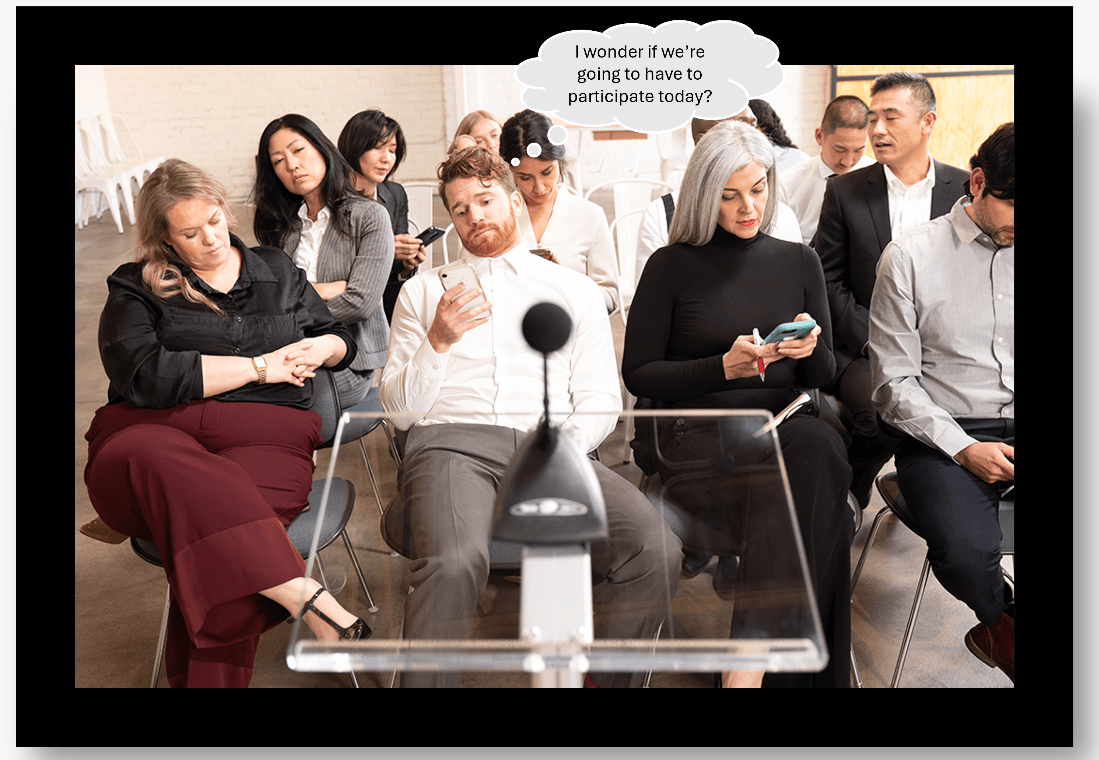
Also when Dealing With Diminished Listening situations are participating individuals becoming less engaged in professional discussion? Some people get into a poor mindset and wait for someone else to ask a certain question… or hesitate to participate “just because”?! So are they engaged?
Finally consider the negative level of Dealing With Diminished Listening when others enrolled in a class or involved in a business meeting are represented by a black box with their name on a screen! Complete listening is demonstrated by facial expressions, quizative looks and smiles too… right?
Unfortunately “listening” in this (I’m just dialed-in) fashion can contribute to a sense of disinterest and even disrespect to others involved in the session. Likewise in a distance learning situation there is often a loss of interaction spontaneity and hesitation to participate that somehow is just an unnatural human reaction to the growing listening gaps.
Bottomline: I guess what I am trying to say with my Dealing With Diminished Listening message title and brief examples is that peoples ability and willingness to provide quality listening in many situations has gone significantly down. And yes we can blame it on COVID and the evolution of technology. BUT… rebuilding LISTENING is totally up to all of us!
TRIPLE III TIME: Building YOUR Report
No matter what type of occupation you find yourself employed in…there will be a time (or maybe even often) that you will be required to provide a status/performance report to those supervising you. And it is almost ironic that more recently in my consulting worlds-of-work that a number of questions have been raised about MY ideas about what approaches I believe make a GREAT and not just a mediocre report. So with these thoughts in mind…I decided to dedicate this week’s TRIPLE III TIME message to: Building YOUR Report with a special TOP 10 list of suggestions.
- Assess your audience (think about age, job connections, interest levels, personal qualifications, etc.)
- Use “At-A-Glance Understandability” as a priority as you are Building YOUR Report.
- Be sure to state the major purpose of your report within its content…almost immediately.
- As appropriate make performance comparisons (via competition/past performance/goals set).
- Include visuals as a simple means of making specific points.
- Build in a pie charts or graphs to reflect numerical information.
- Try to incorporate bullet-point narrative details to offer short explanation specifics.
- Be versatile in data reporting by use of percentages, dollar amounts, sizes, etc. (NOT just numbers).
- “Proof-read” as you are Building YOUR Report to ensure there is NOT a need to “evaluate-this-evaluation”.
- Lastly always finish your report document with an invitation to everyone to add-to and/or recommend revisions.
With all of the advanced systems for completing quality research, accessing world-wide information and maintaining up-to-date data collection options… Building YOUR Report can be an innovative opportunity.
Remember quality is not measured by the length of YOUR report…and authenticity matters.
TRIPLE III TIME: Collaborative Communication Marvels
“How often do we find ourselves going in just the one direction? We have a problem, we think we know what the answer should be, and so we set off to talk to the people we think will have the answer were expecting. However, by inviting other people in, people who might not be obvious collaborators, we’re opening ourselves up to new experiences and new information.”(GREAT TED TALKS: Leadership. Harriet Minter)
I have lost count of the excellent…creative…innovative projects and services that I have been a part of as a result of collaborative communication. By this I mean that prior to…during creation of…and final outcome delivery, beneficial communication took place every step and at every organizational level along the way!!
Participating in Collaborative Communication Marvels is always a “what about this idea” opportunity. Better concepts may be offered by communicating at a greater level with those younger or older than those in charge. Likewise establishing a standard Collaborative Communication operating procedure within an organization or business will most often lead to a more complete/correct progressive decision!
Collaborative Communication Marvels are NOT difficult to construct and become part of. Most often collaborative communication experiences are created at no additional cost and/or even dedicated staff time. Rather this style of inclusive communication processes just needs to be established as an overall priority to all involved.
Finally although I am a strong supporter of in-person “get-togethers”…the rise of collaborative communication technology makes it easier than ever before to share ideas and heads off the traditional tendency of having just one owner per project. Culturally encouraging everyone to share work, not as a way to lose ownership of it but instead as a way to achieve the best possible outcome, taps into this spirit of building Collaborative Communication Marvels!
TRIPLE III TIME: “Unconstructing Walls & Fences”
As I have thought about important “lessons-learned” during my career work, one of the most significant has to be “Unconstructing Walls & Fences”.
Well once more I see the quizzed look on a lot of faces out there and everyone quietly whispering… “what is he really talking about this time?”
This week’s TRIPLE III TIME message entitled: “Unconstructing Walls & Fences”…simply is about repairing lost business partner relationships and/or just plain friendships in general. Sometimes the relationship disappearance was based on a difficult historic disagreement or a personal belief matter or maybe an issue no one can ever exactly recall. Regardless the walls and fences were constructed and have remained in tact…and the value of taking some kind of corrective action remains insignificant. Don’t allow this to happen or continue to happen to YOU!
Today my list for “Unconstructing Walls & Fences” begins with a recommendation to always TAKE THE HIGH ROAD. Be the lead person and let old news be just that…old news. Also be the person who talks only about what could be…rather than what has happened in the past. Taking the position to lower and eliminate any area of negativity, disrespect, misunderstanding and/or distrust…will place you continuously in a professional progress position!
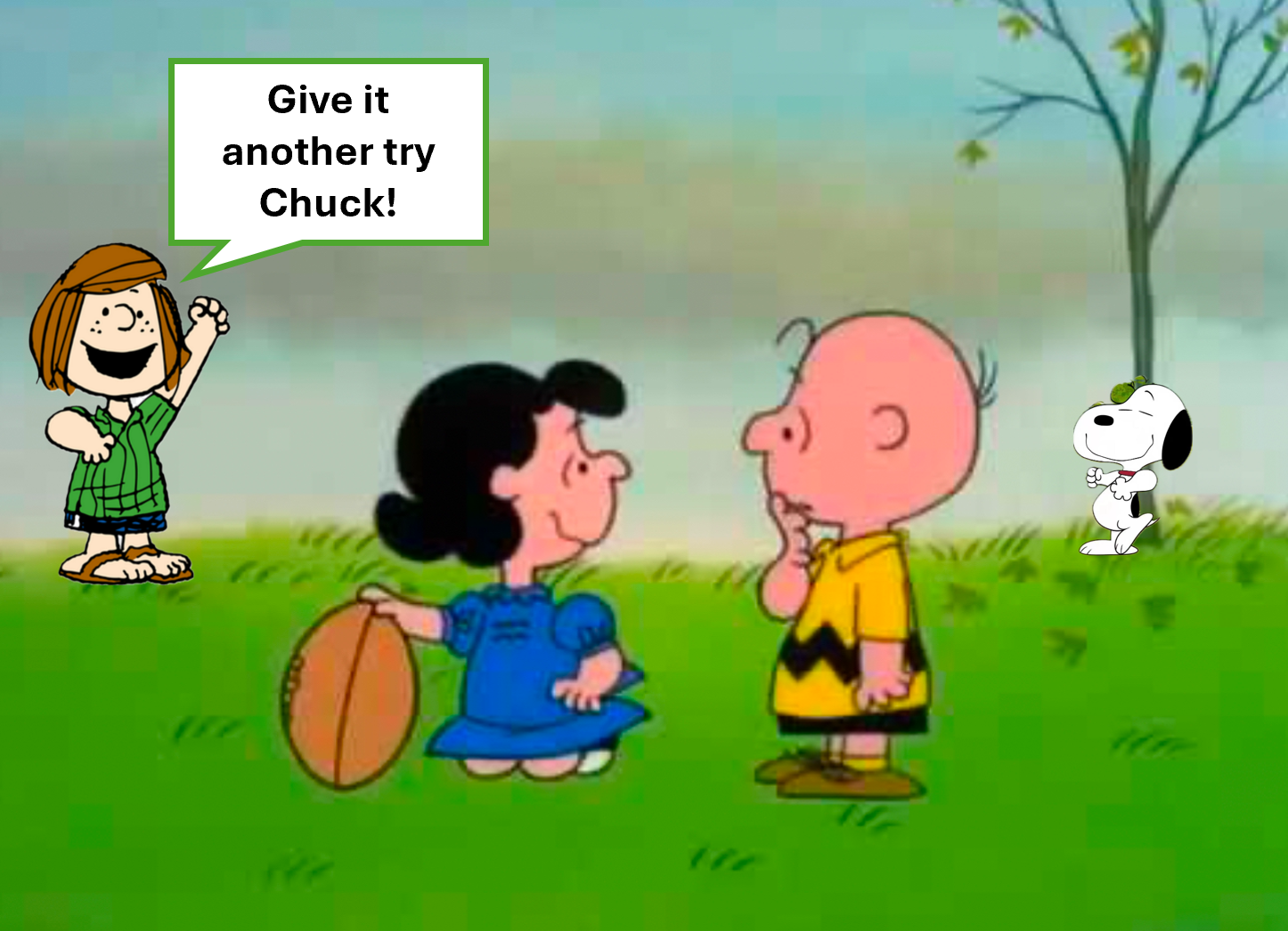 In the longest of runs I can tell you that having no walls or fences will offer you a number of great opportunities. Being able to reach back and ask for colleague to colleague help in so many different ways…will be a tremendous professional asset for you and those you work with!
TRIPLE III TIME: Newsletter “Particulars”
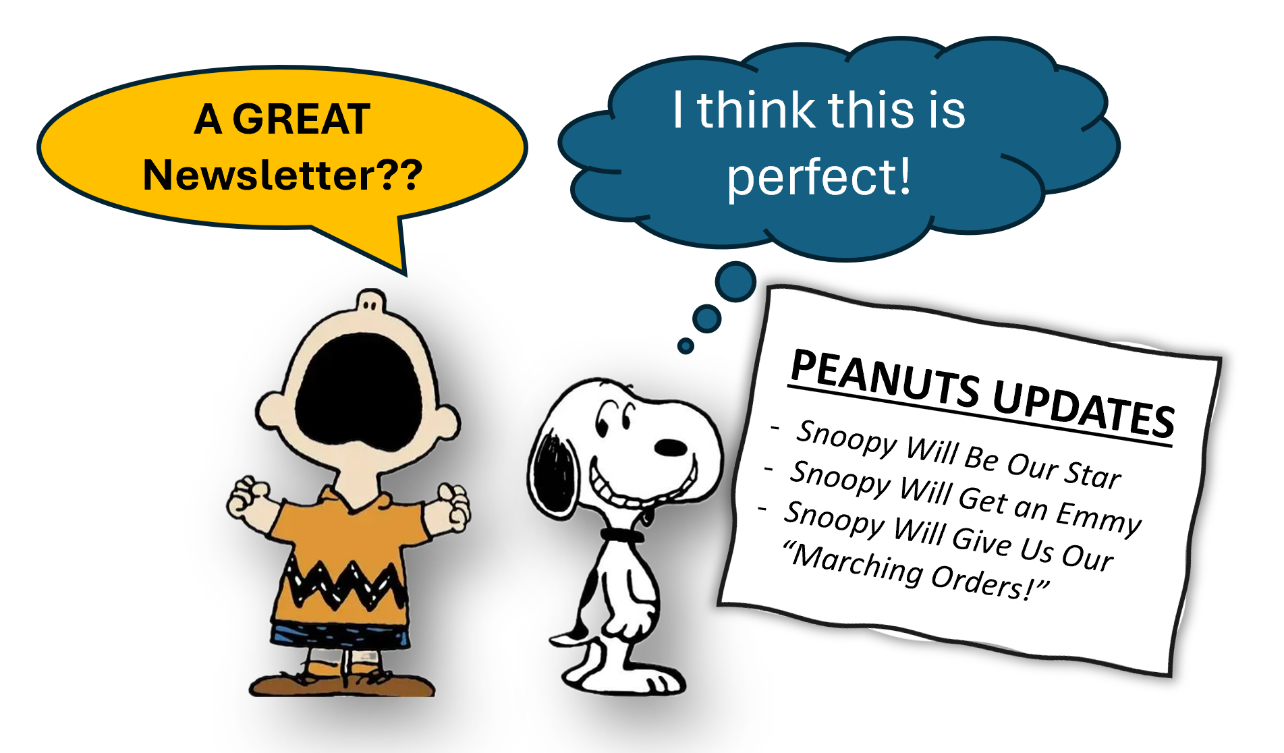
This week’s TRIPLE III TIME message is one specially requested by a long-time reader. Her request was more about my “opinions” regarding company or organizational newsletters…rather than my thoughts about what qualities make one a GREAT ONE! So I guess as you read through the message…I believe you will find I have taken the middle-of-the-road position when discussing Newsletter “Particulars”.
First, I believe internal and external newsletters can be HIGH VALUE if designed/developed correctly. Regularly…consistently taking advantage of the ability to share accurate, enthusiastic information can prove “priceless”! GREAT newsletters should generate a vision of the future (what’s next) and thereby give readers something to look forward to.
Second I really don’t support a continual “report-out” document that only talks about what’s been done (i.e. old news!). Reporting pieces on progress are acceptable…especially if they describe what they mean for the future. Also, if you are the person most in charge of newsletter production, think about visuals reflecting today and tomorrow views on issues/products/services. Colors, straight-forward wording and terms that invite people to want more info are important.
My old TOP 10 weekly staff news-piece was a fun motivator. Every Friday it listed things to look forward to the next week…what staff would be responsibly involved…and what new stuff may result and determine who else may be given an assignment?! All about the future…all the time.
Finally when you think about Newsletter “Particulars”…don’t have big hopes of return communications from the readers…good or bad. Newsletters should be primarily considered a leadership privilege to better inform…set priorities…offer clarity…and possibly motivate those in the targeted audience.
Don’t waste this critical opportunity.
TRIPLE III TIME: In-Person Times
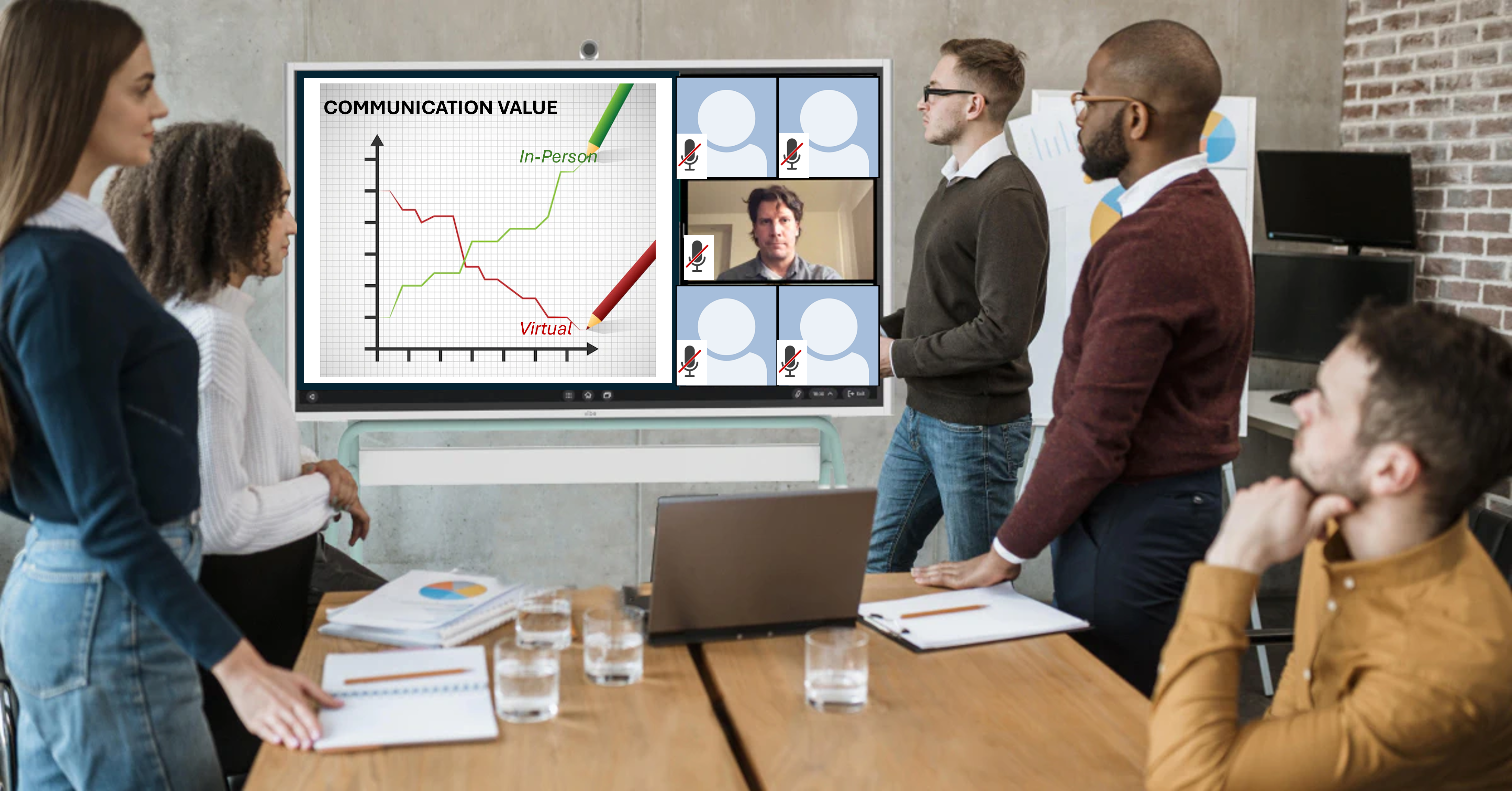
Somehow I wish I had recorded the times the discussion of in-person versus virtual connections occured… and the values of meeting face-to-face were highlighted. Yes, I understand that “distance” learning, meeting and communicating are just the new times requirement… but did I say “that I believe only half as productive!” So yes again I know that time… money…. speed and efficiency matter… but what about authenticity… clarity…. and personal sincerity? How do you measure those?
Today I feel In-Person Times in the workplace have increasingly gone up in value.
Think about it!
Think about meetings… presenting… interviewing… teaching and just plain LEADING. Think about the ability to introduce something totally unique to a group of faces on the big screen. Can you walk over and ask… ”do you really get it?” Can you convince them that every meeting is a special professional “once-in-a-lifetime” opportunity? Or are you just hoping that the session offers some level of quality understanding and need for solid further action? Or has progressive convenience replaced the priority for In-Person Times?
Bottomline: In a way this TRIPLE III TIME message may sound sarcastic or maybe a little bit old-fashioned… right? However, my goal for this week is to re-review the professional value of taking greater steps to require In-Person Times in workplaces. Don’t minimize its impacts. Don’t take it for granted. And don’t let “good enough” in the operational areas of meeting, learning, and communicating be your organizational standard. Go the extra mile in providing In-Person Times and your workers and customers will realize the benefits.
TRIPLE III TIME – RESPECT: Common Sense Professionalism
Providing the best instruction to my American Government & Politics classes has become a little more challenging this semester. With the upcoming election now just a week away…the questions and discussion about each candidate at every level of government…has become more direct and intense for all the right reasons.
As you can guess we talk about:
- Political party differences
- Personal positions on issues
- Priorities for our country/state
- Information shared by candidates and their methods of communication…
and yes multiple points-of-view are openly expressed. Regardless of their beliefs and attitudes…the single, most, important position I require each student to understand, accept and utilize is:
RESPECT: Common Sense Professionalism
Why is this the most critical lesson to be learned??
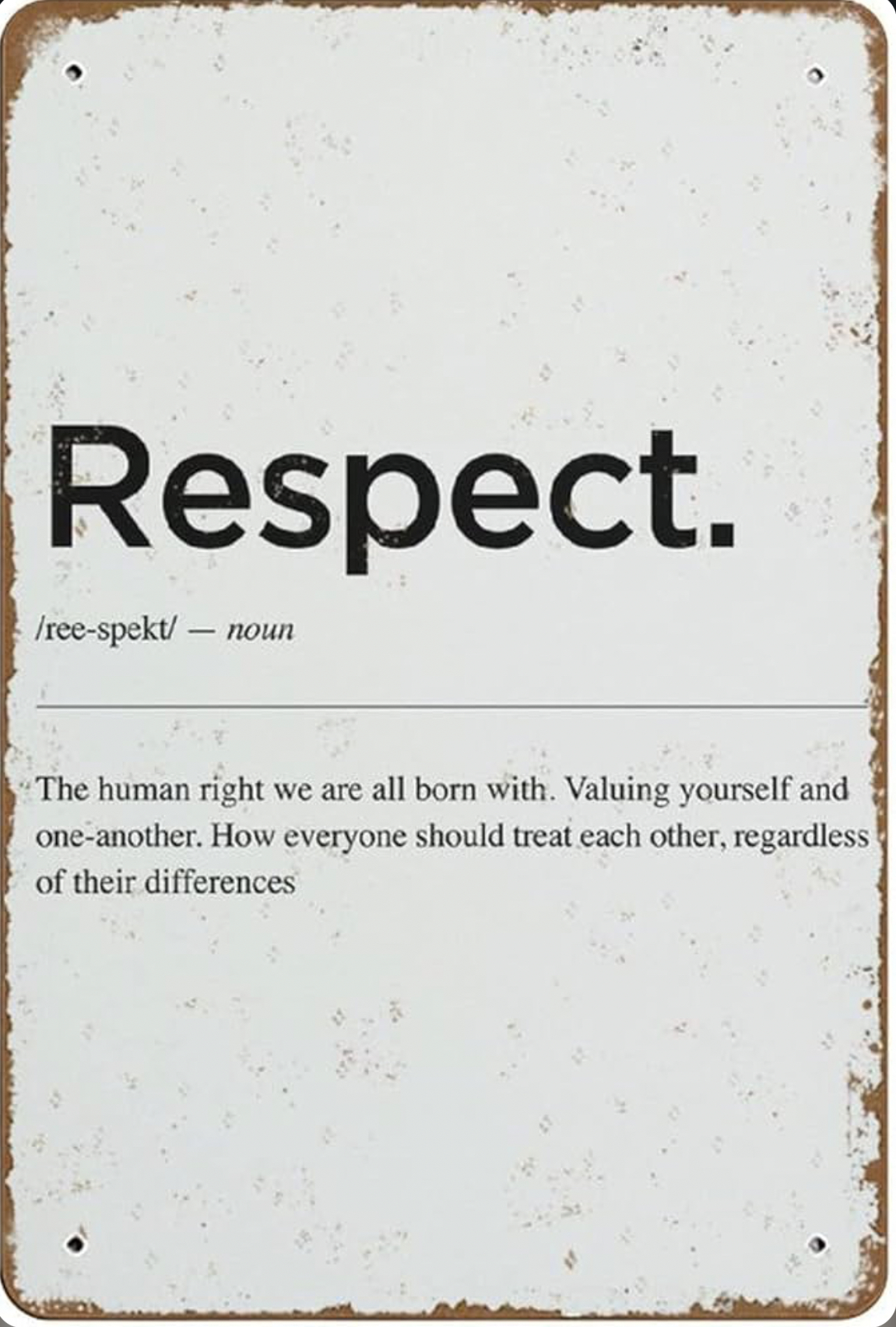 Well I let them know that in politics…or on the job…or on personal life issues, the individual that follows a RESPECT: Common Sense Professionalism code of conduct… will most often be the more successful person. And regardless of your role as a leader, co-worker, colleague, friend, neighbor, student, teacher, political candidate and/or life partner; if you appropriately show a professional level of common sense respect to everyone you interact with…the right kind of respect will be returned.
The best part of this week’s TRIPLE III TIME message: RESPECT: Common Sense Professionalism is that YOU own its potential. YOU control YOUR potential to offer the best form of professional respect. So use that control/potential wisely everyday…EVERYDAY! The positive, progressive, professional returns will be unlimited.
TRIPLE III TIME: Mini-Info PIT STOPS!
 Communication designs and methods are probably one of the largest change areas we are experiencing everyday. I know I would not be able to list all the options that are out there right now…because I would forget a bunch…but just realizing the modern day expanse of the communication industry…is just overwhelming!
So to try to offer understandable, usable communication skills improvement considerations in our limited TRIPLE III TIME message-space…lets discuss what I call: Mini-Info PIT STOPS!
First let’s think about preparing to effectively communicateout a sizeable number of information items. Consider the following:
- Build your important concepts into a series of bullet points. You may have to draft them a couple times but simple, direct, interpretation-free would be the best structure.
- Use visuals to make a statement on an issue. Try it before you question this suggestion.
- Condense your timeframes. Think about limiting time/focus on a certain issue to15 minutes. If you allow more time…people will regularly “take it”.
Now let’s “turn the tables” and think about actions tomaximize your receipt of valuable information. Consider the following:
- Practice critical listening. Screening in communication highlights is a critical professional development skill…everyday!
- Try to “taste” items being communicated to better determine their understandability.
- Don’t go back for information “seconds”. It’s ok to be “concept-full” with small portions.
Bottomline: Sometimes people almost progressively “choke” on receiving too much information too fast. Creating a communication style which supports Mini-Info PIT STOPS will allow both the communication giver and receiver the time to better digest the message(s) being offered.
TRIPLE III TIME: “In-Person or Convenience”
Over the last at least 10 years, I have watched the meaning and quality of effective communication fade. You know where I am going with this TRIPLE III TIME message…and the “old-timer” position I am taking concerning “In-Person or Convenience” communication impacts! But before you stop reading and apply that old-school label to me…let me offer a few “reverse-the-trend” thoughts.
 First, think about the “real” feelings gained when meeting/conversing with someone In-Person! I believe the completeness of every discussion and an extended feel for a “what next” partnership should reverse every concern about miles traveled or extra time required to make an In-Person event happen.
Next think about video and/or text message limitations. Do people subconsciously limit their thoughts…problems…ideas…points or concepts needing discussion? Even In-Person telephone calls seem to invite more in-depth conversation opportunities than words or pictures on a screen!
Lastly (at least for this week’s message), think about the engrained importance of simply “seeing who you are talking to…and them seeing who they are talking at”! Facial expressions…genuine laughter…quizative looks…direct negativity and absolute support are all critical components of meaningful/quality communication everyday…EVERYDAY!
Bottomline: Every person has the power to determine “In-Person or Convenience” messaging. And I understand that every situation and communication options are different. However the critical point to this TRIPLE III TIME topic is to encourage everyone to not allow convenience to be the principle deciding factor in your method of personally and professionally communicating. Taking a stance against the growing trend of In-Person communication avoidance…can be positive, progressive and fun too!

