Author Archives: Inspiring Innovations, Inc.
TRIPLE III TIME: The “Benefits” of Balance
It is always interesting to observe the functions of a team, group… organization and consider The “Benefits” of Balance that may or may not be in play.
What do I mean by Balance?
Think about the overall staff make up of any entity. Are they led by mostly males or females? Is there a constructive mix of older, younger and middle-aged personnel working proportionately at every level of the organization? And given the customer-base that exists within a specific market area… are there ethnic personalities appropriately retained within your business or agency to ensure a strong understanding of the wants/needs and preferences of those coming through your doors?
For example… if agriculture is a service target for your entity… do you have at least one person knowledgeable about farming equipment and animal care? Or if you work with and assist customers that have a majority of higher level staff that are males… are you established to have The “Benefits” of Balance in this male-dominated area to offer a common understanding of issues from their point of view?
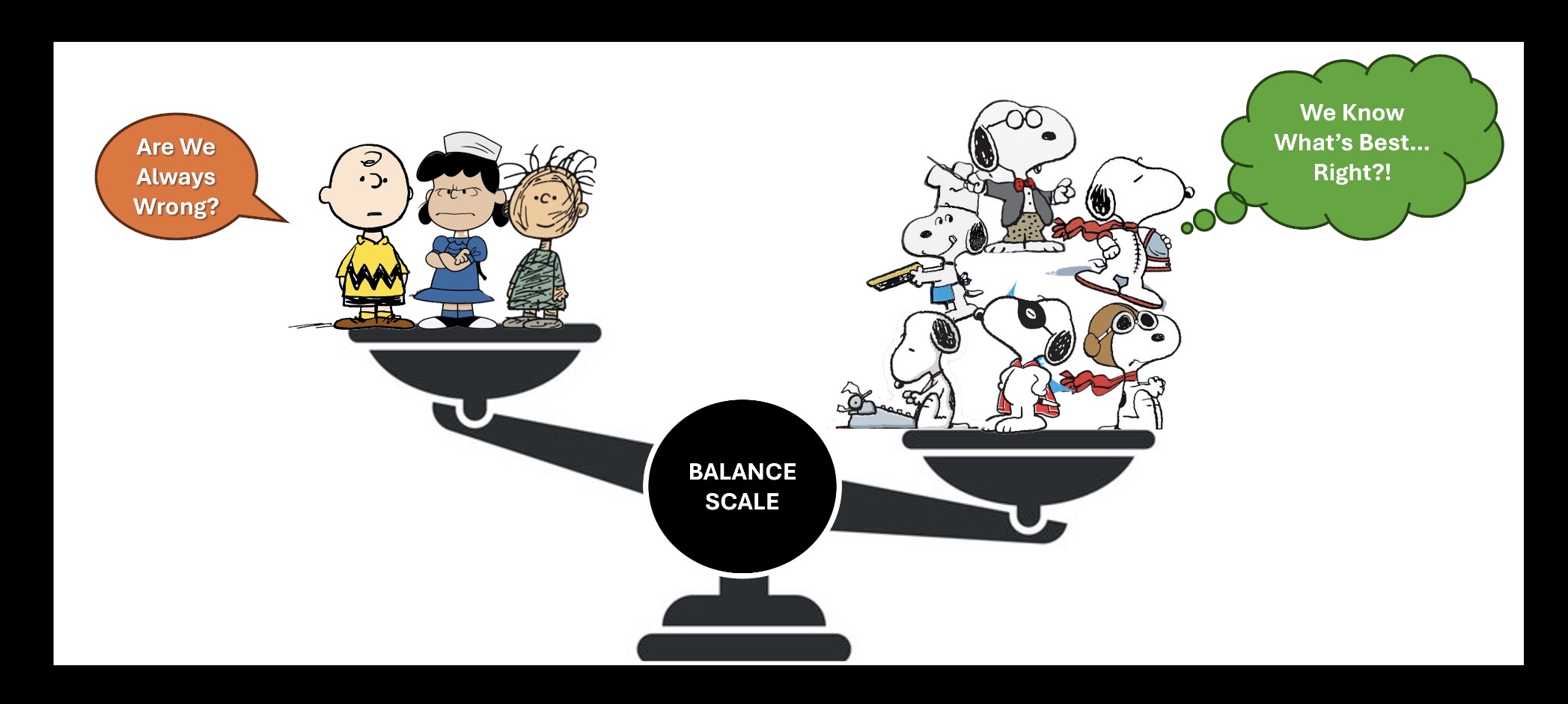
As we discussed before PERFECTION does not exist in any area of our regular or workplace lives. However, it is a high value area of leadership consideration to achieve The “Benefits” of Balance in your personnel line-up! When hiring or promoting… it is totally appropriate to take all logical actions to convey the strategy of balancing your workforce. That does NOT mean that you intentionally discriminate and not select the best person for the job. Rather it would be professionally progressive to openly discuss The “Benefits” of Balance priority with current personnel and very likely it will cause more balancing candidates to show interest in position changes or new opportunities.
This TRIPLE III TIME message may not be favored by all people involved in organizational personnel. However, ask them to look at your business or agency as an outsider. Ask them then to measure The “Benefits” of Balance that they observe or do they see a noticeable imbalance in personnel that results in too many “one-sided” or “unequal” service/product decisions because they lack input from absent Balancers??
TRIPLE III TIME: 3 “C’s” Board Growth Chart
The timing for a special message about building and more importantly developing a public/non-profit sector Board is really long overdue! Given my career history that required me to work with and for these types of community groups… plus the consultant information requests that have been part of my service mix… this week’s TRIPLE III TIME topic will focus on a: 3 “C’s” Board Growth Chart action plan.
Private non-profit and public sector organizational Boards are traditionally created based on Federal/State/Regional/County policies and thereby built on a special assembly of knowledgeable, caring citizens. Their typical assignment is to oversee the expenditures and performance of public dollars for a specific service/product. The criteria for Board membership is routinely flexible and open in an attempt to recruit and retain the best candidates available in a prescribed geographic region. However, it is noticeable that most Board formation regulations do NOT contain instructions nor a methodology specifying the need and processes for ensuring public sector Boards have a plan for continuous improvement. Boards may participate in strategic planning sessions for the entity they oversee, however the resulting progress issues they discuss do NOT apply to them. Hence in an effort to “share” the responsibility for comprehensive organizational continuous improvement, public sector Boards need to make appropriate changes in this area.
In an effort to fill the continuous improvement action void currently experienced by most public sector Boards, this TRIPLE III TIME proposes the introduction of a 3 “C’s” Board Growth Chart initiative. The 3 “C’s” referenced in the III title stands for creating continuous improvement plans around: Comprehension/Commitment/Challenges. Specifically, these responsibility areas would be components of each Board‘s annual learning Growth Chart.
Proposed implementation components of the 3 “C’s” Board Growth Chart may include, but not be limited to the following:
Comprehension
- Legal understanding of total organizational mission and target service audience.
- Full awareness of all fund sources and allowable cost costs.
- Knowledge of funding and oversight organizations.
- Awareness of fiscal and program reporting requirements and related timing.
Commitment
- Full knowledge of Board attendance responsibilities.
- Understanding of the value Board members provide as a representative of a specific business/community sector.
- Accepts the role/responsibility for supporting the organization’s priorities and public service activities.
- Supports the opportunity for Board members to be quasi-ambassadors for the organization.
Challenges
- Awareness of continuous political, fiscal, performance, and public service challenges.
- Understanding of potential conflict due to legal requirements of different programs.
- Difficult administrative decision regarding personnel levels, program expectations and/or results of monitoring/audit issues.
- Possible deviations from service delivery/operational processes practiced in other regions.
The goal for implementing an annual 3 “C’s” Board Growth Chart would be to expand the overall expertise, intellect and judgment skills with regard to Board responsibilities. Additionally, the progressive outcomes for engaging in an annual 3 “C’s” Board Growth Chart initiative are self-evident:
- Stronger/informed Board
- Greater advocacy
- Increased Board interaction
- Solid regional leadership example
- Avenue for idea–generation
Bottomline: Standardly continuous improvement is an expected requirement of all organization staff… therefore, the Board should also be a “teaming” example.
TRIPLE III TIME: Try A “Market Analysis”
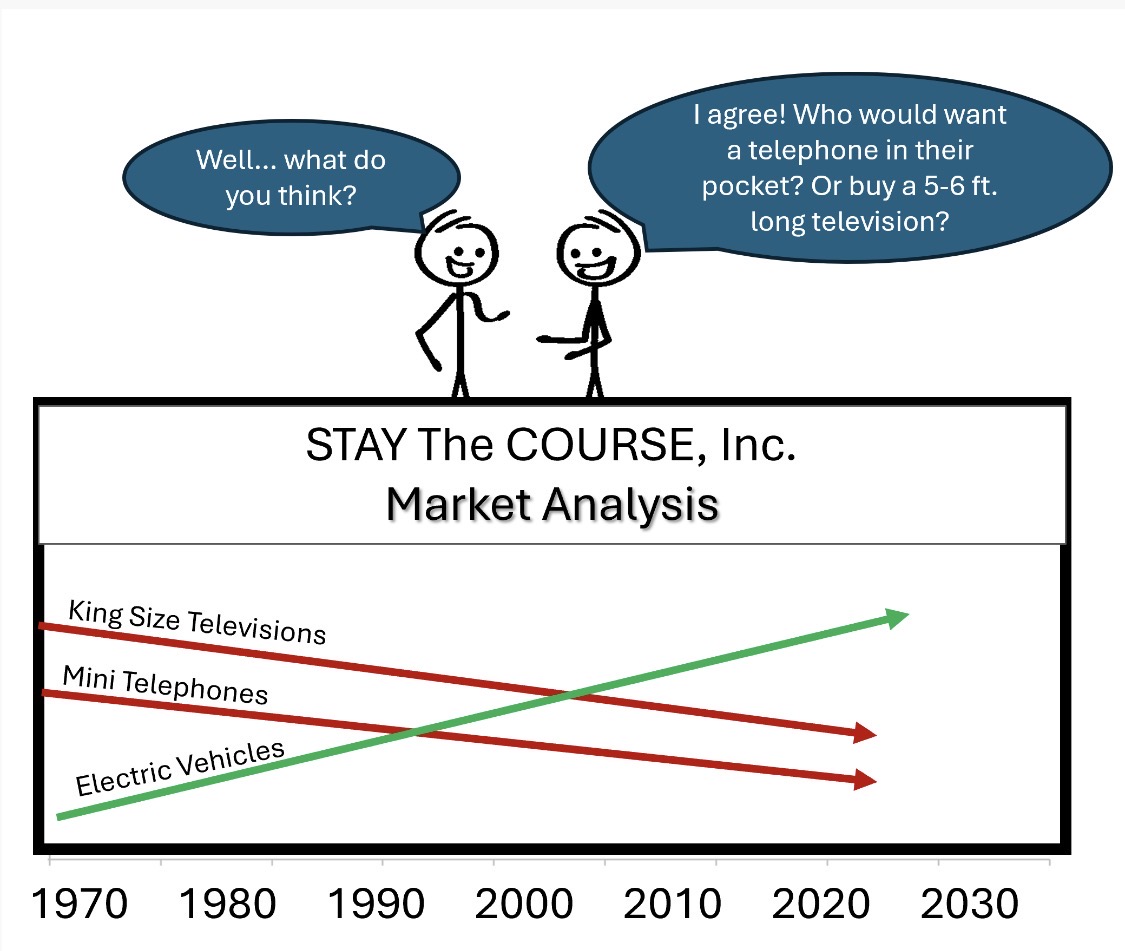
If you are a true student of your business…be it a private or public sector entity… it is a good strategy to annually: Try A “Market Analysis”!
What specifically am I suggesting? Take a look at this excerpt from the Michigan Guide To Starting & Operating A Small Business to best answer this question:
“Paint a picture of what is happening in your industry and explain how you can plan to take advantage of opportunities within the industry. Use your understanding of the industry to demonstrate how your sales/service projections are realistic. Explain how fast your industry is growing with sales, numbers of customers, performance and profits. Discuss if any segments are growing faster than others and how you might leverage that information.
You may want to highlight the following elements:
– Current industry size, status and trends (to show how you will position your company for market opportunities and to identify areas of growth or decline)
– New products or services in the industry, especially ones that will affect your business/agency directly or indirectly
– Trade associations that support your product or service and that you will be contributing to
– Opportunities and threats affecting the industry (how you will capitalize on the opportunities as well as handle the threats).”
In our current customer marketplace… it is my belief that nothing stays the same and the only constant is CHANGE. Too often in my consultant experiences I find that both public and private organizations discuss customers with a “lack-of-change” point of view. The end result are products and services that may be high quality… but lack up-to-date components.
So… Try A “Market Analysis”… and be ready for a new set of discoveries!
LEARNING MOMENTS Podcast: Meeting MAXIMIZATION!

One of the most important roles of a leader of any organization or business is simply: Meeting MAXIMIZATION!
Discussing the most important issues… getting and keeping everyone engaged… considering the best location and providing GREAT leadership guidance… are all continuous factors that need to be addressed to ensure: Meeting MAXIMIZATION!
This month’s Inspiring Innovations LEARNING MOMENTS Podcast discussion is all about my four (4) top recommendations for achieving the best results every time you conduct a meeting. They are all reflective of my experience as a leader in multiple situations and have helped me organize every meeting that I have been responsible for to be labeled SUCCESSFUL!
Enjoy the listen.
TRIPLE III TIME: “Pitching” An IDEA!
Recently I was again fortunate to serve as an early-level judge for a collegiate “shark-tank” event. The group of young entrepreneurs had five minutes to begin “Pitching” An IDEA to my small group of judges and hopefully be picked to advance to the next round. The business-building concepts they shared were representative of both the private and public sectors…and were clearly high-value to each person delivering the “please-select-me” messages!
Was the experience fun and professionally encouraging…YES! But in a progressive kind of way it took me back to another career entrepreneurship time that brought about the development of an: IDEAS Guidebook. And just to share a memory…here’s one of the first components in the Guidebook:
“One of the first steps in making your IDEA come to life is to take yourself through an intense “Shark Tank moment. This means that like the contestants in the TV show, you need to ask yourself very direct questions about your IDEA:
- What do you want to build?
- What problem do you want to solve?
- Where would it be located?
- Who would produce it?
- Why would people use/buy it?
- Is it a hobby or a business?
- Do you want to make money or save the world?
- Have others done/built it before?
- Who would be your best partner…or your competition?
Some or all of these questions need to be addressed and thought through before moving forward with your IDEA.
By spending early time discovering the answers to the What Do YOU/WE Want? questions in this IDEAS Guidebook, you will find others much more willing to listen and consider. (Remember those two words! Listen and Consider!)”
I guess as I listened to each pitch…I was wishing that if I had them in an entrepreneurship class that I would re-stress the WHAT DO YOU/WE WANT? questions over and over to all of them. Now, I am not saying they did a poor job on their pitches. Rather I believe their ideas would have greater strength and business-building potential if they might have stayed simple on WHAT DO YOU/WE WANT? customer-based priorities.
Bottomline: “Pitching” An IDEA! should be somehow common-place in all workplaces. It doesn’t need to be a formalized shark tank event…but if you find yourself “Pitching” An IDEA!…concentrate on points that will cause everyone to LISTEN and CONSIDER.
TRIPLE III TIME: Astounding Your Customers
Isn’t it interesting and almost sad when you can ask a group about what it takes to be labeled as Astounding Your Customers…and they really have to think about it. But when you reverse the question and ask them about examples of poor customer service…guess what, they can go on and on and on!!
This week we are going to talk about solid ways for Astounding Your Customers. First do you REGULARLY think about products and services options and opportunities that far exceed usual expectations? I am talking about customer services that are NOT just bare-bones basics…but exceptional value-amplified forms of help that anticipates and caters to a whole range of customer needs and thereby sets YOU apart from the crowd of competition.
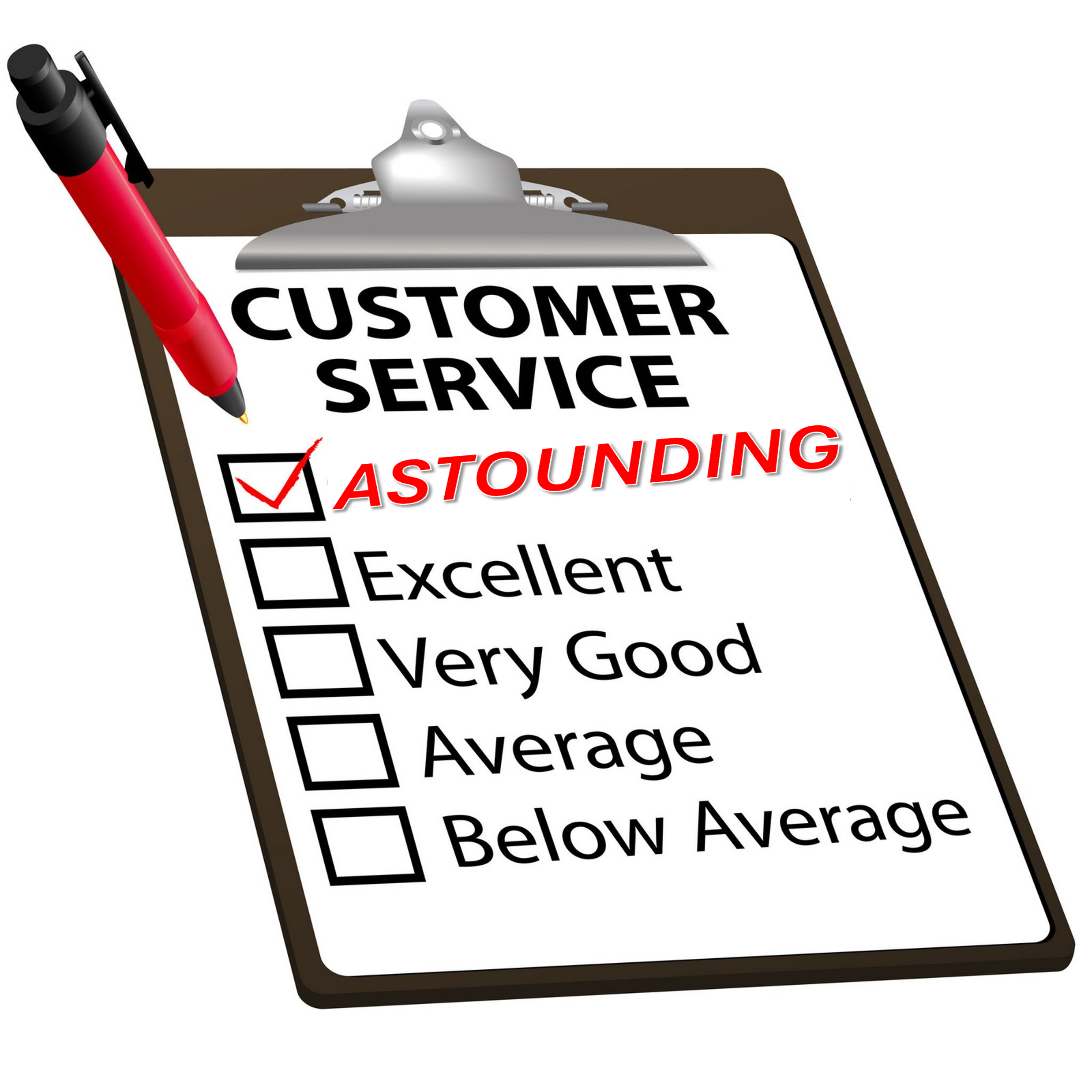 In our growing techno-based society, it will become ever more challenging to create and provide customer services that can be qualified as truly SPECIAL. This means that doing regular “customer-needs-homework”…would help you know/realize who is walking through your actual or virtual doorway! This also requires taking the time to maybe match or blend certain service areas or recommending unique product vendors as part of your Astounding Your Customers techniques/style.
Similarly, think of yourself as the customer and do you feel YOU and your CO-WORKERS are exceptional? And are you EXCEPTIONAL not to just the customers that are cool and fun to work with…but also the traditional older customers that aren’t easily assisted and don’t know for sure what they even want??
Astounding Your Customers may also require non-traditional advertising changes or adding “attention-getting” visuals in your stores or offices. Remember I have said it before…BEING DIFFERENT is AOK! So as you consider your Astounding Your Customers path…have fun and be DIFFERENT.
TRIPLE III TIME: “Ground-Level-Leading”
“Times they are a changing!” This phrase appropriately describes the evolutionary status with regard to the task of LEADERSHIP. Today with the accelerating rate of change, intrusion of social media, revised list of occupation expectations and millennials impacting today’s workforce; LEADERSHIP as a professional trait, has become confused. The confusion does not just occur in the day-to-day prioritization and organizational decisions. Rather it calls in thoughts about how to correctly share leadership, determine the pros and cons of inventing/introducing totally new approaches, but also it asks the question: Where is leadership most valued as it is delivered?
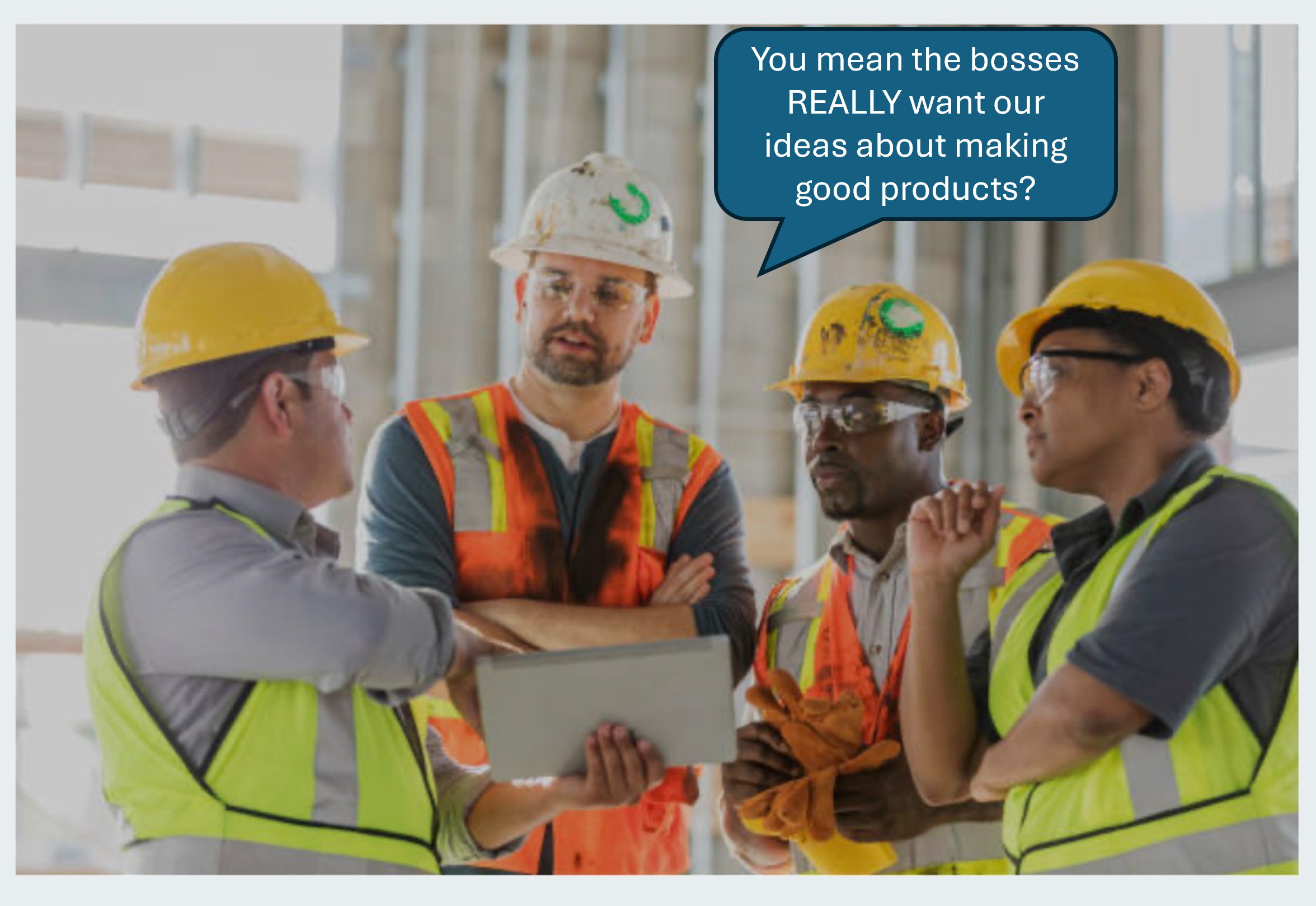 Historically and typically leadership expectations are delegated to the highest levels within an organization’s structure. However, over the past 10+ years leadership duties and responsibilities have bled down into multiple management levels for all the right reasons and with positive results. So today we must take on the challenge of how to constructively harness the leadership contributions of front line staff!
Introducing factors involved in moving toward a “Ground-Level-Leading” (GLL) organizational design would include the following:
- Leadership training would be the GLL priority for front line staff professional development.
- GLL would require evidence-based “up-line” communications and reporting to encourage a continuous improvement mind-set.
- GLL findings would be given customized involvement in Board/Director level discussions/planning
- Regularly scheduled GLL Strategy Sessions would be organized and led by front-line staff…with top level leaders also in attendance.
Eventually, projected positive outcomes of employing a GLL strategy may include but not be limited to the following:
- GLL would improve the value of agency products/services to the customer.
- GLL would narrow the gap between front-line customer knowledge and higher level decision makers.
- Time is a limited asset…GLL would further improve time management at all levels.
- GLL implementation would reduce service limitations resulting from perceived organizational and geographic boundaries.
- Direct evidence-based information would be realized via front-line customer contact/input.
There really is no “best” time to begin “Ground-Level-Leading” actions. Rather just moving steadily in this direction can only grow your organization or business in a unified way.
TRIPLE III TIME: TRANSFORMATION… Does It Ever Stop?
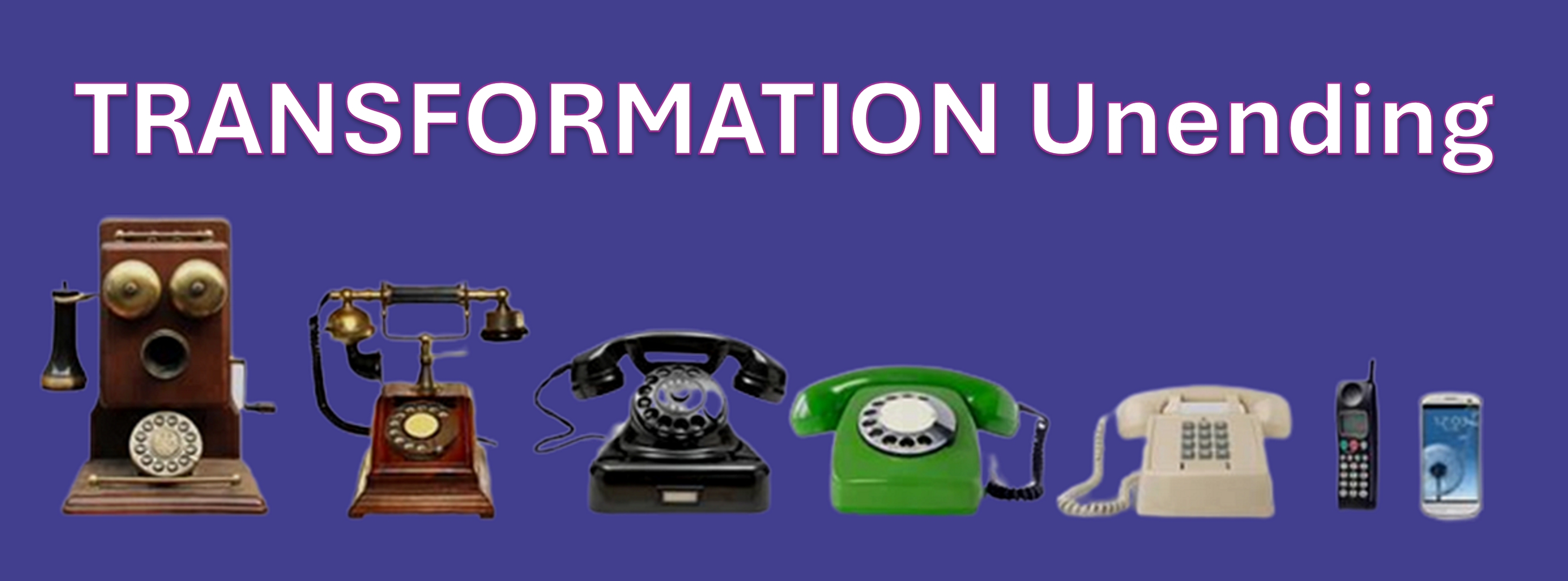
Today as young adults have asked my advice on jobs… future jobs… and what type of classes should they take to best prepare for a great future… my single word answer is: TRANSFORMATION! And as you can guess their standard response is that a TRANSFORMATION class is NOT listed in any college catalog that they have seen?! So then comes the next question: “What do you mean when you reference a TRANSFORMATION class??”
(A fun kind of intro for this week’s TRIPLE III TIME message… right?!)
Well as a leader… if I was offered the opportunity to develop and teach a class on TRANSFORMATION Unending, I would customize it around the following main topics:
- Introduce the class with an understanding that TRANSFORMATION Unending occurrences impacts everyone.
- That the TRANSFORMATION Unending class intends to “pull-out” the leadership potential in all.
- That the incidence of TRANSFORMATION will even affect a company’s purpose and mission regularly.
- That TRANSFORMATION activities can be perceived as both positive and negative at the same time.
- That progress as a result of TRANSFORMATION in the workplace and/or with employees may become redefined.
- That TRANSFORMATION for an organization or business may include cost-cutting and layoffs.
- That use of technology during any TRANSFORMATION may become the end or new beginning in a workplace… but time and timing will be essential.
- Employment opportunities in a TRANSFORMATION environment will require a strong competency and diversity skill-set.
- That TRANSFORMATION in the workplace may not require a complete service or product change… rather responsible quality and modernization upgrades.
- Finally, the TRANSFORMATION Unending class would explain that by not addressing this issue EVERYDAY… the “behinder” you get.
Bottomline: There are a lot of separate thoughts included in this unique TRIPLE IIII TIME message. Consider taking this TOP 10 list one at a time to get the most out of each!
LEARNING MOMENTS Podcast: Vault of VOIDS!
As you check out the title of this month’s Inspiring Innovations LEARNING MOMENTS Podcast: Vault of VOIDS!… I will bet you have never seen those two unique words used “connectively” before! Right?
Well this month I try to place necessary attention on the extra-curricular quality-driven services/product VOIDS that are not stressed nor given timely attention in the workplace and/or by employees. So as a result… these VOIDS tend to find their way into unimportant vaults that take away their opportunity to be recognized as SPECIAL!
It is hard to explain the Podcast’s goal in this short intro… but the discussed examples hopefully bring home a special LEARNING MOMENT.
Enjoy the listen.
TRIPLE III TIME: Creating A Culture of Participation
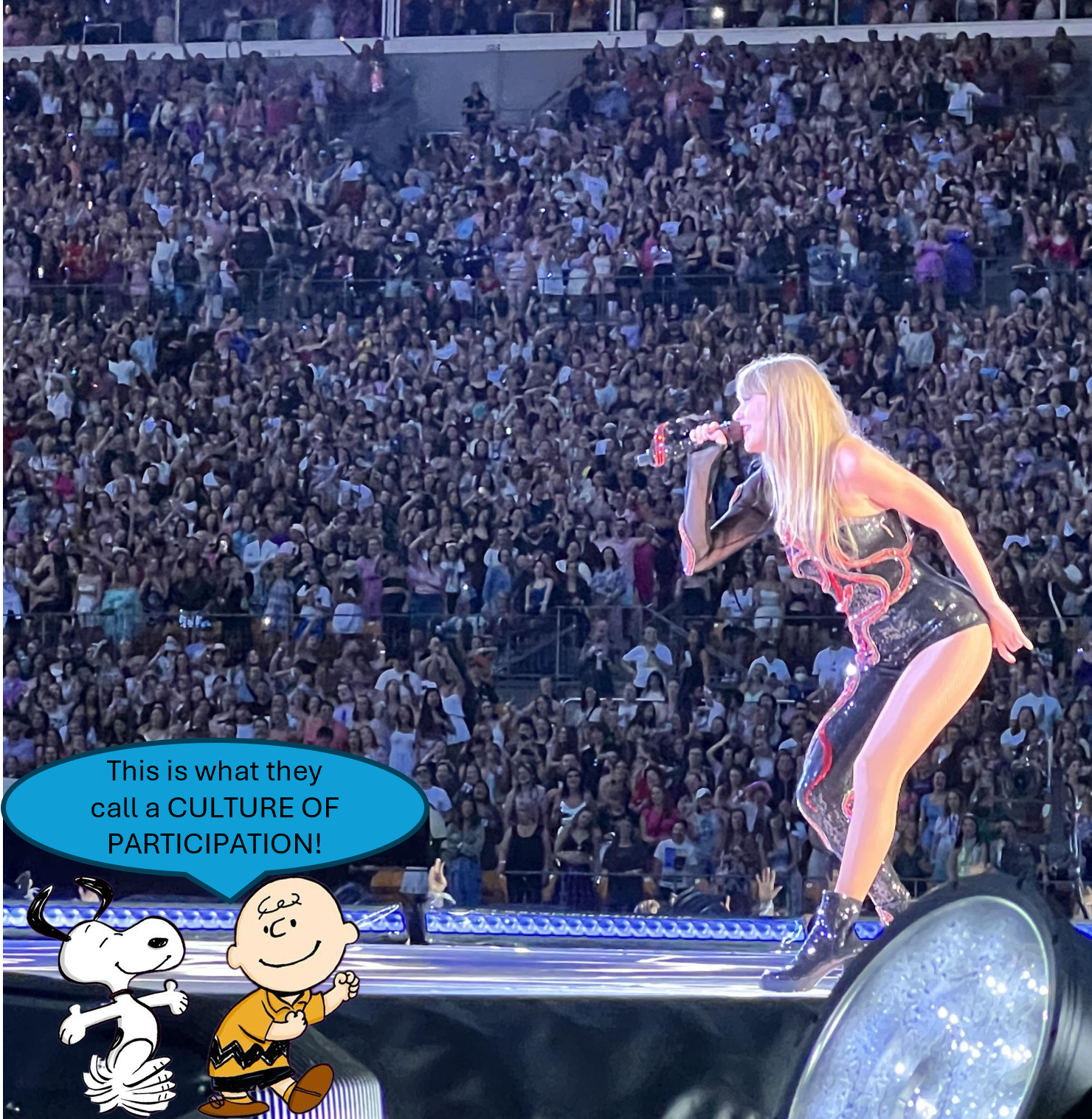
It is always interesting when you become challenged with a professional development topic area… that for some reason has never been prioritized before! Innovation, quality, teamwork and safety are all topics that come to mind when you think about continuous improvement factors. But has anyone ever considered Creating A Culture of Participation for your workplace? Does this specialized challenge: Creating A Culture of Participation get your mind and memory going?
Ironically at the present time I am planning a new entrepreneur-based initiative that will test my Creating A Culture of Participation capabilities to the limit! However, as I begin my quest to have the GREATEST event ever…I realized I need to go “back to the basics” when reassessing my Creating A Culture of Participation strategies. Here are MY “Basic” SOLID 5 concepts for maximizing participation of partners and colleagues:
Basic 1: First, concept designs need to effectively show the mission, goals and community values of any unique participation-building project. Explaining the target audience and learning take-aways would be extremely vital.
Basic 2: Next describing in full detail the structure for delivering the innovation learning moments to those in attendance would highlight areas of special partner participation.
Basic 3: Listing the rewards for a partners investment of time and/or money would be critical to Creating A Culture of Participation. Too often organizers of a new initiative pass over the area of partner rewards because they think they are just “obvious”. Don’t assume this is true.
Basic 4: Also when building/ Creating A Culture of Participation it would be key to indicate that there will be an ongoing hope for continuous involvement in additional future initiatives.
Basic 5: Finally, it would be beneficial to share reflections on the extended benefits and value of partnership participation. Creating A Culture of Participation most times has a positive infectious impact on everyone’s future.
Please give these Basic SOLID 5 strategies some extra attention. They together or separately can have very useful personal and professional benefit.
 Inspiring Innovations, Inc.