Category Archives: Triple III
TRIPLE III TIME: Taking A Professional “TIME OUT”
“As a general rule, time outs aren’t meant to function as a method of punishment. Instead, they’re a way of allowing the child’s reasoning power to catch up with his/her emotions. The main idea is to communicate, teach, and encourage reflecting.” (Focus on the Family online newspiece)
First, I will admit that in my very early childhood…TIME OUTS were not really even “discovered” yet. And if you got in trouble… Mom or Dad would figure out the best correct action to get your attitude and behavior back in the right place. However, today science and research has shown that pulling a child out of the problem situation and providing separate space for them to calm down physically and mentally… standardly helps in opening the “corrective action” doors.
So what about Taking A Professional TIME OUT when trying to resolve/improve/move a challenging concern to a more positive level… when working with adults?
 Well as I have “grown” in the field of professional consulting and have worked with a variety of individuals, students and groups… creatively suggesting at certain times that it is necessary to consider Taking A Professional TIME OUT… is more than appropriate.
Remember the TIME OUT would not be a punishment, rather just a step-back action to give yourself and others a little mental and physical space. Frustrations… attitudes… and disrespect would be lessened during this implementation and strategy of Taking A Professional TIME OUT. Individuals have even laughed when I have “ordered” an adult TIME OUT. But when I explained my action and announced that if we don’t correct ourselves… who will… the support was excellent!
Bottomline: Try to regularly begin Taking A Professional TIME OUT… even if you are working on a project alone and are stuck! And don’t make it a “forced habit”… because then it can be looked at as punishment. Rather it is just a natural part of accepting personal responsibility at home and at work. Plus I have witnessed that it can work well… if YOU let it.
TRIPLE III TIME: Nurturing Patience

No one would/could ever say that I am a patient person. Historically I toss out my business and/or personal expectations…and yes I want to see related action and results fairly quickly. But is that always a good “mind-set”?
As I have professionally grown, one of the most significant learnings I have experienced is the art of: Nurturing Patience.
Think about it.
Nurturing Patience on a professional level is one of the key traits that makes one a solid leader. And let me say that applying appropriate patience to a challenging situation does NOT always come as a result of growing older. Rather I have witnessed many young adults better apply their patience skills when dealing with difficult people than I thought possible.
Consider the goods and bads of seeking “immediate gratification” in different situations. Too often when people apply an “I want it now” attitude to a certain business deal, the result is rarely as good or complete had a Nurturing Patience approach been utilized.
I believe that by Nurturing Patience in business or personal development situations: (1) one gains a better understanding of their role, (2) steps back and gains more insight as to the good or bad outcomes that could result and (3) possibly draws other appropriate people into the discussion for advice.
I have lived on both sides of the patience issue. Have I experienced the negatives of moving too fast and expecting too much…or waiting too long to take action and not getting what I was hoping to achieve…absolutely! However, as leaders…it is critical for everyone to discuss Nurturing Patience, reflect on it’s appropriate application, use patience as determined and then take action.
Again making Nurturing Patience a high-value skill…is time well spent.
TRIPLE III TIME: More Than Just One “RIGHT WAY”

As we start thinking about this week’s TRIPLE III TIME topic: More Than Just One “RIGHT WAY”!…consider all of the people you have worked with in the past and currently. For me…fortunately I feel like I can report that I have been involved with only a few that seemed locked-in on a single path forward. Or maybe some of my “let’s try something different” work style may have rubbed off to minimize the “we have always done it this way” mindset?!
Regardless of what your past or current work/life situation is regarding the More Than Just One “RIGHT WAY”position…this TRIPLE III TIME message will focus primarily on the progress lost resulting from a Just One RIGHT WAY approach.
- Just One RIGHT WAY prohibits the input of other minds.
- Just One RIGHT WAY means no additional learning…for anyone.
- Just One RIGHT WAY labels you as narrow-minded.
- Just One RIGHT WAY means that no “what-else”discussion time would be allowed.
- Just One RIGHT WAY commits to a single process/activity (no matter what!)
Bottomline: The five progress lost examples are only some of the most significant negatives of Just One RIGHT WAY operations. And to avoid these types of negatives, we need to better understand that today we live in continuous growth TRANSFORMATION world. This means continuous growth TRANSFORMATION is the bestlife/work goal…not a Just One RIGHT WAY single life/work assignment.
TRIPLE III TIME: Know The MONEY-SIDE!
Way back…when I got my first real, solid job…I was lucky enough to have a Boss that immediately became a mentor for me. Even though he in age was not many years older than me, in the area of extra education, life experience (he was an armed service veteran) and professional-style jobs, he carried a great deal of valuable knowledge! And even though we only worked together for about three years, (and yes he helped me become the new Boss at a VERY young age), the multiple key professional learnings I gained were tremendous.
But for this week’s TRIPLE III TIME, I want to focus on the one area FEL stressed the most: Know The MONEY SIDE! So what specifically was he trying to emphasize to me?

Well to answer this question… I can fairly report that at least every other day of our work time together, FEL made sure he clearly explained:
- Know where the dollars for our agency’s operation came from.
- What specifically could the funds be used for.
- The results/products/services we were trying to obtain/provide.
- Who was overseeing what we were doing to make sure we didn’t mess up with the money.
- Avenues for other dollars that could expand what we do.
- The legal methods we were using to account for the money.
- Pro and con impacts that would show up if we lost money or gained more money.
- Finally making the point that in public or private business…nothing happens without the money.
Bottomline: As a good employee/business person in any profession, if you Know The MONEY–SIDE of your organization…you will be a better employee. Agency actions and decisions will make more sense and your potential progressive impact on “making good things happen for you and the company”…will be a solid result.
TRIPLE III TIME: Channeling Your Occupational Energy
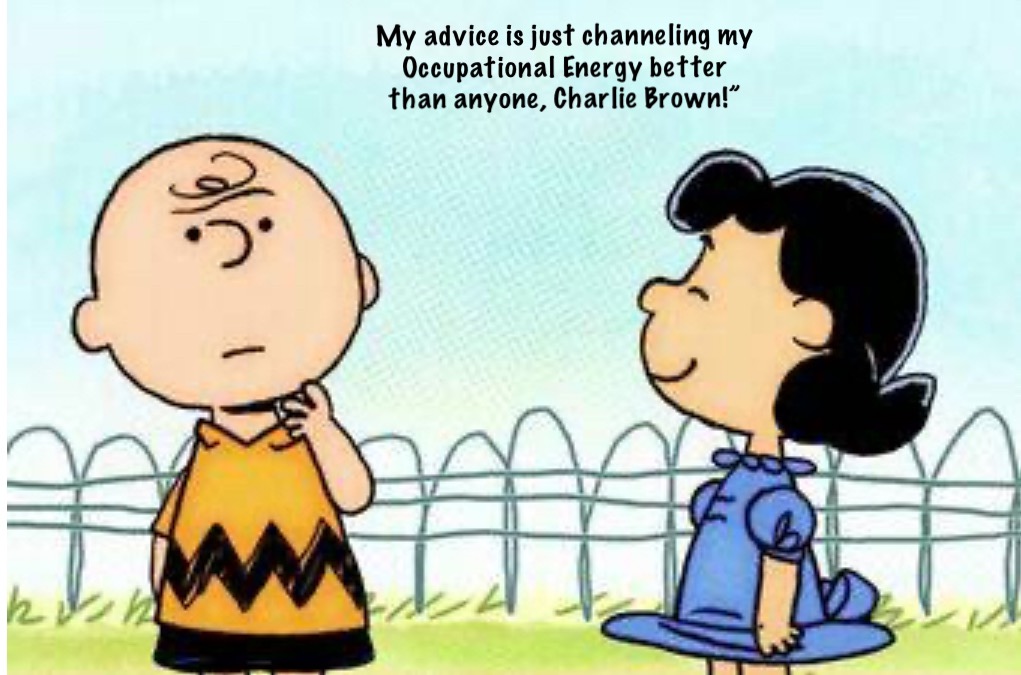
If someone asked you: “How well are you at Channeling Your Occupational Energy”?…what would be your answer? Would you REALLY understand the question or would you just say something basic like: “I do ok” or “It depends on the situation?” But deep down would you confidently understand what is being asked?
I believe that until I transitioned into my current consultant role, I could not have answered the Channeling Your Occupational Energy question!
When you think about Occupational Energy, I am referring to the mental and physical energy you put into your job every day. As a consultant…regardless of the project goals or service product I was working with a customer on, I almost immediately became more aware of everyone’s Occupational Energy “channels”. Whether the situation was directly interacting with customers or composing an audit response, how people expend their Occupational Energy became more apparent.
So enough talk about how I came to realize the importance of Channeling Your Occupational Energy. Let’s use a select TOP 10 to discuss simple, direct approaches that should maximize YOUR Occupational Energy applications.
- Be positive and progressive. Negativity breeds negative energy.
- Don’t be continually selective when using your Occupational Energy. Apply it fairly.
- Don’t hesitate to utilize extra Occupational Energy when everything is going great.
- Share good Occupational Energy with those that can benefit everyday.
- Don’t wait to gain progressive Occupational Energy from someone…be the provider.
- Return customers should be a standard receiver of quality Occupational Energy.
- Practice keeping a Channeling Your Occupational Energy log book. Positive reflections matter.
- Compliment co-workers as they practice showing helpful Occupational Energy.
- Don’t allow for a high-low Occupational Energy roller-coaster to evolve…maintain.
- If you are uncertain of your method of Channeling Your Occupational Energy…consult a trusted friend or colleague.
“Perfectly” Channeling Your Occupational Energy is not possible. However, maximizing it…IS!
TRIPLE III TIME: Employee Loyalty To The Workplace

As most everyone that reads the weekly TRIPLE III TIME blog messages knows… JOBS ADVANCEMENT and WORKPLACE IMPROVEMENT have been my career-long focus. Whether my role has been an Agency Director or Innovation Consultant… helping businesses and organizations, become better both internally and in the marketplace… was/is a center point component in all of my efforts. So this week’s TRIPLE III TIME message, Employee Loyalty To The Workplace… is a long overdue… necessary progress-building topic.
“Employee loyalty refers to the dedication, commitment, and allegiance exhibited by employees towards their organization, resulting in long-term engagement, productivity, and a willingness to go above and beyond in their work.”
I borrowed this Employee Loyalty definition from a recent online article I researched as I began writing this message. So as I continued to assess the status of Employee Loyalty in today’s workplace… general observational research has shown that it has declined due to:
- Fast and continuous workplace product/service changes,
- Impacts of technology and educational expectations,
- Lack of historical value…
but has it now become a renewed critical factor in almost every workplace… YES!!
The goal therefore for this week is to re-stress the high need and value of Employee Loyalty To The Workplace! Think about all of these factors:
- It builds a positive workplace culture
- Helps retain and recruit the right people
- Justifies additional investments (tools/trainings/fringe benefits) for employees
- Encourage two-way, transparent communication
- Increases recognition of the need for a steady life-work balance.
Bottomline: Business/organization LEADERS are statistically (79%) most responsible for Employee Loyalty advancement. So lets ask the question: Does your entity prioritize Employee Loyalty? Do you have policies and progress examples of enhancing Employee Loyalty?
TRIPLE III TIME: AVA (Add-Value-Actions) Marketing!
Businesses…governments…agencies…restaurants…stores…(and the list could go on) all spend a significant amount of money to effectively market themselves. Think about the TV commercials, billboards, radio ads, mailings, social media spots, promotional flyers and consider the price-tags that can be calculated with each activity. Then ask: Do they really get a solid return on their marketing investments…or are they just reacting to what the competition believes is the necessary thing to do?
Well today no matter how anyone answers the previous question…this TRIPLE III TIME message suggests a more simplistic and “natural” marketing technique:
**AVA (Add-Value-Actions) Marketing!**
Let me ask: When was the last time your work group put together and implemented an AVA Marketing plan? When your business decided…as a real marketing strategy to employ unique Add-Value-Actions as part of yourproduct/service delivery process. If you don’t get what I am asking…here are few add-value examples:
- Hand write a thank you message and send it to a customer.
- Give a family of 4 one free meal at your restaurant.
- Deliver a newly purchased used vehicle to a customer 60 miles away…so he doesn’t have to miss work.
- Give away a new book to a bookstore customer…just because.
- Meet a human service client at a coffee shop instead of an office (and yes pay for their coffee).
As you can see this list could be uniquely endless…and consequently the AVA (Add-Value-Actions) Marketing! potential could likewise be endless! If all in your workplace prioritized and made AVA Marketing personal, consider these positive impacts:
- progressive reputation building
- greater person-to-person promotion
- an always special opportunity
- an all staff engagement responsibility
- a customized marketing technique…always
I haven’t mentioned the cost-savings that could happen…but I will let you do the math.
Introducing: Public Administration Clinicals
This quarter’s American Society for Public Administration article offers innovative insight into the use of one learning strategy a totally different way! Developing Public Administration Clinicals for those studying for jobs in the public sector… only seems appropriate and necessary. Clinicals have always been a “staple” in the training of nurses… but wouldn’t it have a similar impact on positions in the public administration field.
“Borrowing” learning designs across different areas of study is often overlooked by public sector innovators… yet the use of clinicals has been around for a long time. As you read the article, stop and think about different professional public sector jobs and how having a clinical learning experience during college degree attainment… may have been a GREAT thing!
Enjoy the article.

Introducing: Public Administration Clinicals
Sometimes some of the greatest innovations are built using creative designs which are historically successful in another service area. For example, some may use the fast-food “Meal Deal” ordering system to re-introduce a series of public sector workforce development opportunities. Or perhaps use the college orientation process to create a customized FFA–Day (Future Farmers of America) for a group of high school chapters and effectively spread the word on agri-business career options. Or even adopt a scaled down version of the TED-TALKS phenomenon and build a comparable learning event that serves a unique group of citizens!
Well this quarter my ASPA article is again focused on the usage of public sector innovation. Specifically this Introducing: Public Administration Clinicals writing will offer a timely recommendation for the use of “clinicals” as a learning tool for public administration employment. Similar to the nursing field which requires and applies college credit attainment to assigned work experiences in the health care profession…so too could this opportunity be structured for public sector employment preparation. Although it could be argued that internships are already available to students at different stages of their education, the unique value of blending public service knowledge within the collegiate learning process makesIntroducing: Public Administration Clinicals a logical option.
First think about creating Public Administration Clinicals with qualified universities in certain career areas like: Fiscal Management, City Planning, Corrections Programming and Workforce Development Policy. Consider the variety of REAL WORK experiences that could be appropriately blended into a public administration course! Effectively every semester could be organized to contain a three (3) credit Clinicals course. Understandably college credit would only be awarded if the Clinicals time was credentialed with a passing grade. Unlike traditional internship models, the Public Administration Clinicals learning time would be measured based on advancement of public service comprehension.
Next, let’s consider the implementation factors that would be necessary to establish Public Administration Clinicals. Initially a non-traditional Curriculum Committee would be formed. The personnel make-up of this Committee would naturally include public administration faculty from participating universities. Additionally, leaders from multiple public sector organizations interested in obtaining great public service employees would also be recruited for the Committee. The major goal of the Public Administration Clinicals Curriculum Committee would be to draft the minimum “Scope-of-Practice” (learning exposure areas) that would be followed by students during a specific semester.
Another critical area of development assigned to the Clinicals Committee would be to formalize the credentials required and grading processes retained by the personnel in charge. Given that every Public Administration Clinical engagement would be based at an established public sector organization, the Clinical learning experience would always be a “working-for-my-grade” situation. Clinicals course work could be divided into “units-of-learning” such as staff evaluation, budget preparation, service marketing, program eligibility determination, etc. Interestingly, if a “units-of-learning” model were used, it may make sense that a team of Clinical Supervisors be recruited to oversee and participate in the student grading process.
Public sector innovation could also play a tremendous role in the formation and implementation of every Public Administration Clinicals situation. For example, building Clinicals supervisor credential requirements. Would they(supervisors) need an advanced degree or could long-term job experiences allow someone to qualify as the best supervisor? Degrees aren’t required to run for public office… so shouldthey be required to serve in a Public Administration Clinicals oversite role?
Use of mid-term and final exams would be another importantconsideration by the Clinicals Curriculum Committee. Would traditional academic components be used to measure learning attained during the Clinicals experiment? Or would public sector innovation approaches facilitate creativity… and “real-time” work experiences force public program influences? Would the exams be totally essay-driven or would multiple-choice/true-false questions be appropriate?
Additionally, should it be acceptable for students to organize their own Public Administration Clinicals site? Perhaps thisinnovation opportunity would foster greater student ownership in potential learning elements and thereby enhance the engagement of the public organization they select? As with any partnership arrangement, there could always be the incidence of mis-use of the Clinicals reporting/grading situation. Possiblythe supervisor may be less-than-appropriate in their oversite role when assigning grades based on friendships past. Human bias could thereby be a factor in maintaining a quality Public Administration Clinicals system. However, assuming that every Clinicals site would receive no-cost benefit from the student “real-work” contributions made during the semester assignment…mutually beneficial results of the special learning situation would hopefully limit any inappropriate professionalism.
A final innovation consideration would be the use of some form of electronic simulation tools that could be effectively blended into a Public Administration Clinical. Think about the aviation sector and the simulation programs that pilot trainees have toexperience as part of their overall instruction and testing! As we referenced early in this article, the nursing profession regularly uses patient simulators to give students real-life situational examples involving injury/disease circumstances. The solid learnings are impactful for every student… and wouldn’t it be the same utilizing Public Administration Clinicals?
Author: Marvin N. Pichla, Ph.D., is the owner and creative adviser of Inspiring Innovations, Inc. Sharing his unique entrepreneurship and innovation in public service experience, Marv consults with public and private business, education and community organizations to develop new and different problem-solving methods through real-life, example-based learning.
TRIPLE III TIME: Measuring Capacities
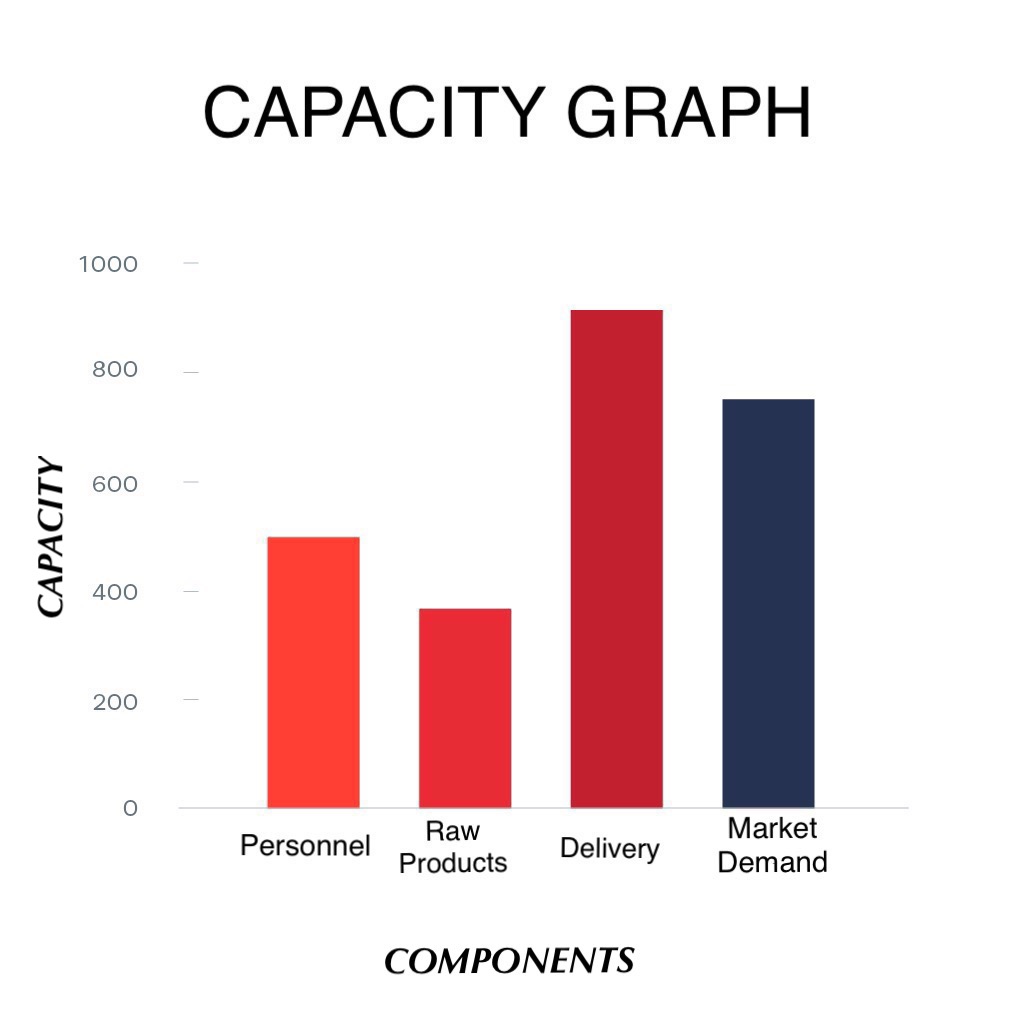
One particular strategic planning area that is often overlooked is: Measuring Capacities. You know what I am referring to RIGHT? Well put in more formal terms…we are talking about the amount of product or services that a person or business can produce under regular conditions. At first glance this planning action may seem easy…however accurate capacities measurement can prove be very elusive given the specialness of your product and/or the complexity of how your service is constructed and delivered.
So do you/your company give Measuring Capacitiesenough planning consideration time and discussion to be continually progressing?
Well, I believe that Measuring Capacities (of people/companies) is a huge TRIPLE III TIME topic and could easily spin-off in a host of other directions! But for today…we will just list a few planning points as a guide to begin maximizing your Measuring Capacities knowledge areas.
- How many people do you employ and are they co-equal in product/service production knowledge and experiences?
- Does your product/service experience “highs and lows” via customer need?
- Is your product/service impacted by “shelf-life” concerns?
- Can you determine specifically the number of products/services that can be produced in an hour/day/week…by each person/or group?
- If overproduction occurs…is there appropriate storage space? Or if Measuring Capacities in a service field…how do you determine if too many staff are TOO MANY?
- Finally, how does one reasonably factor in the future when Measuring Capacities for specific products and services?
I have to admit that I was not focused enough when Measuring Capacities of staff or the organization as a whole in my Director days. But because I had great people in all components within the agency, quality Measuring Capacities information was always shared…discussed…and applied!
LEARNING MOMENTS Podcast: Organized For Tomorrow
This month’s Inspiring Innovations LEARNING MOMENTS Podcast was a “long-time-in-the-making”! No, I don’t mean it took me a long time to record it… rather it took me a while to organize the message in a calm… but strong way. And because I have prioritized being progressively Organized for Tomorrow my whole life/career… I didn’t want to underestimate the energy it takes to be successful in this area.
Please be advised that I have expanded my allotted podcast time to 10 minutes. And unexpectedly… I believe the extra time for discussion I allowed myself has resulted in a much more clear and understandable LEARNING MOMENT.
Enjoy the listen.
 Inspiring Innovations, Inc.