Category Archives: LEADERSHIP – ALWAYS!
TRIPLE III TIME: The “Benefits” of Balance
It is always interesting to observe the functions of a team, group… organization and consider The “Benefits” of Balance that may or may not be in play.
What do I mean by Balance?
Think about the overall staff make up of any entity. Are they led by mostly males or females? Is there a constructive mix of older, younger and middle-aged personnel working proportionately at every level of the organization? And given the customer-base that exists within a specific market area… are there ethnic personalities appropriately retained within your business or agency to ensure a strong understanding of the wants/needs and preferences of those coming through your doors?
For example… if agriculture is a service target for your entity… do you have at least one person knowledgeable about farming equipment and animal care? Or if you work with and assist customers that have a majority of higher level staff that are males… are you established to have The “Benefits” of Balance in this male-dominated area to offer a common understanding of issues from their point of view?
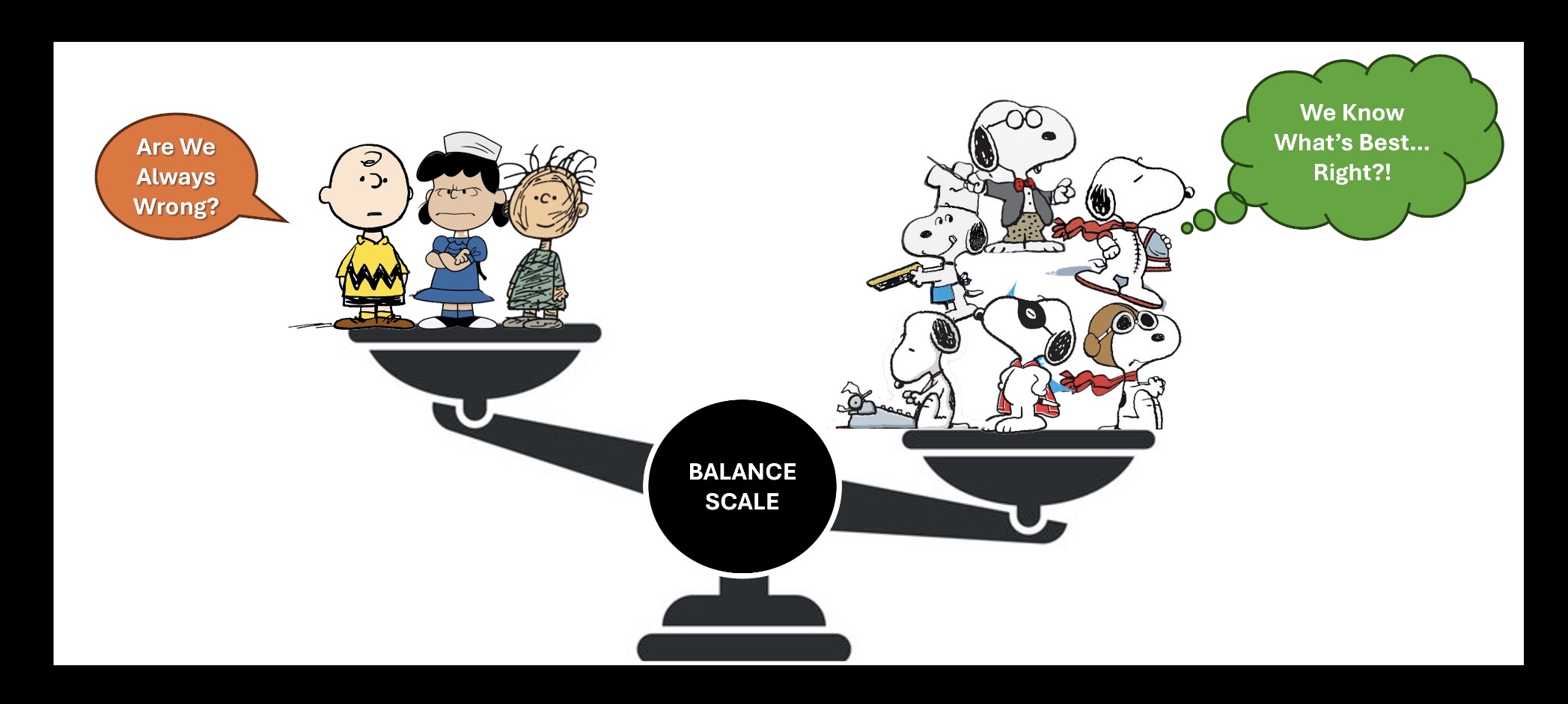
As we discussed before PERFECTION does not exist in any area of our regular or workplace lives. However, it is a high value area of leadership consideration to achieve The “Benefits” of Balance in your personnel line-up! When hiring or promoting… it is totally appropriate to take all logical actions to convey the strategy of balancing your workforce. That does NOT mean that you intentionally discriminate and not select the best person for the job. Rather it would be professionally progressive to openly discuss The “Benefits” of Balance priority with current personnel and very likely it will cause more balancing candidates to show interest in position changes or new opportunities.
This TRIPLE III TIME message may not be favored by all people involved in organizational personnel. However, ask them to look at your business or agency as an outsider. Ask them then to measure The “Benefits” of Balance that they observe or do they see a noticeable imbalance in personnel that results in too many “one-sided” or “unequal” service/product decisions because they lack input from absent Balancers??
TRIPLE III TIME: 3 “C’s” Board Growth Chart
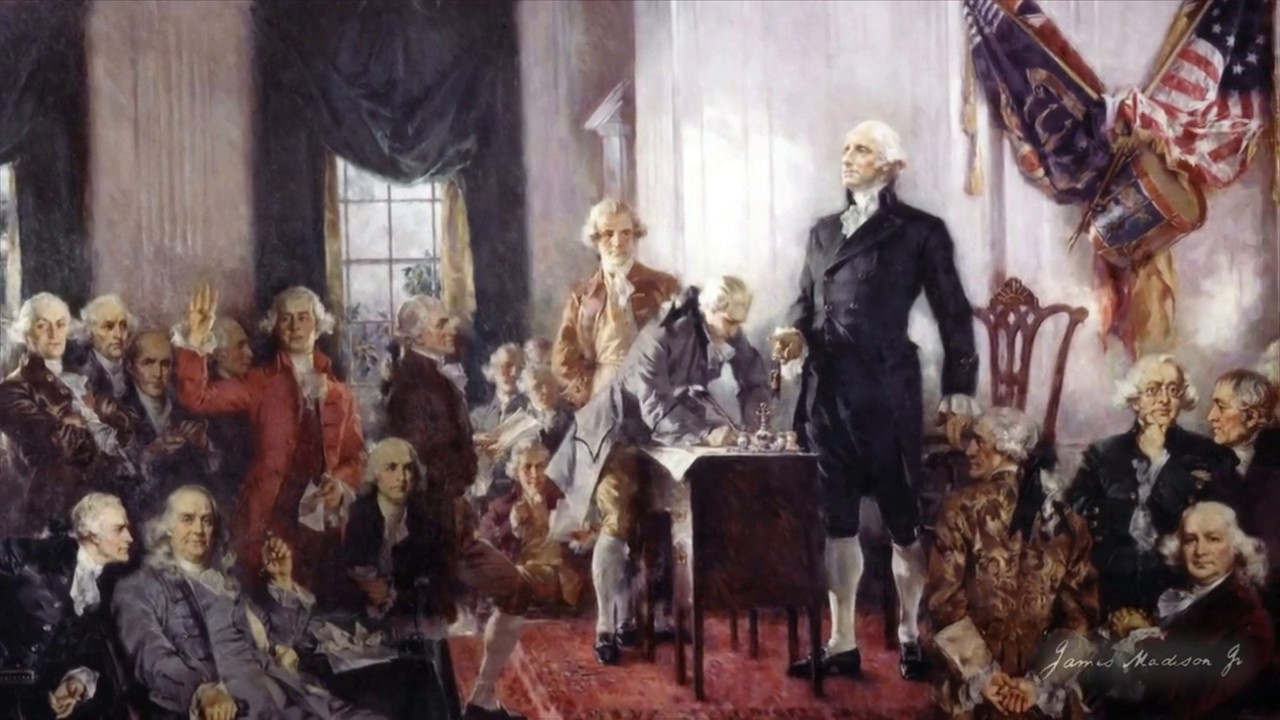
The timing for a special message about building and more importantly developing a public/non-profit sector Board is really long overdue! Given my career history that required me to work with and for these types of community groups… plus the consultant information requests that have been part of my service mix… this week’s TRIPLE III TIME topic will focus on a: 3 “C’s” Board Growth Chart action plan.
Private non-profit and public sector organizational Boards are traditionally created based on Federal/State/Regional/County policies and thereby built on a special assembly of knowledgeable, caring citizens. Their typical assignment is to oversee the expenditures and performance of public dollars for a specific service/product. The criteria for Board membership is routinely flexible and open in an attempt to recruit and retain the best candidates available in a prescribed geographic region. However, it is noticeable that most Board formation regulations do NOT contain instructions nor a methodology specifying the need and processes for ensuring public sector Boards have a plan for continuous improvement. Boards may participate in strategic planning sessions for the entity they oversee, however the resulting progress issues they discuss do NOT apply to them. Hence in an effort to “share” the responsibility for comprehensive organizational continuous improvement, public sector Boards need to make appropriate changes in this area.
In an effort to fill the continuous improvement action void currently experienced by most public sector Boards, this TRIPLE III TIME proposes the introduction of a 3 “C’s” Board Growth Chart initiative. The 3 “C’s” referenced in the III title stands for creating continuous improvement plans around: Comprehension/Commitment/Challenges. Specifically, these responsibility areas would be components of each Board‘s annual learning Growth Chart.
Proposed implementation components of the 3 “C’s” Board Growth Chart may include, but not be limited to the following:
Comprehension
- Legal understanding of total organizational mission and target service audience.
- Full awareness of all fund sources and allowable cost costs.
- Knowledge of funding and oversight organizations.
- Awareness of fiscal and program reporting requirements and related timing.
Commitment
- Full knowledge of Board attendance responsibilities.
- Understanding of the value Board members provide as a representative of a specific business/community sector.
- Accepts the role/responsibility for supporting the organization’s priorities and public service activities.
- Supports the opportunity for Board members to be quasi-ambassadors for the organization.
Challenges
- Awareness of continuous political, fiscal, performance, and public service challenges.
- Understanding of potential conflict due to legal requirements of different programs.
- Difficult administrative decision regarding personnel levels, program expectations and/or results of monitoring/audit issues.
- Possible deviations from service delivery/operational processes practiced in other regions.
The goal for implementing an annual 3 “C’s” Board Growth Chart would be to expand the overall expertise, intellect and judgment skills with regard to Board responsibilities. Additionally, the progressive outcomes for engaging in an annual 3 “C’s” Board Growth Chart initiative are self-evident:
- Stronger/informed Board
- Greater advocacy
- Increased Board interaction
- Solid regional leadership example
- Avenue for idea–generation
Bottomline: Standardly continuous improvement is an expected requirement of all organization staff… therefore, the Board should also be a “teaming” example.
TRIPLE III TIME: “Ground-Level-Leading”
“Times they are a changing!” This phrase appropriately describes the evolutionary status with regard to the task of LEADERSHIP. Today with the accelerating rate of change, intrusion of social media, revised list of occupation expectations and millennials impacting today’s workforce; LEADERSHIP as a professional trait, has become confused. The confusion does not just occur in the day-to-day prioritization and organizational decisions. Rather it calls in thoughts about how to correctly share leadership, determine the pros and cons of inventing/introducing totally new approaches, but also it asks the question: Where is leadership most valued as it is delivered?
 Historically and typically leadership expectations are delegated to the highest levels within an organization’s structure. However, over the past 10+ years leadership duties and responsibilities have bled down into multiple management levels for all the right reasons and with positive results. So today we must take on the challenge of how to constructively harness the leadership contributions of front line staff!
Introducing factors involved in moving toward a “Ground-Level-Leading” (GLL) organizational design would include the following:
- Leadership training would be the GLL priority for front line staff professional development.
- GLL would require evidence-based “up-line” communications and reporting to encourage a continuous improvement mind-set.
- GLL findings would be given customized involvement in Board/Director level discussions/planning
- Regularly scheduled GLL Strategy Sessions would be organized and led by front-line staff…with top level leaders also in attendance.
Eventually, projected positive outcomes of employing a GLL strategy may include but not be limited to the following:
- GLL would improve the value of agency products/services to the customer.
- GLL would narrow the gap between front-line customer knowledge and higher level decision makers.
- Time is a limited asset…GLL would further improve time management at all levels.
- GLL implementation would reduce service limitations resulting from perceived organizational and geographic boundaries.
- Direct evidence-based information would be realized via front-line customer contact/input.
There really is no “best” time to begin “Ground-Level-Leading” actions. Rather just moving steadily in this direction can only grow your organization or business in a unified way.
TRIPLE III TIME: TRANSFORMATION… Does It Ever Stop?

Today as young adults have asked my advice on jobs… future jobs… and what type of classes should they take to best prepare for a great future… my single word answer is: TRANSFORMATION! And as you can guess their standard response is that a TRANSFORMATION class is NOT listed in any college catalog that they have seen?! So then comes the next question: “What do you mean when you reference a TRANSFORMATION class??”
(A fun kind of intro for this week’s TRIPLE III TIME message… right?!)
Well as a leader… if I was offered the opportunity to develop and teach a class on TRANSFORMATION Unending, I would customize it around the following main topics:
- Introduce the class with an understanding that TRANSFORMATION Unending occurrences impacts everyone.
- That the TRANSFORMATION Unending class intends to “pull-out” the leadership potential in all.
- That the incidence of TRANSFORMATION will even affect a company’s purpose and mission regularly.
- That TRANSFORMATION activities can be perceived as both positive and negative at the same time.
- That progress as a result of TRANSFORMATION in the workplace and/or with employees may become redefined.
- That TRANSFORMATION for an organization or business may include cost-cutting and layoffs.
- That use of technology during any TRANSFORMATION may become the end or new beginning in a workplace… but time and timing will be essential.
- Employment opportunities in a TRANSFORMATION environment will require a strong competency and diversity skill-set.
- That TRANSFORMATION in the workplace may not require a complete service or product change… rather responsible quality and modernization upgrades.
- Finally, the TRANSFORMATION Unending class would explain that by not addressing this issue EVERYDAY… the “behinder” you get.
Bottomline: There are a lot of separate thoughts included in this unique TRIPLE IIII TIME message. Consider taking this TOP 10 list one at a time to get the most out of each!
TRIPLE III TIME: Creating A Culture of Participation
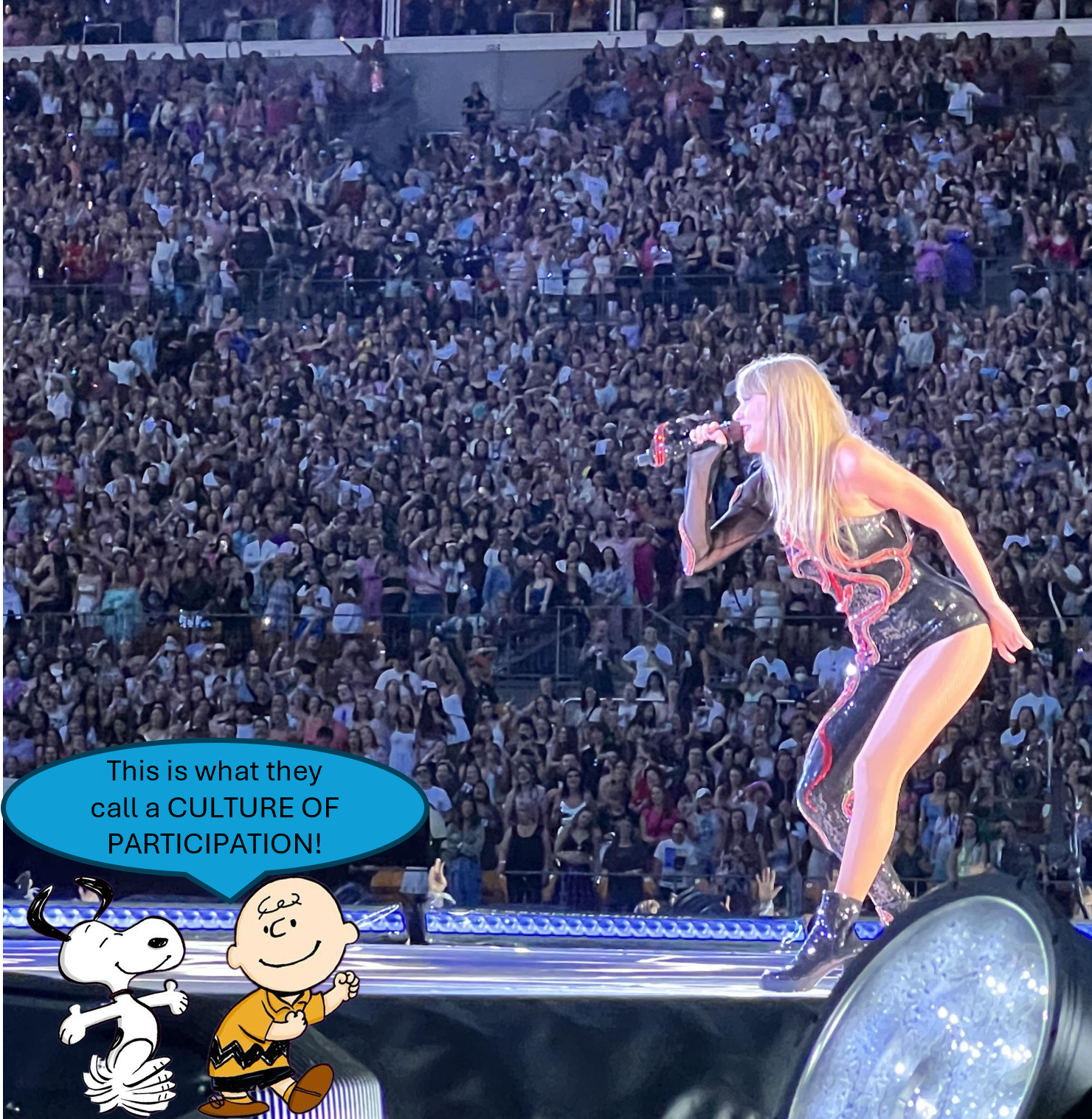
It is always interesting when you become challenged with a professional development topic area… that for some reason has never been prioritized before! Innovation, quality, teamwork and safety are all topics that come to mind when you think about continuous improvement factors. But has anyone ever considered Creating A Culture of Participation for your workplace? Does this specialized challenge: Creating A Culture of Participation get your mind and memory going?
Ironically at the present time I am planning a new entrepreneur-based initiative that will test my Creating A Culture of Participation capabilities to the limit! However, as I begin my quest to have the GREATEST event ever…I realized I need to go “back to the basics” when reassessing my Creating A Culture of Participation strategies. Here are MY “Basic” SOLID 5 concepts for maximizing participation of partners and colleagues:
Basic 1: First, concept designs need to effectively show the mission, goals and community values of any unique participation-building project. Explaining the target audience and learning take-aways would be extremely vital.
Basic 2: Next describing in full detail the structure for delivering the innovation learning moments to those in attendance would highlight areas of special partner participation.
Basic 3: Listing the rewards for a partners investment of time and/or money would be critical to Creating A Culture of Participation. Too often organizers of a new initiative pass over the area of partner rewards because they think they are just “obvious”. Don’t assume this is true.
Basic 4: Also when building/ Creating A Culture of Participation it would be key to indicate that there will be an ongoing hope for continuous involvement in additional future initiatives.
Basic 5: Finally, it would be beneficial to share reflections on the extended benefits and value of partnership participation. Creating A Culture of Participation most times has a positive infectious impact on everyone’s future.
Please give these Basic SOLID 5 strategies some extra attention. They together or separately can have very useful personal and professional benefit.
TRIPLE III TIME: Business Ethics…What’s YOUR Responsibility

Sometimes in our personal and professional worlds… the time and place to address a sometimes ignored… sometimes avoided critical topic just seems to appropriately “show-up”. Well given my public and private business dealings and my career-long mission to help people, selecting this week’s TRIPLE III TIME message: Business Ethics…What’s YOUR Responsibility just seems righteous.
In his book “Second To None-The Productive Power of Putting People First”, Charles Garfield explains well the concept of ethics.
“Ethics-a company’s moral code-is one of those “soft” concepts that are generally relegated to Corporate Affairs of the company legal department. More often than not, it is viewed as peripheral to the company, as an issue that will be dealt with only when a flagrant abuse of ethics arises (or, sadly, often only when such an abuse becomes public knowledge). But ethics, far from being peripheral to the company, is its very foundation. Ethics is the set of written and unwritten moral principles which a company operates at a core level. A company’s ethics determines how it treats employees, customers, and suppliers; how it develops products and processes; and how it participates in the larger community. More generally, “ethical behavior” means doing what is right, what brings the greatest benefit or the least harm to all of those involved.”
So now think, as a company… organization… community and professional… does ethics rise up as a regular priority and concern? Or is it non-existent and even discouraged?
I believe daily example-setting is the principle means of committing to the importance of ethical practices and policies in your areas of influence. If you wait for it to be discussed… trained on… or highlighted in this month’s agency newsletter… stop waiting and think about what YOU can do! Think about your personal/company values… what do you stand for… what is your organizational character… what everyone you are connected to believes in and ultimately what makes your business/agency successful.
It is important to realize that all of us face and make ethical choices everyday. Ignoring or minimalizing the impact of ethical behavior/operation… kind of says to those who are friends, co-workers or business partners… that if it’s not affecting me then it’s OK?
We are at a moment in time that Business Ethics…What’s YOUR Responsibility… is a question we all need to answer.
TRIPLE III TIME: Personnel “Asset Allocation”
Most times when people discuss and/or review their asset allocations…their focus is on cash, savings accounts, stocks, bonds and other money driven options. But when you are working on strategies to grow or diversity your business or organization… it is most necessary to take a strong look at your Personnel “Asset Allocation”.
Employees are always considered one of an entity’s GREATEST assets. It just makes sense… right?? Good, confident, dedicated workers can make the difference between stable productivity and potential excellent return-on-investment. This potential is true both in the public and private employment sectors. Determining if certain people are in the “right job” or would a position redesign/job change be a better employee action…is all part of correctly allocating your personnel assets.
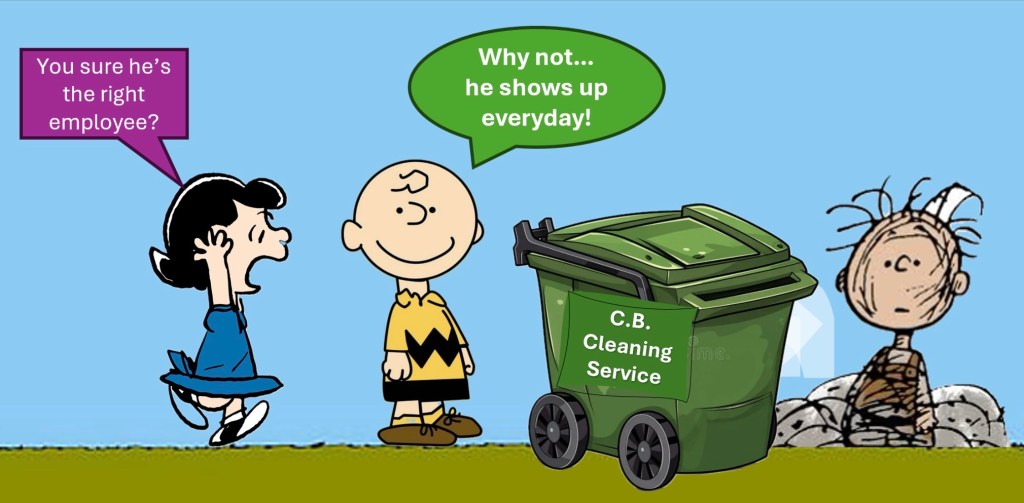
Today, I am not sure if business or organization leaders take enough time to review and consider creative options in obtaining the best Personnel “Asset Allocation” situation!
Personnel assets impact costs related to salaries, insurance, space, equipment, travel and professional development. These operational costs are often the greatest factors in a company’s day-to-day function and performance/profit. So it is logically critical to not ignore taking the most appropriate time necessary to ensure all personnel are progressively striving and achieving high level productivity in the workplace.
Bottomline: Don’t view the Personnel “Asset Allocation” responsibility with a: (1) we have always done it this way, or (2) it would be real confusing to try something different, or (3) what if it makes things worse… so let’s ignore it and maybe it will improve on its own… plan-of-action strategy!! Instead strategize collaboratively with other co-workers periodically and review personnel matters in a comprehensive and individual manner so all of the best opportunities come your way.
TRIPLE III TIME: Artificial Intelligence (AI) – Purpose & Use
This is one of the most difficult TRIPLE III TIME messages I feel a unique nervousness in writing about. Maybe it is because I daily try to avoid using technology in delivering my professional services. Or maybe I have not been a “student” of this area of new age professional development and therefore I feel totally inadequate when progressively discussing it. So am I guilty of utilizing a “hiding-spot” to avoid discussing AI and thereby going against one of my own leadership principles… maybe?
Well this week as I have been participating in preparation for start-up of the fall semester at the community college… Artificial Intelligence (AI) – Purpose & Use was a high impact discussion topic. So continued avoidance no longer is an acceptable professional leadership option… and taking a position on its workplace contribution needs prompt attention.
First the most important point I want to make is that I know AI WILL be part of everyone’s job/career going forward. Therefore, does every worker/workplace need to have quality discussions regarding its purpose and use…ABSOLUTELY! To me this means that everyone must acknowledge it as a solid tool for improving products and services… but that overuse can harm professionalism.
Second, I believe to appropriately make use of AI… establishing understandable boundaries and expectations will be difficult but necessary. What do I mean? For example, will it be a good situation to have an AI generated staff memorandum distributed when it in no way sounds authentically like YOU? Or would it be progressive to have your bosses start asking AI “what IT thinks about an issue”… rather than asking YOU? Would these actions delete the customer-valued “personality” your company/organization has tried to build?
Bottomline: Next week when classes start…I will strongly remind students that THEY are in my class… not computers. But I will also indicate that AI in an evolving professional career-building tool and that THEY still hold the keys as to when/where/and how much AI can positively contribute to their work.
TRIPLE III TIME: “Job Titles”
Have you ever been in a decision-making position that has required you or a group to determine the “official” Job Titles for various work areas? I have participated… coached… and observed this seemingly easy process… but let me report that “EASY” has never been the right word to describe the assignment!
Well because more recently I have been asked to provide some guidance in determining MODERN… ACCURATE… RESPECTABLE and COMMONLY UNDERSTANDABLE: JOB TITLES for a couple of groups… here are my TOP 10 thoughts applicable to this situation:
- Don’t select an option just to make someone happy.
- Plan to assess and review all organizational “Job Titles” annually.
- Pledge to stay modern… old titles create an age stereotype/bias.
- Do real research on options… go beyond typical/traditional.
- Write down job expectations first… then think title.
- Take particulars about current employees out of the job description title…make it stand alone.
- Make final “Job Titles” choices with at least 3 other colleagues.
- Realize and remember that every job today will have techno-applications.
- Make sure your mother (and even grandmother) could understand the job via the title.
- Try to not consider money/salaries or status… because “Job Titles” are about duties and responsibilities.
 Finally, and maybe this is #11: Include a personnel option that allows if someone REALLY doesn’t agree with their Job Title… that they have the option to submit an alternative title along with quality justifications for change.
These thoughts may or may not make determining “Job Titles” easier… but it will sure make everyone respect the effort to find the best there is!
TRIPLE III TIME: “Stereotyping” Mistakes
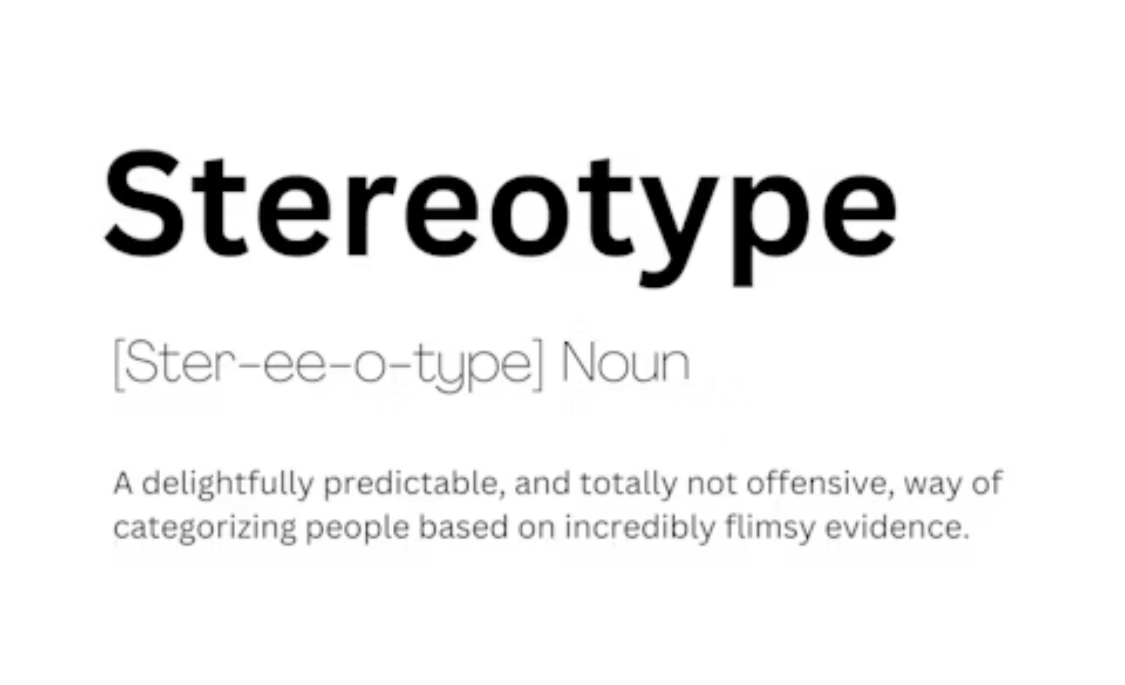 First let me state that I am sure that the wise readers of the TRIPLE III TIME blog messages… NEVER make “Stereotyping” Mistakes! None of us look at the way someone dresses… talks…and/or where they live and places a certain stereotype assumption on them…RIGHT!
In my long-term public sector employment history… I have observed… and yes unfortunately applied various forms of stereotypes to different people at different times. Is it a form of “human-nature”… yes probably… but does it most often cause multiple forms of “Stereotyping” Mistakes… YES! This stereotyping trap that I am describing also occurs when we believe people will behave in a certain manner depending on their age, gender, social or economic background. For example, if someone drives a brand new Porsche versus a rusting 1963 Ford pickup… do certain stereotypes show up? Or if someone shows up at an event with children all dressed in dirty clothes versus a family in modern-stylish dress-ware… do we start stereotyping?
Many times when I have my consultant “uniform” on and am addressing the needs for all organization staff to be authentic…the issue of stereotyping people is discussed. I remind them that they all will play a leadership role sometime during their employment years… and it is a LEADERS responsibility to stress the problems caused by “Stereotyping” Mistakes. Is it sometimes difficult… non-intentional… professionally confusing… yes!? However, does it most often lead to a lack of understanding, miss-communication and a tremendous loss of authenticity on both sides… also YES!
I guess my most memorable example of being told that its best to be just authentic and not make “Stereotyping” Mistakes came directly from my Ma when she said a long time ago: “I don’t care what job you have or how smart a degree says you are… you just be Marv.”
(P.S. It’s her birthday this week!)
 Inspiring Innovations, Inc.