As a consultant offering professional development advice and workshop information to clients… there are not two terms that I stress more than: Promises & Deadlines!
Think about it!??
Effectively and efficiently keeping personal, business and/or organizational Promises that you make very strongly impacts the trust factor that people apply to you as a professional. Likewise, with the always important “just-in-time” specifications that are connected to the delivery of all products and services in our everyday world… meeting agreed upon Deadlines often defines your status in the marketplace!
So how are YOU with regard to: Promises & Deadlines!?
If you Promise to arrive at 5pm to help coach a little league team… are you on time?
If the Deadline for your credit card bill is March 15th… do you send it early or miss the Deadline and pay more interest?
If you Promise to come to work early for a special meeting… are you there?
If the Deadline for applying for a credit for purchasing necessary workplace supplies is tomorrow…are you late?
If you Promise to take good notes on a project and share them… are you reliable?
If the Deadline for approving changes in personnel duties and responsibilities is February 1st…does everyone get your message in time?
If you Promise to design a new product flyer by the end of the month…are people still waiting?
If the Deadline for calling all family members about an upcoming event was last week… do some get left out?
If you Promise to quickly review and approve staff time off…is it a priority?
If the Deadline for submitting required performance reports has passed… are you concerned?
The Promises & Deadlines questions are offered just to prompt areas of concern. However, I have to encourage everyone to work hard to maintain that Promises made Promises kept professional standard. And also remember… Deadlines are established because time matters!
As I have continued to work with some really fun personalities over the past few years…one thing we talked about is building a personal/professional PORTFOLIO! No, this is not an idea to replace your resume as you look at and consider your fit in different jobs. Rather Building YOUR PORTFOLIO should be a collection of work and hobby examples that reflect the extent of your life skill-set. And as you can guess I stressed that it should be ever changing, growing, historical yet up-to-date to accurately display how your career, business, hobby, achievements and interests have evolved.
What does GOOGLE say about PORTFOLIOS:
“Essentially, it’s a comprehensive showcase demonstrating capabilities, achievements, and holdings, adaptable for creative fields (art, writing, design), finance, or career development.”
Reflectively when pressed to discuss what I would put into my PORTFOLIO… I was quick to recall the binder of innovations I had dreamed-up in my Director days that my good friend and co-worker D.S. had put together for me. And like so many others considering PORTFOLIO building, I had to admit: “I’m not sure where I put all that cool stuff!” So remember this statement from Clark University:
“Save everything you create and decide later what you want to include in your portfolio. Some items may be more relevant to the work you’ll do in one position than another, so it helps to have a variety of samples. You can present your materials in your own creative style.”
Bottomline: Remember always that primarily the PORTFOLIO you build is for YOU! Next, try to include your entire history of creations, professional awards, formal and informal education achievements and job experiences. I believe you will find that your always semi-completed PORTFOLIO document will be a valuable asset as you continue forward.
Finally… TAKE YOUR TIME! You didn’t build your PORTFOLIO entries in a day… so it doesn’t have to be completed in a day.
This week classes have started at Alpena Community College and as always during my first American Government & Politics class everyone must introduce themselves…including me! Well as I described my workforce/job training career time…a very wise young lady asked a great, thoughtful question. It went like this:
“Sir, I currently work at a regular fast-food job and if I wanted to make it feel like More Than Just-A-Job…what would you tell me?”
Well first I gave her a very strong “that’s a wonderful question young lady” statement…and then offered a brief list which I shortened into a very basic TOP 10 of More Than Just-A-Job priorities:
Do you do the minimum in the job you have?
Do you arrive for work early and stay a little later…or watch the clock?
Do you communicate well with everyone?
Do you try to be a good promoting person for your company/group?
Do you do your own research to know the maximum about the company you work for?
Do you ask for direction regarding any new training that would make you a better employee?
Do you expand your area of work to learn more…or wait to be told?
Do you help new employees because “it’s the right thing to do”?
Do you appear on a leader-list as someone to ask for help and new ideas?
Do you represent someone who would naturally be growing toward a promotion or a raise in pay?
As you can assume…my responses started a fun series of additional questions and discussion. However, I needed to steer back to introduction time in the classroom!
Bottomline: This More Than Just-A-Job TOP 10 in many ways is a timeless list of important employment priorities. The class will get more “words-of-wisdom” about jobs during the semester. Can you add to the list??
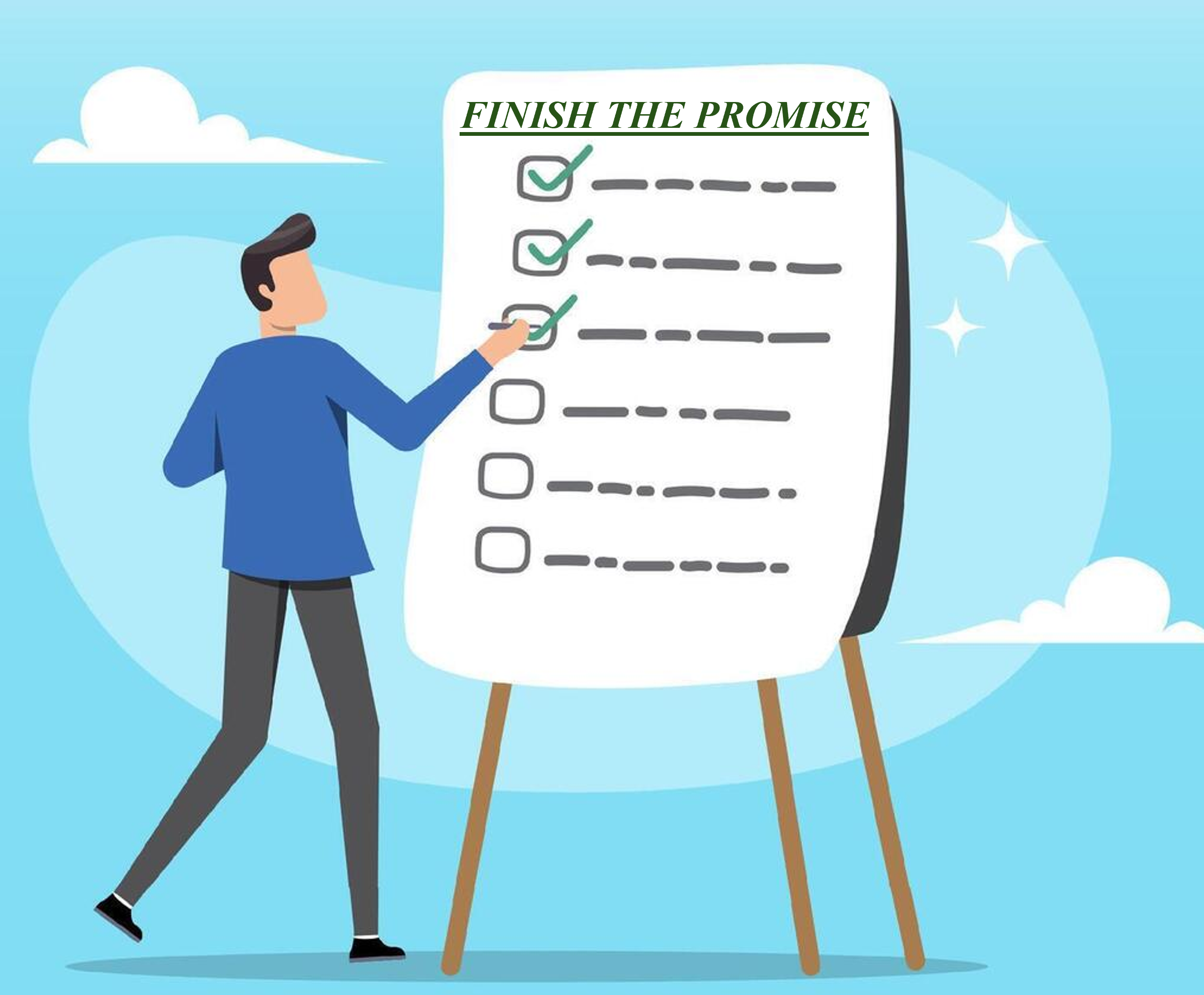
Let me start this first 2026 TRIPLE III TIME message with a historic proclamation: “I am not big on New Year Resolutions!” And I am sure I am not alone on this personal position…but at the same time I know there are many who at least make an honest attempt to save money…lose weight…communicate better…you know the list. So maybe it is professional time to toss out a Resolution idea that might help everyone. Let’s think about a special TRIPLE III TIME commitment to: “FINISH THE PROMISE!”
First, I want everyone to think about this Resolution mostly as a quality-building customer service. More often today I have witnessed and felt very frustrated when a company/organization did not “FINISH THE PROMISE!” for a service/product that was agreed upon. Think about times when a return call was not received, a repair not made, service order not completed, visit not arranged, and/or payment not sent on time. Do any of these actions impact quality customer service?
Quality customer service does not come naturally. Customers should NOT have to call and remind you of the product/service responsibilities you/they have agreed to and maybe have even been paid for. Quality customer service is as important as an accurate invoice or having the right signature on a contract. Quality customer service should also not drive individuals to wonder if a product/service will be delivered on time. Rather in both cases if a company/organization/individual prioritizes a “FINISH THE PROMISE!” performance practice everyday…every time…pure quality will follow.
Bottomline: Let’s all make a “FINISH THE PROMISE!” 2026 Customer Service Resolution. Make it an “across-the-board” personal and professional commitment…and I promise the benefits will follow.
Well… yesterday was Christmas. I hope every part of it worked out GREAT for everyone. A lot of clean-up in homes is probably an important first consideration but while you pick up all of the present wrappings… how about a few professional WHAT NEXT thoughts? Yes, I realize that 2026 is still a few days away…and there will be ample time for future thoughts then. But in this unique “in-between” time my TRIPLE III TIME mindset is pushing me to encourage everyone to take a “soft”: PRE-2026 Taking Stock of Your Priorities consideration moment.
And just for traditions sake…here’s a TOP 10 list of questions to help in your PRE-2026 Taking Stock of Your Priorities “study”.
1. What single VERY IMPORTANT accomplishment did you NOT achieve in 2025?
2. Who in your family or friend or colleague lists did you NOT connect with?
3. What question do you wish you had asked your supervisor at work?
4. Is there a home improvement project that is still on the “to-do” list?
5. Have you decided what form of professional development would work best for you in 2026?
6. Is there still a fun trip that was planned…that is still planned?
7. What action in 2025 made you feel successful…and can it happen again?
8. Did you remember that a good idea can only be good if you share it?
9. Did you grow into new personal/professional partnerships?
10. Did you improve as a leader, communicator, and/or innovator?
Have fun with your PRE-2026 Taking Stock of Your Priorities consideration moments. Give yourself “righteous” credit where it is appropriate and make WHAT NEXT 2026 priorities that challenge you.
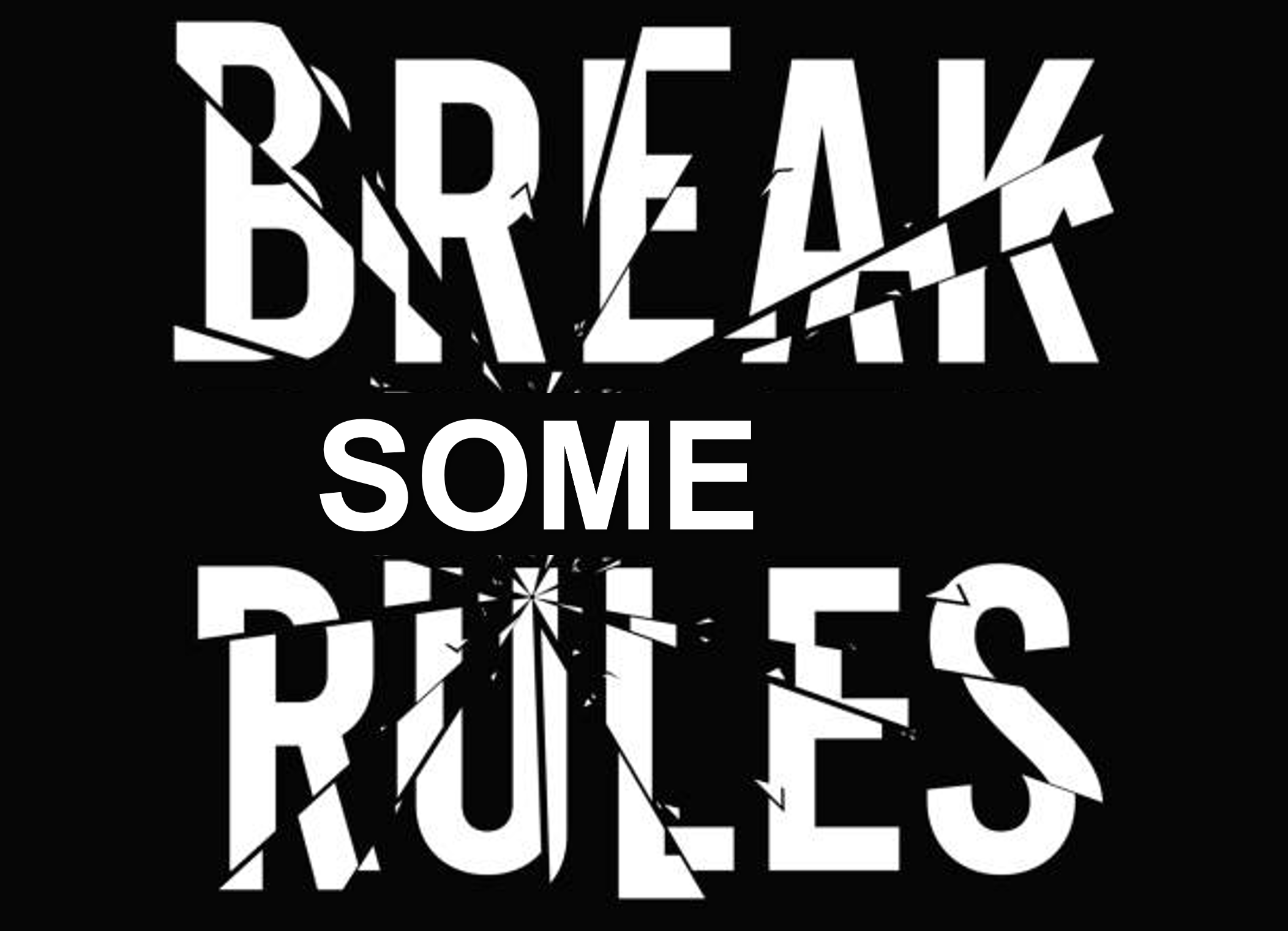
“Those who make new innovations and are successful in breaking the rules are creating the new rules. And in a never-ending cycle, those new rules will have to be broken as well.” From “The New Rules of Innovation” (2012)
There are so many individual thought pieces that can be discussed when writing about innovation… but risk-taking and rule breaking are two that I have NOT specifically targeted… so far!!
As you… we… all watch and participate in a world that realizes change on almost a minute by minute basis… old ways and old rules just seem to be a heavy weight around fast-paced progress. Even when the latest innovation arrives and some question its success impacts… if it improves the status quo… it must be considered some form of “winner”.
Hence as the opening quote proclaims, if you don’t plan to: Break Some Rules!… progress will remain at the “held hostage-starting gate.”
During my Director years, one of my biggest innovation rule-breaking challenges was to inform those at the next higher level of leadership that applying their old rules to our new way of service delivery… would NOT work! Whether we framed our new initiative as a “demonstration project” or “pilot program”, the ultimate goal was to up-scale everyone’s mindset on how to evaluate us. New/alternative “measuring sticks” were debated and ultimately applied because traditional rules of performance needed to be “broken”!
Bottomline: if you really believe in innovation and you Break Some Rules… it should not be considered illegal/subversive/disrespectful or non-compliant. Rather it should be assessed, non-traditionally measured and given appropriate support for an attempt to modernize and encourage progress. Additionally when one Breaks Some Rules…unplanned successes and diverse development outcomes often occur!
Remember, innovation action needs to be accepted and encouraged…. or new successes may never be allowed to grow.
Sometime… somewhere we have all heard the phrase: “Don’t Lower The Bar”. And if discussed in a professional development situation… the phrase most often refers to lowering the standards/expectations that need to be met to qualify for something. So as a consultant advising business or organizational leaders… do you think there would ever be a time or event that would push me to suggest “lowering the bar”?
Working with people no matter the job or the position you hold is one of the toughest professional tasks. And although there may be decision-making moments that would offer positives if lowering the bar of requirements were made. In the long-term however… any precedent-setting action of lowering qualification requirements… may cause multiple non-progressive results.
What challenge/results am I referring to? Check out the following TRIPLE III TIME “Don’t Lower The Bar” concerns:
Lessening the number of learnings needed to attain certain credentials.
“Squashing down” the time needed to certify total completion of requirements.
Taking “assumed-learning” as “good enough”.
Convincing yourself that more experience will fill-in the learning gaps.
Not worrying about your own credibility when you sign a certificate of completion or letter of recommendation for someone.
Remembering that job orientation/on-boarding learning normally occurs just once.
Finally, regarding awarding promotions and advancements, lowering the bar based on employee longevity… existing degree status… or friendships and company/agency loyalty… can often result in unfortunate outcomes.
Applying the “Don’t Lower The Bar” principle may be difficult in some unique categories. However it has been my career-long experience that maintaining and maybe even RAISING THE BAR of professional standards/expectations… can produce quality progressive outcomes in creative ways!
“Finding ways to work with the wrong (or old) equipment can be a boost to your creativity!” (GREAT TED TALKS, Tom May, 2020)
Did you ever want to just throw your computer out the window when you push the wrong button and the screen goes blank?? Or maybe it took you 40 minutes to type the “perfect” paragraph and suddenly the battery power in your computer is gone and you effectively lose some important information? It is at these moments that Mr. May’s quote pushes me not to always rely on what a computer can do for me on “ITS” terms… but rather find a way to get more out of technology on my own creativity terms!
I describe my challenges with computer usage as a lead-in to this week’s TRIPLE III TIME message: Using The Wrong Equipment =’s Creativity! It is a real-time example of taking a little extra time… reinforcing patience… lessening the need for “perfection” and taking an alternative techno-approach to motivate innovation. Did the experiences I described make me try a little harder on improving my initiative and focus better to complete my project… yes it did. Was computer technology for me the wrong equipment for what I was attempting to write… yes. But did it challenge my creativity to make it work for me in a different fashion… YES!
The goal of this week’s message is to help everyone consider different forms of “wrong equipment” that you experience (more Marv examples: foam brushes, sledgehammer, virtual meetings, hand saw, cell phone, online book and pest sprays) and consider the creativity capacities it may ignite. Think about:
Repurposing equipment/tools to invent an alternative purpose for them.
Using wrong equipment in a totally different manner (especially computers) to get more out of them.
Lessen traditional stereotypes regarding wrong/old equipment and tools and realize: “They ain’t as bad as I thought”.
And/or in a unique kind of way…think about applying the Using The Wrong Equipment =’s Creativity message with regard to people you work with/employ. Maybe someone is the “wrong equipment” for one job…but may be absolutely great in another employment area. Creativity…right?!
Tom May offered a great, thoughtful quote. Make it work for you!
In high school and even when I started college (by orders from my parents) most of my career thoughts were about partner farming with my Dad and brother. Even as I half-heartedly took classes my first and second years…I still wasn’t real serious about a specific job interest nor what a college degree would do for me. But the more part-time jobs I took and the quality connections I made at every development turn…the more I realized the satisfactory smiles I attained just helping people.
So now as I look back and consider all of the non-traditional steps/actions I took to spend my entire career working for the cause of helping people…the better I understand that just helping people was the “WHY” driver in my work-world. And now for this TRIPLE III TIME moment, to share special thoughts about: Strengthening The “WHY” In What YOU Do!
First start by growing past that “it’s just a job” mentality. Too often people take this approach/attitude and do the minimum to make the it’s just a job”…a total reality. It is totally up to you to develop and show a special kind of energy for your “WHY”…that no one else in your workplace can replicate.
Second begin looking for and connecting with others that have similar “WHY” this job is especially right for me…right now approach. You really will never know when the chance meeting opportunity will occur…but often it finds you! Ideas, hobbies, philosophies, products, colleagues and priorities uniquely find their way into your conversations. The result is that your “WHY” purpose gains greater satisfaction and creativity.
Third, take advantage of these no cost high value connection opportunities. You will find that the new network partners will appreciate when you “take-advantage” of their skills and knowledge and then how it happens naturally in reverse. But remember you must let your “WHY” job/career thoughts be clear and thereby allow more open conversation to take place.
I can’t think or even guess the HUGE number of lifetime opportunities and privileges I have experienced when connecting with those who share my professional “WHY” and my enthusiasm when innovating “with-my-own-kind”! They represent a special kind of professional development and by Strengthening The “WHY” In What YOU Do! will better build that progress element in your world-of-work everyday…EVERYWAY!
“When we create a culture that rewards collaboration and cooperation, we actively encourage our team members to behave in that way. When we reward aggressiveness, this spreads throughout the organization like “a virus”. And while it might seem productive to create a red zone filled with star performers, eventually these individuals will be more concerned with trying to take each other out. Your star performers will very quickly become less than average.” (Jim Tamm: Cultivating Collaboration)
Do YOU Get Defensive? I will admit freely that as a life-time innovator and idea person…early in my career I would get quickly defensive if someone questioned my concept or new way of “getting-the-job-done”! It would be easy to hide behind the excuse that it was just human nature…right? However, it didn’t take me too long to realize that by getting defensive…I often drove colleagues away and maybe even lost their always needed support.
It is critical to realize that there are absolutely NO positives in taking a defensive posture on anything. Co-workers will not want to work with you. Bosses will treat you in a guarded way and not include you in high-value discussions. And customers will “keep their distance” if you get defensive even when they just ask a regular product/service question.
Finally if you apply the Do YOU Get Defensive? question with regard to your style as a leader…do you see yourself as open to questions…comment and/or critique? And don’t compare being defensive…with being confident. Your conduct/messaging will be worlds apart in how it is perceived by others.
Remember being defensive will always put you in the NEGATIVE category.
 As I have continued to work with some really fun personalities over the past few years…one thing we talked about is building a personal/professional PORTFOLIO! No, this is not an idea to replace your resume as you look at and consider your fit in different jobs. Rather Building YOUR PORTFOLIO should be a collection of work and hobby examples that reflect the extent of your life skill-set. And as you can guess I stressed that it should be ever changing, growing, historical yet up-to-date to accurately display how your career, business, hobby, achievements and interests have evolved.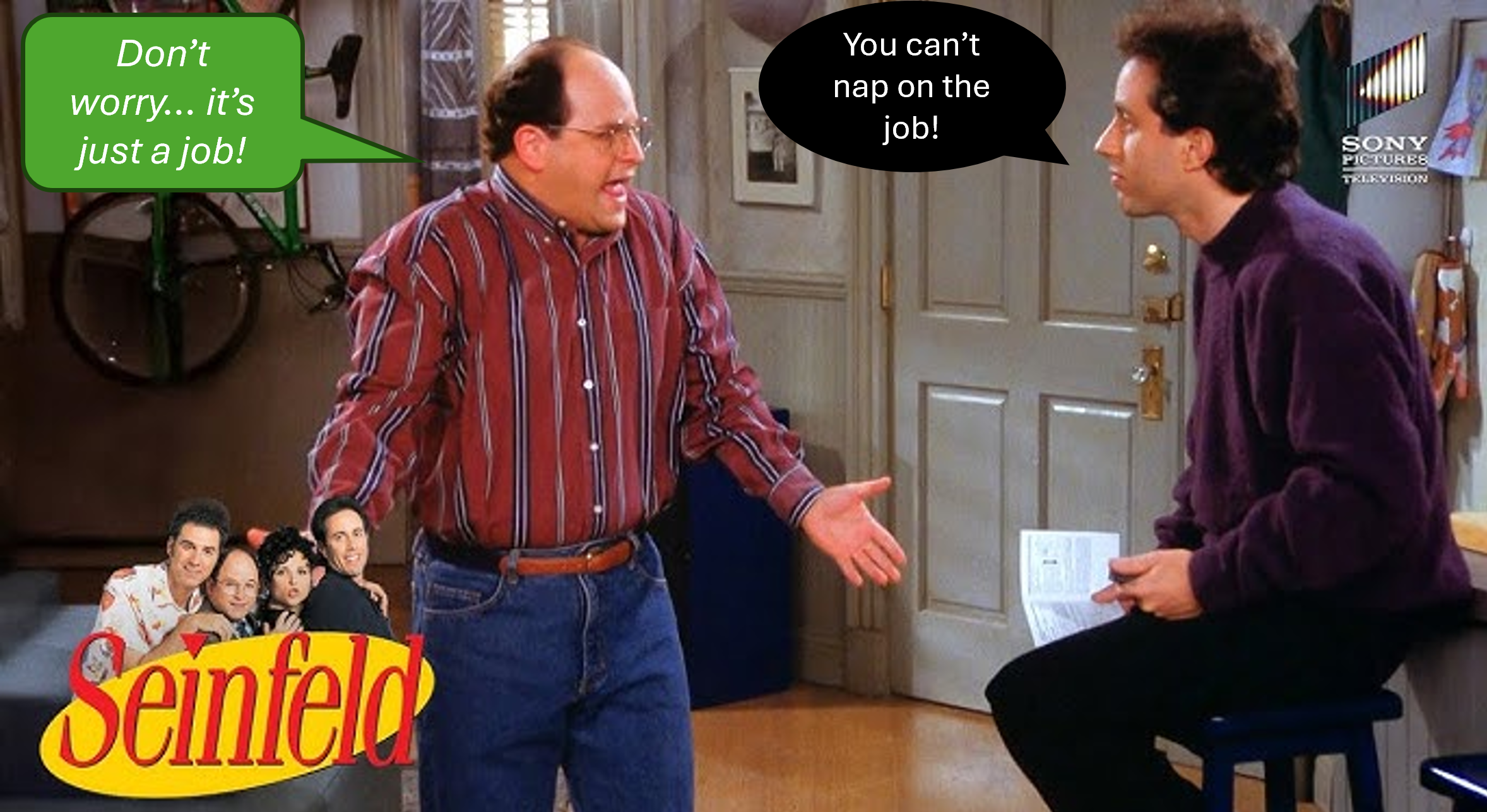
 Quality customer service does not come naturally. Customers should NOT have to call and remind you of the product/service responsibilities you/they have agreed to and maybe have even been paid for. Quality customer service is as important as an accurate invoice or having the right signature on a contract. Quality customer service should also not drive individuals to wonder if a product/service will be delivered on time. Rather in both cases if a company/organization/individual prioritizes a “FINISH THE PROMISE!” performance practice everyday…every time…pure quality will follow.

 Inspiring Innovations, Inc.