Category Archives: COMMUNICATION LIVES
TRIPLE III TIME: Newsletter “Particulars”
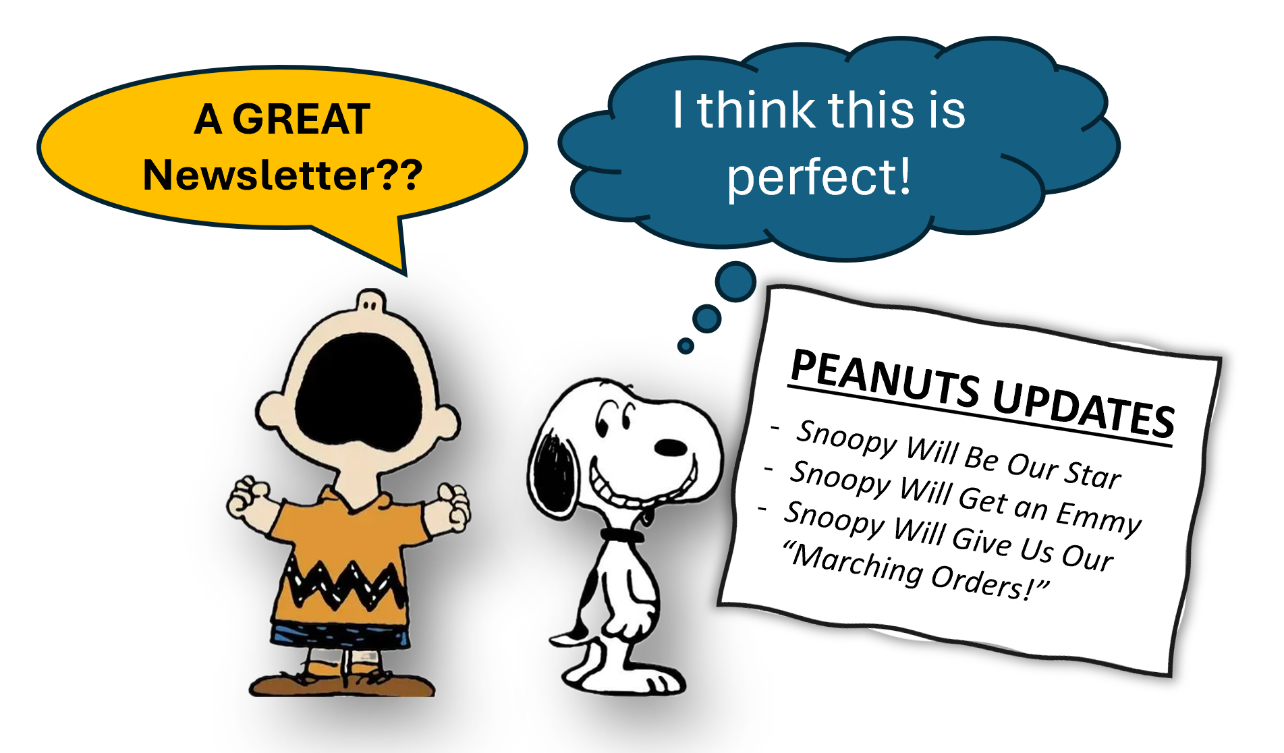
This week’s TRIPLE III TIME message is one specially requested by a long-time reader. Her request was more about my “opinions” regarding company or organizational newsletters…rather than my thoughts about what qualities make one a GREAT ONE! So I guess as you read through the message…I believe you will find I have taken the middle-of-the-road position when discussing Newsletter “Particulars”.
First, I believe internal and external newsletters can be HIGH VALUE if designed/developed correctly. Regularly…consistently taking advantage of the ability to share accurate, enthusiastic information can prove “priceless”! GREAT newsletters should generate a vision of the future (what’s next) and thereby give readers something to look forward to.
Second I really don’t support a continual “report-out” document that only talks about what’s been done (i.e. old news!). Reporting pieces on progress are acceptable…especially if they describe what they mean for the future. Also, if you are the person most in charge of newsletter production, think about visuals reflecting today and tomorrow views on issues/products/services. Colors, straight-forward wording and terms that invite people to want more info are important.
My old TOP 10 weekly staff news-piece was a fun motivator. Every Friday it listed things to look forward to the next week…what staff would be responsibly involved…and what new stuff may result and determine who else may be given an assignment?! All about the future…all the time.
Finally when you think about Newsletter “Particulars”…don’t have big hopes of return communications from the readers…good or bad. Newsletters should be primarily considered a leadership privilege to better inform…set priorities…offer clarity…and possibly motivate those in the targeted audience.
Don’t waste this critical opportunity.
TRIPLE III TIME: In-Person Times
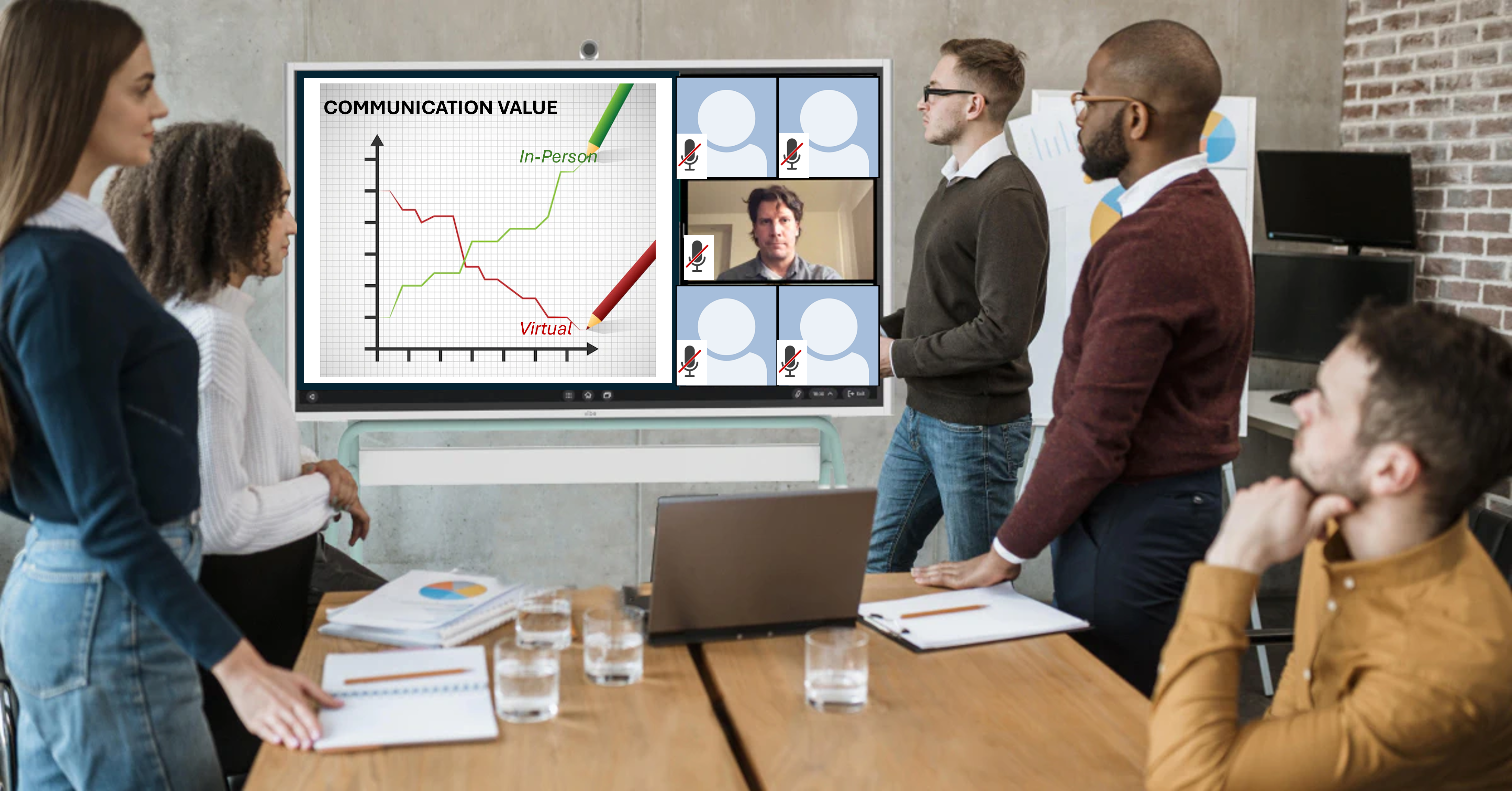
Somehow I wish I had recorded the times the discussion of in-person versus virtual connections occured… and the values of meeting face-to-face were highlighted. Yes, I understand that “distance” learning, meeting and communicating are just the new times requirement… but did I say “that I believe only half as productive!” So yes again I know that time… money…. speed and efficiency matter… but what about authenticity… clarity…. and personal sincerity? How do you measure those?
Today I feel In-Person Times in the workplace have increasingly gone up in value.
Think about it!
Think about meetings… presenting… interviewing… teaching and just plain LEADING. Think about the ability to introduce something totally unique to a group of faces on the big screen. Can you walk over and ask… ”do you really get it?” Can you convince them that every meeting is a special professional “once-in-a-lifetime” opportunity? Or are you just hoping that the session offers some level of quality understanding and need for solid further action? Or has progressive convenience replaced the priority for In-Person Times?
Bottomline: In a way this TRIPLE III TIME message may sound sarcastic or maybe a little bit old-fashioned… right? However, my goal for this week is to re-review the professional value of taking greater steps to require In-Person Times in workplaces. Don’t minimize its impacts. Don’t take it for granted. And don’t let “good enough” in the operational areas of meeting, learning, and communicating be your organizational standard. Go the extra mile in providing In-Person Times and your workers and customers will realize the benefits.
TRIPLE III TIME – RESPECT: Common Sense Professionalism
Providing the best instruction to my American Government & Politics classes has become a little more challenging this semester. With the upcoming election now just a week away…the questions and discussion about each candidate at every level of government…has become more direct and intense for all the right reasons.
As you can guess we talk about:
- Political party differences
- Personal positions on issues
- Priorities for our country/state
- Information shared by candidates and their methods of communication…
and yes multiple points-of-view are openly expressed. Regardless of their beliefs and attitudes…the single, most, important position I require each student to understand, accept and utilize is:
RESPECT: Common Sense Professionalism
Why is this the most critical lesson to be learned??
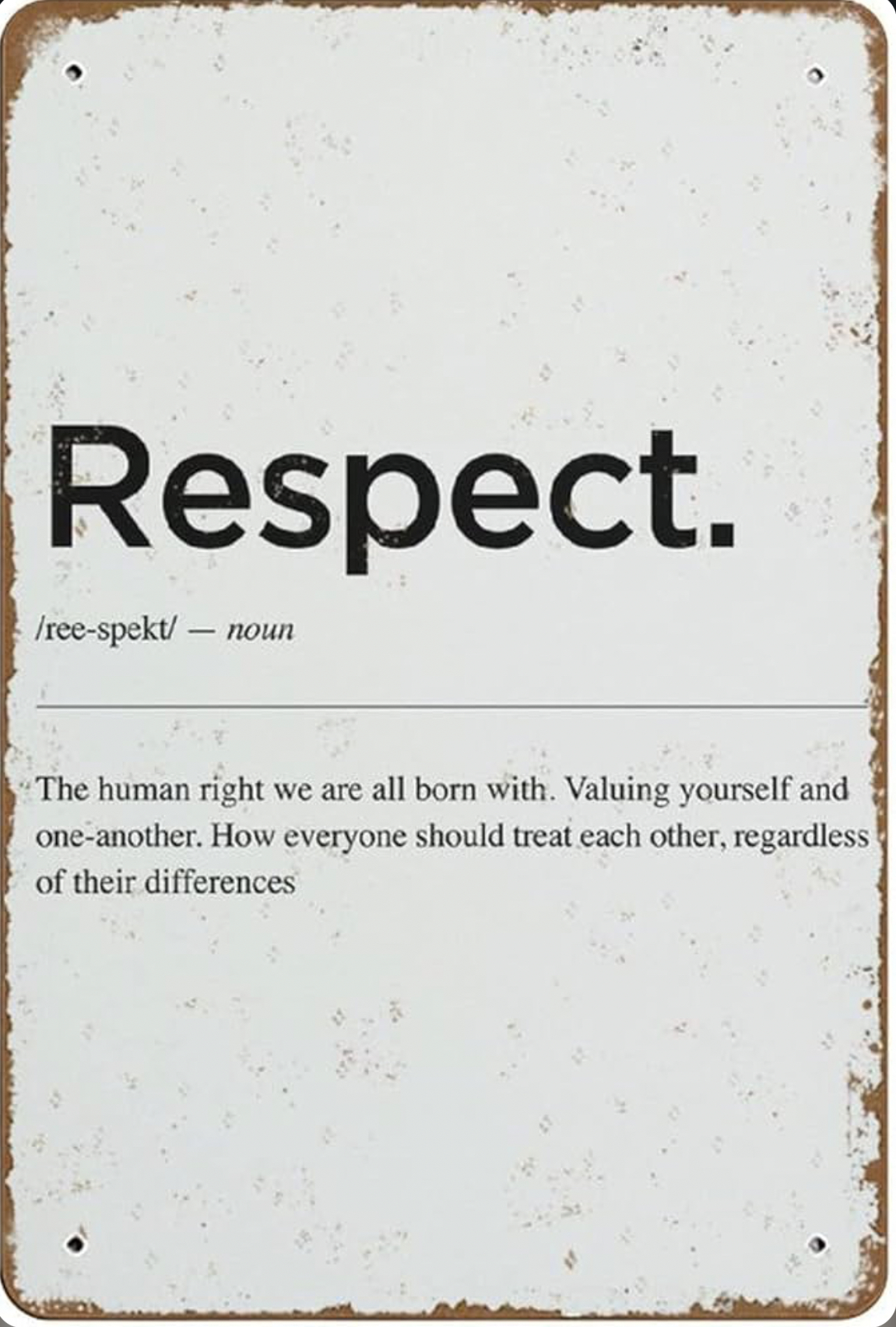 Well I let them know that in politics…or on the job…or on personal life issues, the individual that follows a RESPECT: Common Sense Professionalism code of conduct… will most often be the more successful person. And regardless of your role as a leader, co-worker, colleague, friend, neighbor, student, teacher, political candidate and/or life partner; if you appropriately show a professional level of common sense respect to everyone you interact with…the right kind of respect will be returned.
The best part of this week’s TRIPLE III TIME message: RESPECT: Common Sense Professionalism is that YOU own its potential. YOU control YOUR potential to offer the best form of professional respect. So use that control/potential wisely everyday…EVERYDAY! The positive, progressive, professional returns will be unlimited.
TRIPLE III TIME: Mini-Info PIT STOPS!
 Communication designs and methods are probably one of the largest change areas we are experiencing everyday. I know I would not be able to list all the options that are out there right now…because I would forget a bunch…but just realizing the modern day expanse of the communication industry…is just overwhelming!
So to try to offer understandable, usable communication skills improvement considerations in our limited TRIPLE III TIME message-space…lets discuss what I call: Mini-Info PIT STOPS!
First let’s think about preparing to effectively communicateout a sizeable number of information items. Consider the following:
- Build your important concepts into a series of bullet points. You may have to draft them a couple times but simple, direct, interpretation-free would be the best structure.
- Use visuals to make a statement on an issue. Try it before you question this suggestion.
- Condense your timeframes. Think about limiting time/focus on a certain issue to15 minutes. If you allow more time…people will regularly “take it”.
Now let’s “turn the tables” and think about actions tomaximize your receipt of valuable information. Consider the following:
- Practice critical listening. Screening in communication highlights is a critical professional development skill…everyday!
- Try to “taste” items being communicated to better determine their understandability.
- Don’t go back for information “seconds”. It’s ok to be “concept-full” with small portions.
Bottomline: Sometimes people almost progressively “choke” on receiving too much information too fast. Creating a communication style which supports Mini-Info PIT STOPS will allow both the communication giver and receiver the time to better digest the message(s) being offered.
TRIPLE III TIME: “In-Person or Convenience”
Over the last at least 10 years, I have watched the meaning and quality of effective communication fade. You know where I am going with this TRIPLE III TIME message…and the “old-timer” position I am taking concerning “In-Person or Convenience” communication impacts! But before you stop reading and apply that old-school label to me…let me offer a few “reverse-the-trend” thoughts.
 First, think about the “real” feelings gained when meeting/conversing with someone In-Person! I believe the completeness of every discussion and an extended feel for a “what next” partnership should reverse every concern about miles traveled or extra time required to make an In-Person event happen.
Next think about video and/or text message limitations. Do people subconsciously limit their thoughts…problems…ideas…points or concepts needing discussion? Even In-Person telephone calls seem to invite more in-depth conversation opportunities than words or pictures on a screen!
Lastly (at least for this week’s message), think about the engrained importance of simply “seeing who you are talking to…and them seeing who they are talking at”! Facial expressions…genuine laughter…quizative looks…direct negativity and absolute support are all critical components of meaningful/quality communication everyday…EVERYDAY!
Bottomline: Every person has the power to determine “In-Person or Convenience” messaging. And I understand that every situation and communication options are different. However the critical point to this TRIPLE III TIME topic is to encourage everyone to not allow convenience to be the principle deciding factor in your method of personally and professionally communicating. Taking a stance against the growing trend of In-Person communication avoidance…can be positive, progressive and fun too!
TRIPLE III TIME: Constructive Criticism
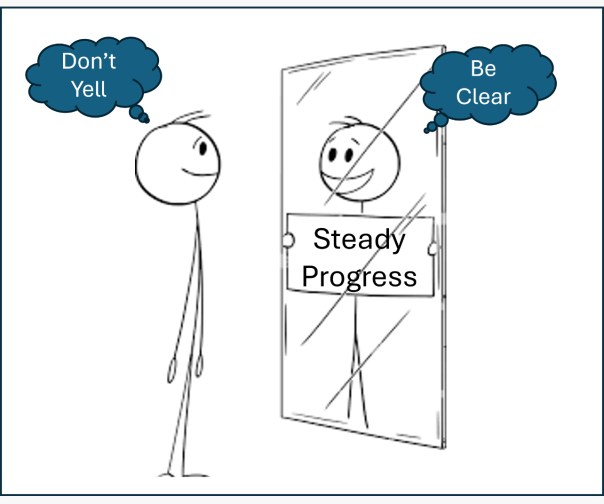
This week’s TRIPLE III TIME message beings by asking everyone to take a serious look in the mirror and assess your style of delivering Constructive Criticism! Think about it?! We have all been in THE situation that requires you to offer a personal statement of honesty regarding an action taken by a co-worker, friend, manager, colleague and/or even a family member. So how did you do?
Well before we go much further into our discussion… let’s see what GOOGLE says about the definition(s) of this challenging topic!
“Constructive Criticism is a form of feedback that focuses on delivering critique and negative feedback constructively and positively to improve performance or behavior. Constructive criticism is actionable, clear, and beneficial to the recipient.”
Or
“Constructive Criticism is a comment or comments saying in a helpful way what is wrong with something and how it could be improved.”
As you continue engaging with your image in the mirror… think if you try to always deliver your Constructive Criticism in a positive tone. Do your words of advice come across as critical and non-progressive? Or does your feedback generate the wish for additional assessment discussion that is issue specific… with improvements that are understandable and corrective action suggestions that are workable?
Bottomline: I believe the responsibility for providing Constructive Criticism today has become more challenging than in the past. Choosing the right words… controlling the tone of your message delivery… and offering the most appropriate alternative actions to be taken… is and always will be going forward… a HUGE professional responsibility.
So think more deeply about the words you use to create every Constructive Criticism message. Also remember that raising your voice may cause someone to listen less… so a soft, direct tone may be best. And finally only suggest an initial limited number of action improvements. Too many can be as damaging as too few.
If you are questioning if this message makes positive sense… put yourself on the Constructive CriticismRECEIVER side of the table.
TRIPLE III TIME: Maximize Engagement
After a long sabbatical from the opportunity to “present” at a major professional conference, recently I traveled to another state to share and pitch a new progressive workforce concept. Was I nervous…YES! But at the same time very excited and prepared to facilitate a workshop on a topic that I felt had the potential to transform the historic “job-prep” scenario…into an organized, modernized, all-jobs impactor action!
Well as a small group formed in my presentation room, I quickly realized that I had attendees from at least ten (10) different states. And when I announced that I would NOT be using a power-point, did NOT have a series of hand-outs and I primarily wanted to Maximize Engagement with everyone…I received a fun, enthusiastic round of applause!!
This week’s TRIPLE III TIME topic: Maximize Engagement isn’t really about my workforce development idea nor my workshop experiences, rather this message is all about the high need and value of professional, personal engagement with everyone you interact with…every time you can.
 By working to Maximize Engagement not only do you heighten people’s understanding of your thoughts and important points…but equally you obtain relevant feedback that may improve the concept you are working on. Additionally, because we all need to regularly “exercise” our listening skills, the potential to hear more diverse discussion regarding progress challenges and/or discoveries connected to an innovation you may be proposing…are always more welcomed when Maximize Engagement is the priority.
With today’s increased technological shifts away from in-person meetings, the capacity to Maximize Engagement among colleagues and co-workers has become somewhat diluted. As a result, it is totally a PERSONAL RESPONSIBILITY to reapply this professional development opportunity in every situation you can.
TRIPLE III TIME: Interviewing With Authenticity
One of the standard components of every “job search” workshop is a strong segment on interviewing. Having a great resume, a good work history, extra education and a number of quality references can all be very important…but in the end how you “perform” during an interview most often holds the success attainment key to that next job.
But wait, how about if we turn the table. For professional development’s sake…did you ever wonder what kind of “interviewing preparation” steps are taken by those who are conducting the interviews?
The goal of this week’s TRIPLE III TIME message: Interviewing With Authenticity is to focus on the critical role taken by every job interviewer with regard to personnel selection and organizational growth.
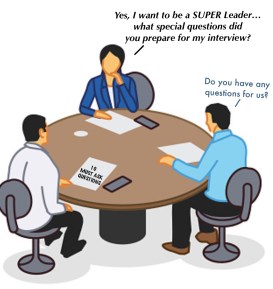 In many circumstances today interviews are conducted with a team of organizational leaders…right? And almost standardly there is one person who makes sure each interviewer has a list of questions to ask…in what order…and by who. Does that sound familiar?
So when you think of that scenario…isn’t it everyone’s wish to have the person being interviewed to shine…be confident…and be authentic…right? But what about the interviewers…does the process described sound “shiny” and in any way push the interview team to look/feel in any way authentic??
I believe that it is extremely necessary for all organizations to assess their employee interview processes and to specifically prioritize the “personality” you wish to convey and effectively begin with Interviewing With Authenticity!
Yes I know there are certain legal questions you must avoid…but consider does your interview team and process reflect your agency culture…commitment to growth…future purpose…and a united foundation. Or does your interview method portray a maintenance organization with historic practices I don’t even want to list.
Although Interviewing With Authenticity should be easy….my challenge in preparing this TRIPLE III TIME message reveals it is not. So start by taking a hard look at your interview processes and make progressive personality and AUTHENTICITY upgrades as appropriate. I guarantee your next interview will be FUN!
TRIPLE III TIME: “Can’t We Just Say: GROWTH SKILLS?”
Is it the year 2024…or are we still in a time of older use of out-of-date terms like: Hard Skills and Soft Skills? Maybe it is just me…but I feel confused when I hear people in different employment sectors tell me how important “Soft Skills” have now become and that “Hard Skills” knowledge has been placed on the back burner. Or maybe its when I show my often old-fashioned state of mind and I ask consultant customers to explain and list the Hard Skills versus Soft Skills so I can be more aware of this transitional occurrence!!
Today I believe that in the workplace… there is no longer an either/or position regarding Hard/Soft Skills. Time, occupational blending and cross-training has dissolved much of the traditional separation of Hard and Soft Skill traits. How… because sometimes you need to be tough-minded… but also caring in working with customers/employees. Additionally, isn’t it critical in the public or private sector that everyone understand performance and the fiscal bottom line? Yes… but stressing the importance of team-building, idea-generation and emotional intelligence is also high-value when building professional GROWTH SKILLS.
Am I making my point?? Let’s continue.
When a conversation comes around to a discussion of Hard and Soft Skill development in my consultant job areas… I try to steer the conversation to a new list of professional GROWTH SKILLS which I refer to as a set of 5-C’s:
- Communication
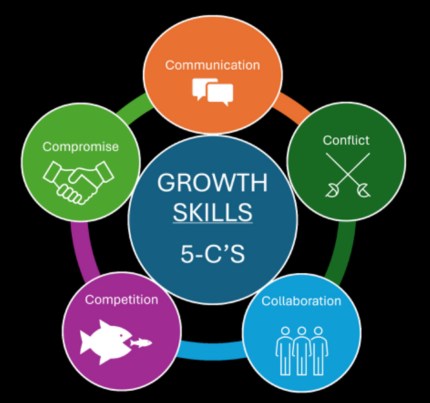
- Conflict
- Collaboration
- Competition
- Compromise
Think about it! Each of the 5-C’s GROWTH SKILLS components absolutely require experience, knowledge, and expertise derived from historic Hard and Soft Skills definitions and applications. However, the challenge TODAY is to effectively blend them within today’s 5-C’s GROWTH SKILLS line-up.
Now… “Can’t We Just Say: GROWTH SKILLS?”
TRIPLE III TIME: “Listening BOOSTERS”

It is early January and my two American Government & Politics community college classes have started. And hopefully as you will recall…I start each class with a mini-professional development priority subject to be a focal point throughout the semester. This semester the target priority area is seeking out and utilizing: “Listening BOOSTERS!”
Ok…Ok…I can see everyone looking around at each other prepping for a Marv-style definition of “Listening BOOSTERS!”
Well my definition of a “Listening BOOSTER!” is a person…activity…topic or situation that causes you to boost your attentiveness and thereby listen more intently to what is being discussed. Today I believe that everyone has become listening-numbed in so many ways and in so many situations that we all end up with only half-understandingness (yes that may qualify as a new word!) on the topic at hand. The result(s) is/are less accurate production/services, less passion about not doing just the minimum at your job and/or less caring about what cool future activities may come your way!
So what can we do to employ different “Listening BOOSTERS!” that will cause all of us to be better listeners?!
First, take a little time and ask yourself what causes you to be a better listener? Is it:
(And isn’t it interesting to realize that these same causes also can make you a poorer listener?)
Next…attempt to slow down topic discussions and try consider asking quality questions during each conversation. Also regularly ask yourself why a certain topic is VERY interesting/a priority to others…even though it may not be currently to you. And third always listen for selective professional development “take-aways” that may help you in the future.
Bottomline: Most professional discussions are really “once-in-a-lifetime” opportunities and will NOT be repeated. Applying purposeful “Listening BOOSTERS!…during every future opportunity will help all parts of your tomorrows!
 Inspiring Innovations, Inc.