Category Archives: DEVELOPING YOU!
TRIPLE III TIME: Be the GROWTH Example

“Bravery is not something we’re born with, but something we grow into and learn as we progress through life. However it is much harder to be brave if we believe that the person we are now is the same person we will always be. A GROWTH mind-set is the thing that allows us to be brave in the face of adversity. It’s our brains way of encouraging us to love a challenge-here’s a chance to learn!” (GREAT TED TALKS-Leadership by Harriet Minter)
This thoughtful paragraph written by Ms. Minter says an awful lot…in just a few sentences. Do you see/read what I mean?
In the first sentence Harriet tried to make the point that one must be patient and not to expect to be immediately “all-knowing” no matter your age. GROWTH comes to us as we move through our daily lives…so maybe we need to slow down and become a little more aware of all the diverse learning activities going on around us and maximize their progressive potential!
Next, she recommended that we not be afraid of GROWTH through adversity. Rather Ms. Minter indicates that approaching adversity through bravery is just natures way of challenging us and opening up new opportunities for us to learn.
(Now go back and read her quote again. What is YOUR take-away from these words?)
My biggest TRIPLE III TIME take-away from this great TED TALKS excerpt…is that it is forever critical to Be The GROWTH Example! Too often people shy away from life’s challenges and very much lose the personal and professional GROWTH elements contained in every one. Her paragraph also gives us a different “OPPORTUNITY OF A LIFETIME” scenario…and suggests that if you don’t approach life’s challenges with bravery…you may never get that OPPORTUNITY again.
TRIPLE III TIME: Planning For A PLAN!
 Planning is a critical task in every profession. Whether the assignment is teaching, sales, farming, home building…whatever, the responsibility for preparing and having a good PLAN of action for your initiative is just plain important.
So, as I began considering factors to discuss in this week’s TRIPLE III TIME message, I realized that many Planning for a PLAN actions have changed over my career years… and that maybe a special TOP 10 in this professional development area might be the best way to go! But remember these TOP 10 considerations come to you from a consultant’s mindset:
- Who wants the PLAN…who cares if it’s just Ok or Great?
- Will people care if it’s your idea…or should it be theirs?
- Remember a lot of PLAN narrative is “old news”…bullet points are a solid option.
- Consider “immediate gratification” components…they initiate interest.
- No one “goes-it-alone” in completing a project…so include partnerships in your PLAN.
- Offer information on past successful PLAN achievements if appropriate (they are like references in a resume).
- Use creative, visioning terms in your PLAN (create pictures with your words).
- Determine if the PLAN needs to be about “parts” of your organization…or more about the whole to be successful.
- Both TIME and MONEY are critical PLAN factors…give them appropriate attention.
- Finally, discussion about being FLEXIBLE and SPECIAL have a place in PLANS…they always matter.
Effectively and efficiently Planning for a PLAN is a professional development skill-set that may be used daily. Maybe re-read this TOP 10 with that thought in mind!
TRIPLE III TIME: “Owning-Up”
 Very recently I found myself totally lost in the world of technology! To be honest, the computer action I was trying to accomplish was far from “high-tech” stuff…rather it would be considered by most as a very elementary computer function! But given my attitude toward becoming more computer-literate…I had to begin “Owning-Up” to co-workers about my “technology disabilities” and seek out a colleague who could help me quickly resolve my issues.
So when I contacted SB…I was greeted in the most professional yet co-worker caring fashion. In a special kind of way she made “Owning-Up” feel like a very standard, yet important continuous improvement and staff development activity. SB talked me through the necessary steps…did NOT do anything for me…but made me push and type every button to get me computer-wise… where I needed to be.
The reason this experience is part of this week’s TRIPLE III TIME message, is to encourage everyone to try “Owning-Up” to knowledge and skill weaknesses… and not avoid or dismiss them as unimportant. Addressing any and all of these types of unknowings can not only improve your workplace effectiveness…but also serve as an avenue to make better friendships.
Additionally, SB served as the best problem-solver I could’ve asked for. How would my reactions be different if she had ridiculed my techno-weakness, expressed disgust at my lack of computer skills or shared my dilemma with others in a demeaning way. Think about your experiences on either side of this personnel issue (or others) and consider how was it handled. Were you SB-like…or the opposite?
“Owning-Up” and seeking quality help in an uncertain workplace learning area is the STRONG way to go. And when you are asked for “Owning-Up” help…be the professional and caring person that co-workers are hoping for.
TRIPLE III TIME: Tactical Planning…How Good Are You?
Organization and even personal planning are often not given the deliberate attention they deserve. Yes, I will admit that in my Director days I often employed a “flying by the seat of my pants” approach to planning and agency operation. However, I will also admit that because I surrounded myself with great co-leadership people, the need for complete detail in program/service design and delivery was gratefully provided.
But now in assisting my consulting clients and high-management involvement in the post-secondary education sector, I have come to focus more on Tactical Planning activities. Unlike strategic planning which concerns itself with decisions about resource allocations, company priorities and steps needed to meet important long-term goals…Tactical Planning is all about short-term plans and actions for implementing specific elements of a company/organizations larger strategic plan. Tactical planning may be delegated to middle-management…but realistically needs to involve all levels of an organization to be totally effective.
So, this week’s TRIPLE III TIME message asks: Tactical Planning…How Good Are You?
 Do you assign yourself to strategically think about and draft recommendations on how to improve yourself, co-workers and/or the organization? Or do you follow a more traditional line of thinking and believe “that strategic planning is the higher up’s job”? As a leader at any level do you convey an openness to all workers that their input and ideas are important? Would people observe that you and your business/organization operate with a culture that Tactical Planning is EVERYONES responsibility?
Times have dissolved the lines that limited frontline staff from contributing to solid Tactical Planning. Yes, there are still select areas that may need to be accomplished by Boards and top-level leaders. However, when you think about Tactical Planning…How Good Are You?…be sure to not only think about work…but also your own self-improvement!
TRIPLE III TIME: The Challenge of Self-Management
As the start-up of the fall 2023 college semester gets closer…I always try to “debrief” how my 2022 classes went and try to identify any significant factor that hindered students from successfully completing my class or other classes they were taking.
My discovery? The majority felt that they struggled with The Challenges of Self-Management.
What were they referring to? Well as I recalled different class discussions, I can report they were quite honest about their inability to correctly show self-control or self-regulation in challenging situations. Related to these admissions were comments on trying hard to regulate youthful emotions, thoughts and behaviors that cropped-up when balancing college coursework and standard high school student situations. The result was a common feeling of weak self-management among many.
Well the more I remembered and then researched about the struggles MANY people have regarding self-management…the quicker it rose to the top of my TRIPLE III TIME message topic list.
The Challenges of Self-Management are a very important personal and professional development responsibility for everyone! Improvement actions can be simple and may include but not be limited to:
- Goal Setting: Select appropriate, time specific goals and plot a course for achievement.
- Adaptability: Understand that life/work is not an “exact-science” and change is NATURAL.
- Monitor Behavior: Calm and steady behavior is a great-self-management strategy.
- Self-Reinforcement: Maybe focus on what you have accomplished…more than what’s left to do.
- Decision-making: Make decisions with the information you have. Delays will only complicate the choices.
There are books and seminars on self-management…but I hope these five mini-ideas help.
And PS: If you haven’t already guessed…I am going to introduce The Challenges of Self-Management as this semester’s professional development COMMON SUBJECT for both of my classes!
TRIPLE III TIME: Are YOU An Assimilator?
When I first began taking on clients and projects as a consultant…I was somewhat unsure of my solid competency in this new area of work. Yes I was a pretty good Director…manager of people and an organization…but I was not totally confident in may abilities to advise/recommend/instruct others! So in the beginning of my consultant role I found myself relying too heavily on sharing information on MY innovative projects and initiatives instead of solidly addressing the challenges of the individual or organization I was hired to help.
What was my corrective action?
 Well I decided I needed to be more like my long time mentor and colleague Dr. LB! He was (and still is) a GREAT consultant. During my years of knowing him as a college professor and consultant, he always was solid in his customer service approach…handled tough questions and was admired as someone who really helped people/organizations. So how did I do as a consultant…trying to be more like Dr. LB and assimilate his style and processes? Honestly…I think I was worse!
Recalling these moments of self-evaluation and corrective action…pushed me to draft this week’s TRIPLE III TIME message: Are YOU An Assimilator??
“Assimilation systematically erodes self-esteem as surely as water wears down granite. The tragic consequence of assimilation is that it destroys a piece of ourselves. Without a sense of ourselves we can not draw on the unique talents that make us truly valuable. Even those who win by assimilating ultimately lose, for after all it is only the artificial self who got (did) the job.”
(Second To None: The Productive Power of Putting People First by Charles Garfield)
This quote by Mr. Garfield really sums up the negatives of trying to be someone else as a professional. As an Assimilator you stifle your own creativity and eliminate any sense of authenticity you may bring to your job/organization. And speaking from my own personal experiences…my growth as a consultant really started when I began “just being myself” as an instructor, good listener, and LEADER.
TRIPLE III TIME: Know Your Role
Throughout my career, I have had the opportunity to work in a variety of roles within my worlds of work! For example, I have worked as a:
- Youth Advisor
- Asphalt Truck Driver
- Farmhand
- Bowling Machine Repairman
- Insurance Inspector
- Sports Store Salesperson
- Program Planner
- Director
- Consultant
- Adjunct Faculty
- Adult Program Placement Worker
- Board Member
In almost every situation a job description was available to help one: “Know Your Role?” However in most workplaces, I will admit that I was able to quietly model my role somewhat in a way that not only benefitted the employer…but also allowed me to customize my job role and thereby heighten my product/services contributions. And although there are other concepts I would like to cover and explain their positive learning lesson values…but not this week.
For this week’s TRIPLE III TIME message I want to share my “Know Your Role?” thoughts that come from both my employee and employer experiences. Here are my Serious 6!
First, DON’T assume or attempt to read your supervisor’s mind about your role. You will be incorrect most of the time…so just ask! Second, know your limitations. Don’t make performance role promises you can’t keep. Starting a lot of projects is cool…but not finishing them is a problem. Third, be a continuous “job student”. The more you know about what you are doing…the better you will do it. Fourth, go ahead and “over-do” role tasks for qualities sake. If it means more money sometimes…AOK…but don’t excel only for the money. Fifth, don’t change how things are done just because they are not done how you think they should be. Listen more and create a “I can show you” role situation. Finally, learn to remember those things that could be done better…especially in the treatment of workers role. Why…so when YOU become boss and “Know Your Role?”…YOU will do things better.

Don’t Underestimate “Bouncing Your Idea!”
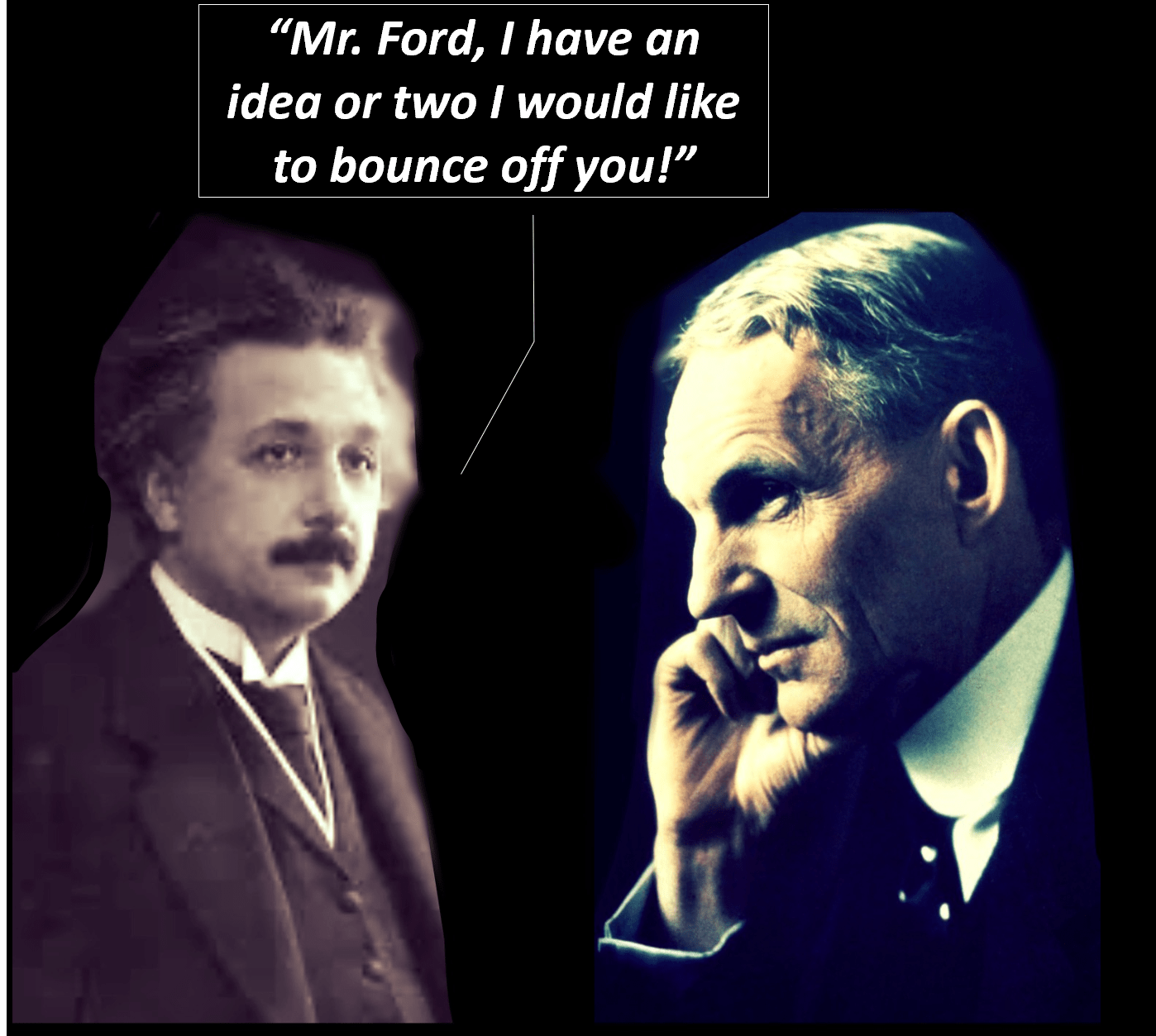
In the world of innovation and creativity…one of the greatest underestimated and only casually recognized strategies is the act of “Bouncing Your Idea” off others. Think about it. Sometimes “Bouncing Your Idea” off someone is conducted so naturally and regularly that no one takes the time to personally and professionally assess the value of this historic process of sharing and discussing an idea…of any size/level! Therefore, this TRIPLE III TIME message: Don’t Underestimate “Bouncing Your Idea!” will suggest a strong TOP 10 list of resulting positives that might go unrecognized and appreciated?!
When “Bouncing Your Idea!” off someone you may:
- See even more growth areas than you had considered.
- Identify weak points in the idea design/implementation that went unnoticed.
- Find that you have more individuals/organizations/businesses interested in your idea than you thought.
- Have a group of unique “spin-off” ideas come forward.
- Realize others have a similar idea that can add value to yours.
- Become the “go-to” person regarding new idea discussion and development.
- Create an “idea generation” movement/division in your workplace/community.
- Help a friend/colleague better formulate an idea and its presentation to others.
- Confirm the notion that new ideas aren’t always about more money…rather about doing things uniquely different.
- Build your own self-confidence in your capacity to be innovative and creative.
All ten are common-sense and straight-forward. So go ahead and begin Bouncing Your Idea (or Ideas) off others every time you get the chance.
It will be fun and progressive!
Leadership At It’s Toughest: Telling People What They DON’T Want To Hear!
“When was the last time you stood up and delivered bad news? It can be scary and uncomfortable. As humans, our instinct is to want to be liked by those around us, but truly brave leaders know that if we want to make change, sometimes we have to deliver the cold, unpalatable truth.” (GREAT TED TALKS: Leadership, Harriet Minter)
Harriet Miller’s quote is simple, honest and complete in its analysis of how difficult it is to try Telling People What They DON’T Want To Hear! Think about it. As was “distantly” discussed in earlier III messages…EVERYONE is faced with this responsibility at some point. This setting may occur in a supervisor-to-employee, friend-to-friend, mentor-to-client, counselor-to-participant and of course parent-to-son or daughter situation. In every case it becomes a leaders role to effectively define and explain the problem and hopefully find a way to a positive solution.
Those who are not “brave leaders” may choose to delay, avoid, ignore, hope the bad news goes away or that someone else delivers the bad news message. However none of these options help any problem…instead they may even contribute to making it bigger!
The main point of this TRIPLE III TIME message concerning the Leadership At It’s Toughest: Telling People What They DON’T Want To Hear! topic, is to recommend always taking a BRAVE LEADER role. Remember the saying: If not you…then who? I think it is necessary to apply this question when addressing a bad news issue. Would you want someone else to explain the problem, consider appropriate discipline or propose a good solution?
I believe YOU know my BRAVE LEADER answer.

TRIPLE III TIME: What Would Make YOU Better?
During the past year or so…in my role as a consultant and community college administrator…I have consistently asked “organizational customers”…what class or training opportunity would make you better? And although I thought everyone would be able to quickly and easily consider my question and toss out a few learning examples…most times it just generated more questions. Questions like:
- Do you mean in my job or at home?
- Do you mean a college class or just a workshop?
- Would it be just one class/session or might it be one that meets many times?
- Are you asking about one that would grade you too?
- Can you define “better”?
Well as you can see my observational research told me that most were not sure how to exactly answer the question and/or what to designate as an area they need to improve in?!

What Would Make YOU Better? The goal of this week’s TRIPLE III TIME message is to indirectly motivate you to think about how YOU would answer this question. Did I believe it would really be easy…NO?! But unfortunately it seems to be a question individuals do not often think about. Plus because it is a combination professional/personal topic area…it often generates the need for deeper response considerations.
I can report that when individuals or groups sincerely address the What Would Make YOU Better? question, the results can be extremely progressive! The “Better” answer sometimes is as simple as taking a personalized computer class…or as involved as a series of time management sessions for all in your organization. However the best part of whatever actions are taken…is that professional ownership of the improvement is required!
 Inspiring Innovations, Inc.